
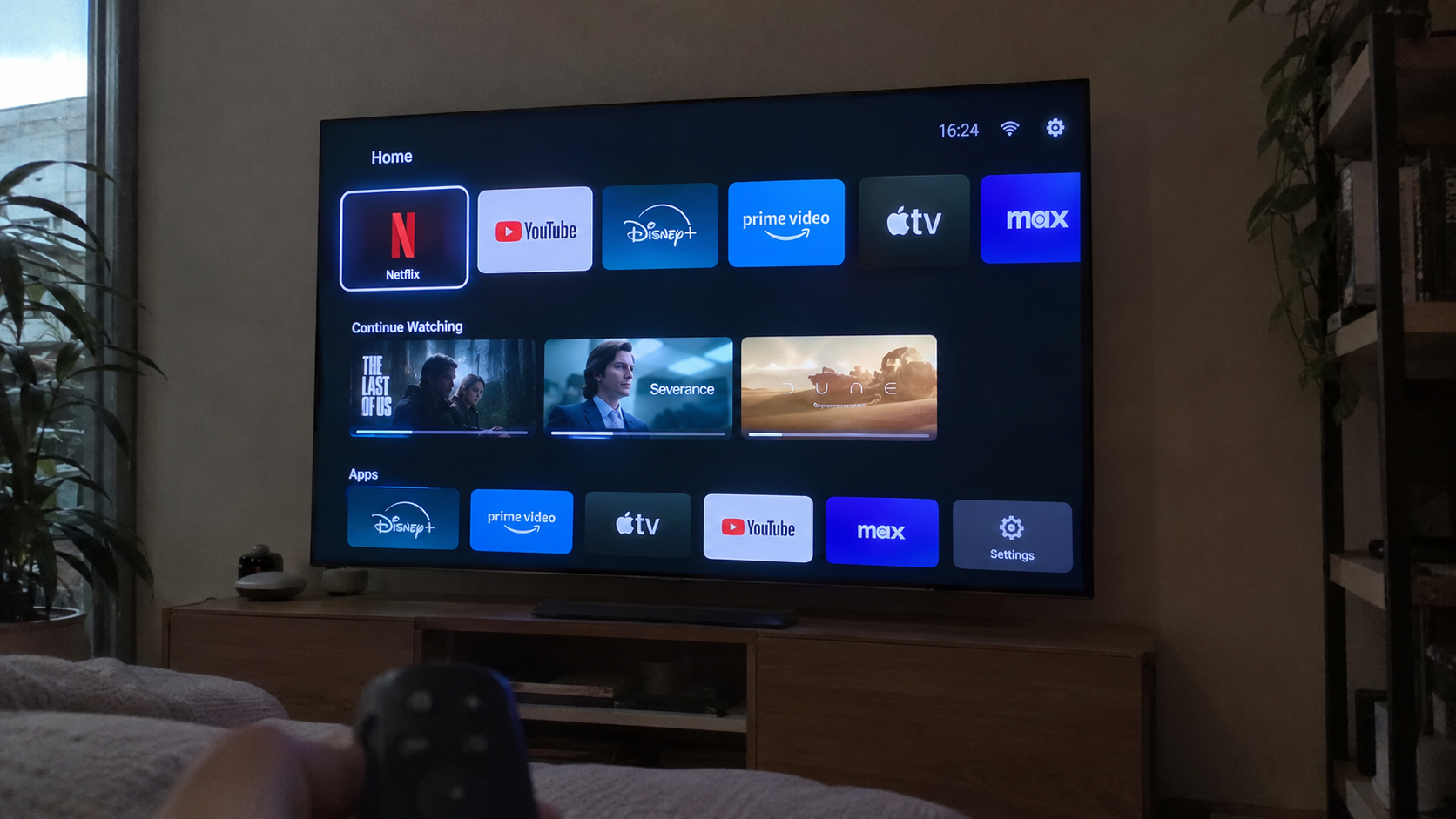
Smart TV owners are using AI coding agents to disable advertising software, telemetry tools and slow default interfaces on their sets. The trend, described as “vibe coding your TV,” gained attention after a developer used Anthropic’s Claude Code to modify his parents’ Xiaomi television.
A new way to customize the living-room screen
The developer, Gathin T., gave Claude Code the model number of his parents’ Xiaomi TV after it displayed a sponsored advertisement before they could reach Netflix. The agent located the television on the home Wi-Fi network, disabled 25 Xiaomi software packages and created a replacement launcher for the home screen.
Gathin later turned the process into cleanyourtv, an open-source project designed to help other owners carry out similar changes. Rather than permanently deleting system packages, the tool switches them off. A restore script can therefore reverse the changes, and the process does not require “root” access—the high-risk step of unlocking full administrator control over a device.
As of Tuesday, the project listed tested configurations for 107 television models from 37 brands. Its GitHub repository had received 10,700 stars, been copied into 1,200 forks and attracted 85 open pull requests, which are proposed changes submitted by contributors. Gathin said on his donation page that several thousand people had performed the process on their own televisions within two days.
The project uses Android Debug Bridge, or ADB, a maintenance feature built into Android-based devices. After a user enables developer mode—on some sets this involves clicking the “Build” number seven times in the settings menu—a computer on the same network can communicate with the TV. The agent can then list installed applications and identify software associated with advertising or telemetry, the background collection and transmission of usage information.
Why owners are targeting smart TV software
The movement reflects frustration with the way modern televisions combine entertainment hardware with advertising and data-collection systems. Many sets use Automatic Content Recognition, or ACR. This technology can identify material shown on the screen, including programming from cable services, game consoles and other devices connected through HDMI, and send viewing information back to the manufacturer for advertising purposes.
The issue has also drawn legal scrutiny. In December 2025, Texas filed lawsuits against Sony, Samsung, LG, Hisense and TCL, alleging that their televisions could capture an image of the display every 500 milliseconds, or twice per second. The allegations are part of a broader debate over whether consumers understand how much viewing information their televisions collect.
According to Decrypt, regulators have pursued related concerns for years. In 2017, Vizio agreed to pay $2.2 million to settle allegations that it had collected viewing data from 11 million televisions without consent. Walmart acquired Vizio for about $2.3 billion in 2024, and executives highlighted the television company’s profitable, fast-growing advertising business as part of the deal’s appeal.
From lighter launchers to fully custom screens
Users involved in the trend have gone beyond simply disabling unwanted applications. Mihir Gupta replaced a 192-megabyte default launcher—the software that displays the TV’s home screen—with a custom 83-megabyte alternative. Ansub Khan said the available memory on his parents’ older Android TV increased by about 90% after his changes.
Other projects have focused on replacing the standard interface entirely. One user created a screensaver that displayed revenue and new Stripe payments. Another replaced advertisements with a live three-dimensional model of an apartment, including lights and a ceiling fan that could switch on in real time. A separate interface was built with the animation tool Rive.
A competing project called dumbtv targets Amazon Fire TV devices. It disables about 65 packages, including ACR software, and installs a 41-kilobyte launcher without internet permission. Its deliberately stripped-back design shows applications, HDMI inputs and a clock.
Compatibility remains limited. Cleanyourtv works fully on Android TV and Google TV models from brands including Sony, TCL, Hisense, Philips and Xiaomi. Samsung televisions use Tizen, while LG sets run webOS, so those platforms cannot receive the same overhaul. Fire TV users can use the cleanup component, but not the full Android TV process.
Some LG owners have nevertheless reported debloating their televisions and simplifying the interface. The source material also notes concerns that LG televisions may identify users’ locations and collect voice conversations and other data even when the sets appear to be switched off.
The security and reliability risks
The modifications are not risk-free. At least one user said an attempt left the television “bricked,” meaning it could no longer operate normally, while another reported getting stuck partway through a Fire TV cleanup. A failed change can leave a device unable to boot properly.
The cleanyourtv documentation warns that network ADB is unencrypted. On some firmware versions, any device connected to the same Wi-Fi network may be able to control the television once debugging is enabled. Users are advised to turn debugging off when the work is complete.
AI coding agents introduce another concern. They can execute commands, and hidden instructions can potentially manipulate them into exposing credentials. The source material says Microsoft identified such a vulnerability affecting Claude Code and that Anthropic patched it in May. The combination of automated commands and device-level access means owners should understand what an agent is being asked to do before allowing it to proceed.
Moneyiar market picture
Moneyiar data at 11:03-11:04 on October 21, 2026, showed all four tracked assets higher over 24 hours, although three remained lower over seven days:
- Ethereum Name Service (ENS): $5.683755084, up 5.06% in 24 hours and down 4.63% over seven days.
- OriginTrail (TRAC): $0.4034294384, up 5.82% in 24 hours and down 10.49% over seven days.
- RedStone (RED): $0.14520769, up 6.84% in 24 hours and down 6.03% over seven days.
- Prom (PROM): $5.420324976, up 12.79% in 24 hours and 5.17% over seven days.
The smart TV project is part of a broader “vibe coding” trend, in which people describe a desired result in ordinary language and let an AI system write and run code. On televisions, that approach is turning a device commonly treated as closed and manufacturer-controlled into something users can customize—but with meaningful privacy, security and reliability trade-offs.





