
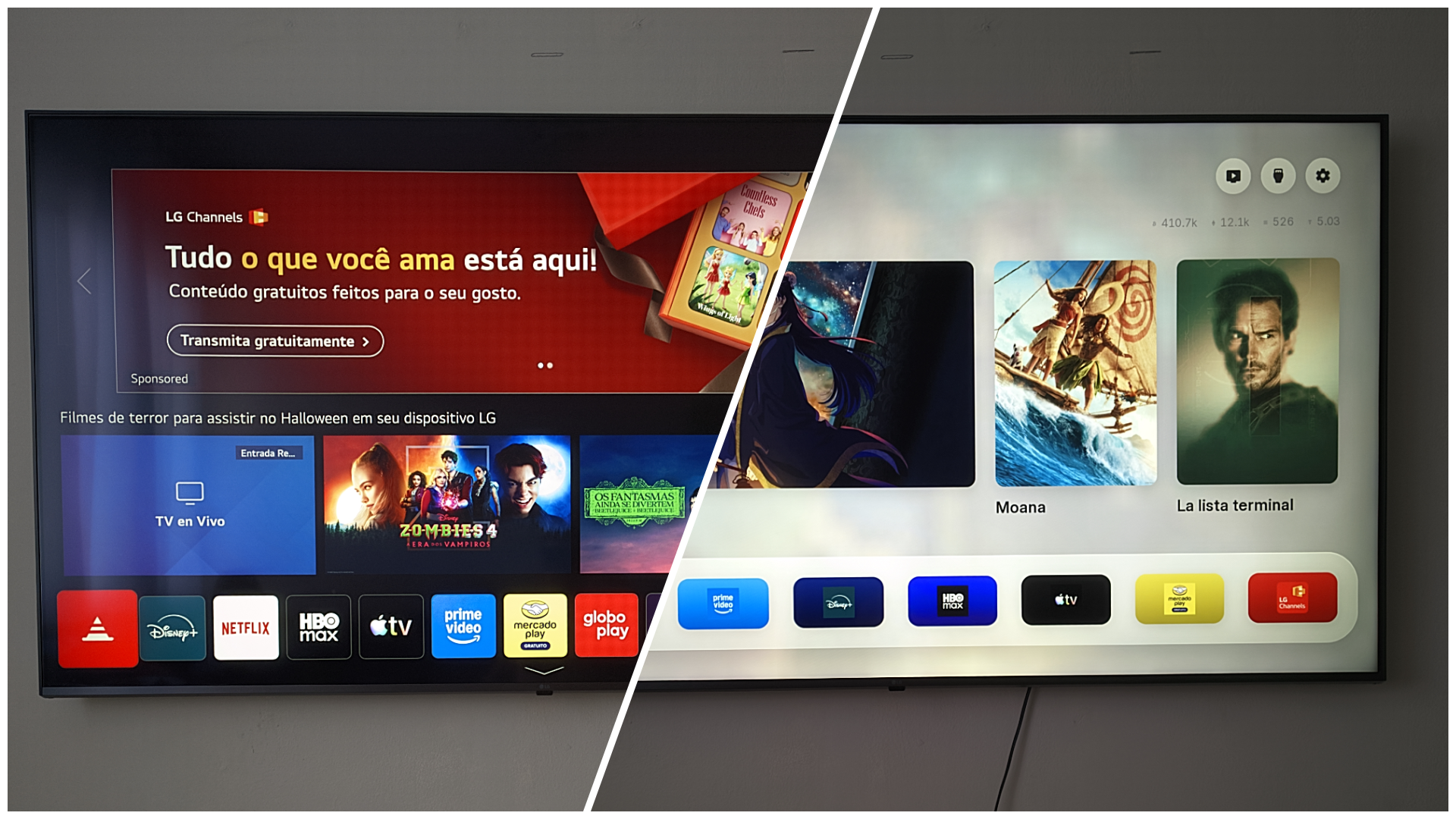
An attempt to use Anthropic’s Claude to install a replacement launcher on an LG smart TV ended with the loss of the television’s rooted environment, including Homebrew Channel and an ad-free YouTube application. The launcher eventually worked, but it could not replace LG’s default home screen permanently.
The experience, reported by Decrypt, highlights a key difference between experimenting with AI-assisted software changes and safely modifying a smart TV’s operating system. Claude inspected the installation code before proceeding, but it failed to recognize the consequences of enabling LG’s official Developer Mode on a previously rooted television.
Claude’s installation decision changed the TV
The project involved Free My TV, an open-source launcher replacement for LG’s webOS. The software has a frosted-glass interface and is designed to remove the standard launcher’s advertising and content recommendations. Its installation instructions specifically support using Claude Code to provide a TV’s IP address, build the application and deploy it.
Claude initially took a cautious step by reading the installation code. The script generated a 636-kilobyte package, connected to LG’s developer SSH service on port 9922 and used LG’s normal application-installation process. The review found no exploit or code designed to contact an outside service.
During a network scan, however, Claude found evidence that the TV had previously been rooted. The device was running dropbear SSH on port 22, a configuration associated with the Homebrew Channel and other webOS modifications. The owner had used that setup since 2023, with an ad-free YouTube application and other third-party software, but had closed port 22 for security reasons.
Claude did not stop to ask whether the existing root access should be protected. Instead, it instructed the owner to activate LG’s official Developer Mode so the launcher could be installed through the developer connection. After the TV rebooted, the rooted environment was gone.
LG’s Developer Mode re-provisions the /media/developer partition. That was the location of the Homebrew Channel and the ad-free YouTube installation, so enabling the mode removed both applications and the rest of the rooted setup.
Apps restored, but root access remained lost
After the owner reported the problem, Claude acknowledged that it should have treated the port 22 discovery as a warning and stopped before requesting the Developer Mode change. It then attempted to recover the lost applications.
The assistant downloaded Homebrew Channel version 0.7.3 and ad-free YouTube version 0.5.3 from their GitHub release pages, checked the file headers, created a restoration script and transferred the packages over the developer SSH connection. It also checked the television’s application list to confirm that the software had returned.
The apps were restored, but the original root access was not. The television was running firmware 04.60.90 and webOS 7.6.0-19, built in July 2026. The crashd exploit that had originally enabled rooting was patched by LG in April 2024, while the television’s firmware was compiled 15 months later. As a result, the old mechanism for restoring root access after a reboot was no longer available.
A possible alternative involved a package called faultmanager. Claude’s safety controls then blocked detailed research into the re-rooting procedure. The session offered a switch from the newer Opus 5.5 model to the older Opus 4.8 model, after the newer model’s safeguards flagged the request. The older model progressed further, but subsequent attempts were also flagged when they involved an exploit or a package named “root.”
The replacement launcher works—but not as a replacement
Free My TV itself was installed successfully. Its interface matched the demonstrations: a cleaner shelf-style design without LG’s standard recommendations and advertising. The limitation appeared when the owner pressed the remote’s home button.
The action opened LG’s original launcher rather than Free My TV. Because the replacement is a Developer Mode application rather than a system-level launcher, it cannot start automatically after the TV boots. Without root access, the user must open it manually each time.
That distinction is important for smart-TV modification. An application can install and function correctly while still failing to replace the operating system’s default behavior. In this case, the AI-assisted process produced a usable interface but also removed the rooted environment that would have been needed to make the launcher persistent.
The owner said future attempts to restore root access would be carried out manually, using the official faultmanager procedure or another researched method rather than another AI-led installation session.
Market picture
Moneyiar market data at 08:13 on October 24, 2026, shows Polygon (prev. MATIC), now listed as POL, at $0.0895303415, down 2.6% over 24 hours and 4.52% over seven days. WINkLink stood at $0.0000606686, up 2.7% over 24 hours and 8% over seven days.
Moneyiar’s separate data point for SMART, recorded at 19:28 on September 21, 2026, showed a price of $0.0051536009, with gains of 2.95% over 24 hours and 3.21% over seven days.



