
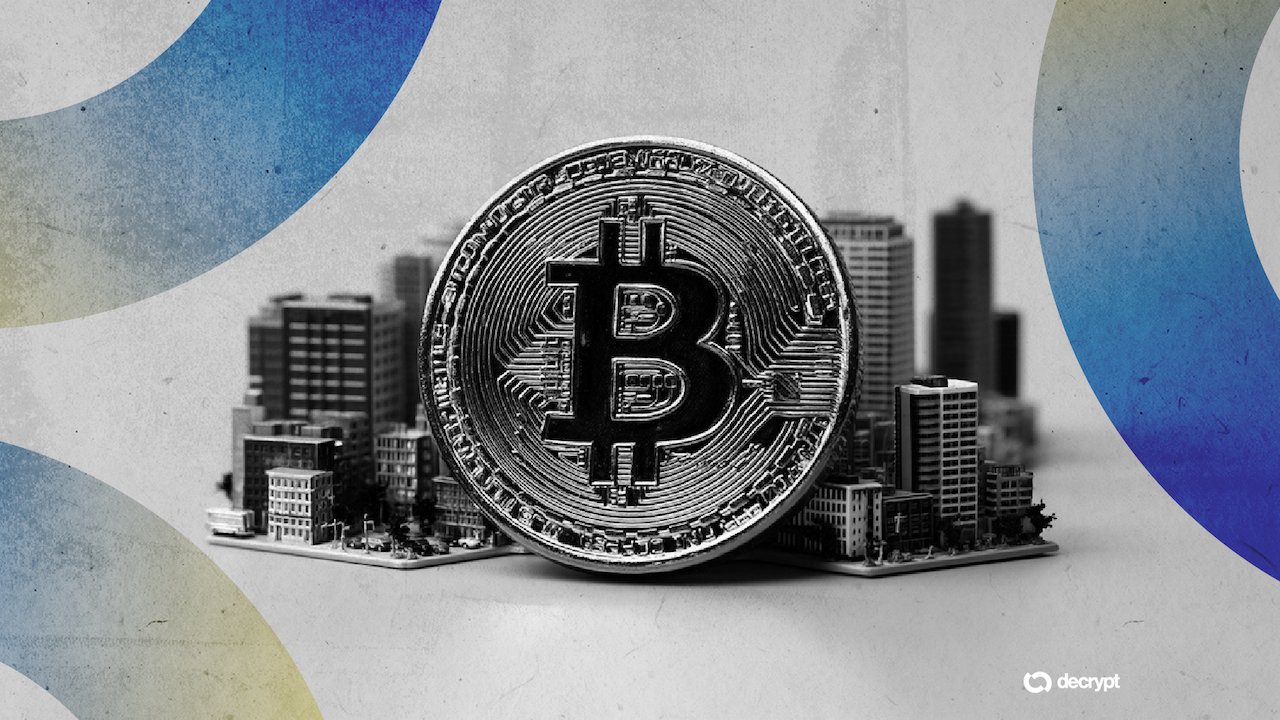
Bitcoin fell below $81,000 on Thursday after stronger-than-expected U.S. inflation data increased expectations that the Federal Reserve could raise interest rates again. The decline extended the cryptocurrency’s losses as traders reassessed the outlook for borrowing costs and liquidity.
Bitcoin reached an intraday low of $80,444 and was trading at $81,002, according to CoinGecko data cited in the original reporting by Decrypt. That represented a 2.7% decline over 24 hours and a 2.5% fall over the previous week at the time of the report.
The move followed data showing that U.S. consumer prices rose 3.7% in the year to September and increased 0.6% during the month. The monthly increase was the largest in five months, with energy costs linked to the war with Iran identified as a major contributor.
Inflation shifts expectations for the Federal Reserve
The inflation figures prompted a sharp change in market expectations for the Federal Reserve’s next moves. The New York Times reported that traders’ implied probability of a rate increase in October rose to 43% from 24% after the inflation report. Federal funds futures, however, continued to point to December as the more likely timing for the next increase.
Other market-based measures also showed higher expectations for an October hike. CME FedWatch put the probability at 29.3% on Thursday, up from 17.7% a week earlier. Traders on the prediction markets Myriad and Polymarket placed the odds at 28%, while Polymarket participants assigned a 79% chance to a December increase. Myriad is operated by Dastan, the parent company of Decrypt.
The Federal Reserve raised its policy rate to a range of 3.75% to 4% in September. The next rate decision is scheduled for October 28.
Higher interest rates can affect Bitcoin because the cryptocurrency is often traded as a liquidity-sensitive risk asset. When markets anticipate tighter monetary policy, investors may reassess positions in assets whose prices have benefited from abundant or cheaper capital. Abdul Rafay Gadit, co-founder of ZIG Finance, described the latest decline as a repricing of interest-rate expectations rather than a change in Bitcoin’s underlying narrative.
U.S. inflation has remained above the Fed’s 2% target for 66 consecutive monthly readings, according to a CNBC analysis cited in the report. Cleveland Fed President Beth Hammack wrote last week that policymakers were beginning to accept high inflation as a fact of life.
ETF demand and corporate buying also matter
Tim Sun of HashKey Group said interest-rate expectations were only one part of the explanation for Bitcoin’s stalled advance. He also pointed to a stronger dollar and a pullback in artificial-intelligence technology stocks, but said the deeper issue was a change in the sources of new capital entering the market.
According to Sun, spot Bitcoin exchange-traded funds and corporate Bitcoin treasuries were the main marginal buyers during the past two years. Higher borrowing costs have reduced the appeal of some corporate treasury strategies by narrowing the valuation premiums that can help companies raise funds and continue purchasing Bitcoin.
That change in demand helps explain why Bitcoin has struggled to sustain upward momentum even as the market has gained greater participation from established financial institutions. Sun said involvement by major traditional banks had supplied longer-term capital and helped prevent a prolonged, deep sell-off.
For Bitcoin to break out of its current range, Sun said spot ETF flows would need to return to sustained net inflows. Corporate treasury companies would also need to improve their ability to raise money and use it for additional Bitcoin purchases.
Bitcoin’s trading range and current market picture
Stephen Wundke, strategy and revenue director at quantitative investment firm Algoz, said Bitcoin could remain between $76,000 and $83,000 for the rest of October unless a clear catalyst appears. He said Bitcoin staying above $79,500 would preserve the possibility of a bullish move. Wundke also said peace with Iran could change the market dynamic immediately.
Gadit said the coming weeks were likely to be driven more by Federal Reserve signals than by crypto-specific developments. If policymakers indicate that they can look beyond persistent inflation, risk appetite could recover quickly; if not, he expects trading to remain unsettled.
Moneyiar market data at 21:29 on October 15, 2026, showed Bitcoin at $82,210.195864091, up 0.58% over 24 hours and 0.72% over seven days. The same data showed Data Network at $0.1903543211, down 3.93% in 24 hours and 2.86% over seven days; Holo at $0.0003875696, up 1.12% over 24 hours and down 5.15% over seven days; and Holoworld AI at $0.0594085629, up 1.89% over 24 hours and 0.7% over seven days. These Moneyiar figures were recorded later than the CoinGecko price cited in the report, so the readings are not directly simultaneous.
The immediate focus for Bitcoin traders remains the balance between persistent inflation, the prospect of tighter policy and the strength of demand from ETFs and corporate buyers. The Fed’s October 28 decision will provide the next major test for that balance.




