
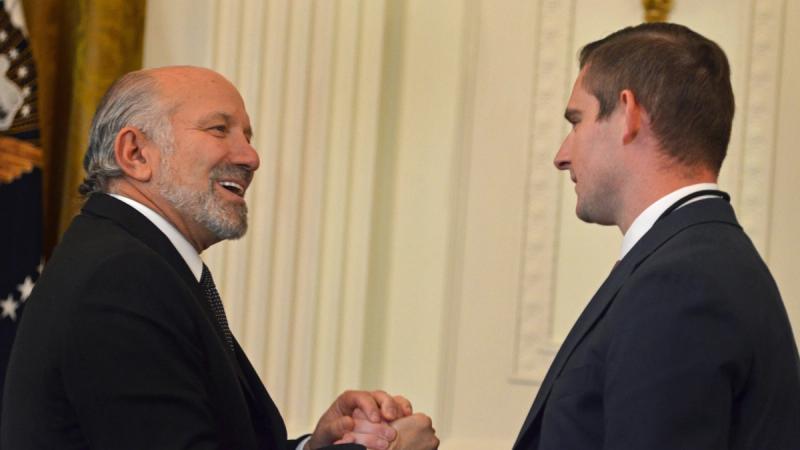
A senior Senate Democrat is seeking information about the relationship between Cantor Fitzgerald and Tether, the issuer of the USDT stablecoin, including how the financial firm manages Tether’s U.S. reserves and addresses allegations involving illicit finance.
Blumenthal requests information from Cantor CEO
U.S. Senator Richard Blumenthal has sent a letter to Brandon Lutnick, chief executive of Cantor Fitzgerald, asking for details about the firm’s business ties with Tether. Blumenthal is the top Democrat on the Senate Permanent Subcommittee on Investigations, and has been examining Tether’s financial relationships and its alleged role in Iran’s financial system.
According to CoinDesk, the letter was sent on Thursday. It focuses on Cantor’s role as the firm that holds and manages Tether’s reserves in the United States. The two companies also have other business interests, although the source material does not provide further details about those arrangements.
Blumenthal’s inquiry comes as U.S. lawmakers continue to consider how digital assets should be regulated. In his letter, he described the Cantor-Tether relationship as potentially useful for understanding how the stablecoin industry operates, particularly because a substantial portion of Tether’s assets is held in the United States under Cantor’s custody.
Tether says it operates out of El Salvador, according to the letter. Blumenthal nevertheless highlighted the location and management of its assets in the U.S. as a reason for examining Cantor’s responsibilities and controls.
Questions about sanctions and illicit-finance safeguards
The senator asked Cantor to explain the steps it has taken to investigate allegations that Tether’s stablecoin has been used in illicit finance and money laundering. His request specifically mentions alleged use within Iran’s shadow banking network and possible evasion of sanctions involving Russia.
Blumenthal also questioned Cantor about its banking and sanctions safeguards. The inquiry extends to Howard Lutnick, Brandon Lutnick’s father, who previously led Cantor Fitzgerald before leaving the company to become U.S. Secretary of Commerce in President Donald Trump’s administration. Brandon Lutnick took over the company’s leadership after that transition.
The letter argues that Tether has earned significant income from interest and investments connected with the stablecoins it issues, including stablecoins allegedly used in illicit activities. Blumenthal said Cantor Fitzgerald has also benefited financially from its relationship with Tether and is seeking information about the firm’s oversight of that partnership.
Neither Cantor Fitzgerald nor Tether immediately responded to requests for comment sent to their spokespeople, according to the source material.
A stablecoin is a digital token designed to maintain a relatively stable value against an underlying asset, commonly the U.S. dollar. Tether’s USDT is the world’s leading stablecoin, and the company’s reserves are central to questions about how the token is supported and how its financial partners operate. The inquiry does not establish that Cantor Fitzgerald or Tether violated sanctions or anti-money-laundering rules; it seeks information about the companies’ controls and responses to allegations.
Political significance of the investigation
Blumenthal and other congressional critics of the crypto industry, including Senator Elizabeth Warren, currently have limited authority because Democrats are the minority party in the Senate. That could change if Democrats regain the chamber in the November election.
A Democratic majority could place Blumenthal and other members in positions with greater control over investigations. The source material notes that committee leaders with subpoena power can legally compel information and testimony, giving congressional inquiries more force than they may have while the investigators are members of the minority.
Prediction markets cited in the report indicate that Democrats currently have a better-than-even chance of retaking the Senate. Kalshi puts the probability at 61%, while Polymarket gives it 64%. Those estimates were closer to 50-50 several weeks earlier, according to the source material.
The outlook described for the House of Representatives is more favorable for Democrats: both platforms show the likelihood of a change in majority at above 90%. These market-based probabilities are not election results, but they help explain why the timing and potential reach of congressional scrutiny are attracting attention.
Current crypto market picture
Moneyiar market data at 21:29 on October 8, 2026, showed Ethereum at $2,473.9232, down 3.70% over 24 hours and 8.15% over seven days. Tether USDt was trading at $0.9992 at 21:28, with a 24-hour decline of 0.02% and a seven-day decline of 0.05%.
Other tracked assets showed mixed performance. Ethena was priced at $0.2058, down 8.76% over 24 hours and 15.46% over seven days. Celestia stood at $0.5098, up 13.94% over 24 hours and 18.82% over seven days. These figures are Moneyiar data recorded at the stated times and provide market context alongside the political and regulatory questions surrounding Tether.




