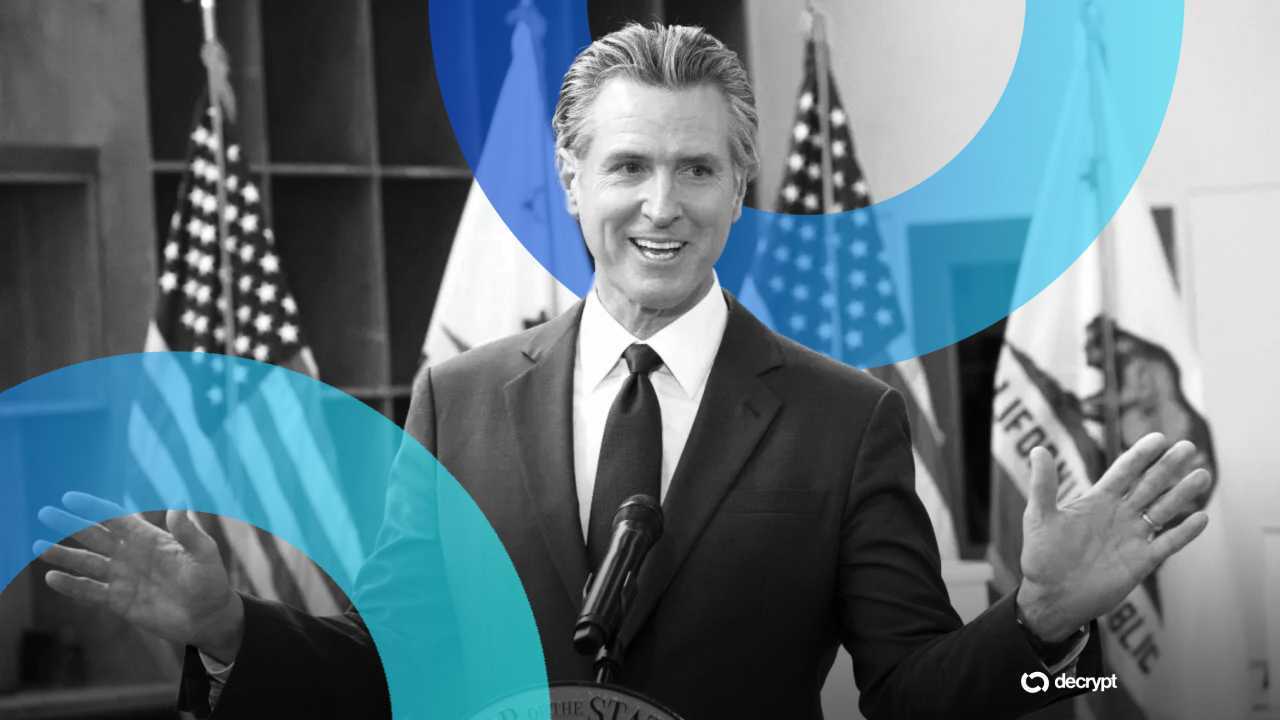
California has prohibited public officials and employees from issuing meme coins under a new law signed by Governor Gavin Newsom, adding state-level restrictions to the growing debate over politicians’ participation in the crypto market.
What California’s law does
Assembly Bill 2409, authored by Assemblymember Avelino Valencia, a Democrat from Anaheim, bars California public officers and public employees from issuing meme coins. The measure also places restrictions on digital-asset service providers operating in the state.
Platforms will be prohibited from listing certain meme coins issued on or after January 1, 2027, when those tokens are offered by or created in partnership with a federal official or a state or local public officer. The exchange-related provision therefore covers more than the officials themselves: it also creates obligations for crypto businesses that serve California residents.
The law is not a general prohibition on meme coins. AB 2409 focuses on tokens connected to public officials. It defines a meme coin as a digital asset marketed through its association with internet memes, characters, current events or trends, with value driven primarily by public interest, speculation or community participation.
California’s attorney general, district attorneys, city attorneys and county counsels may enforce the restrictions through civil actions. Available remedies include injunctions, which can seek to stop prohibited conduct, and disgorgement of funds, which can require money obtained through that conduct to be surrendered.
The political backdrop
Newsom signed the legislation as lawmakers in Washington consider whether elected officials and their relatives should be allowed to issue, promote or profit from crypto assets while holding office. The California governor’s press office directly connected the new law to President Donald Trump’s meme-coin activities, describing the administration in a social-media post as showing “an unprecedented level of corruption.” Newsom separately wrote that “No official should profit off their office” and called Trump a “scam.”
The debate intensified after Trump and members of his family developed a substantial business presence in digital assets. In July, Senator Kirsten Gillibrand, a New York Democrat, renewed her call for legislation that would bar politicians and their spouses from issuing or promoting digital assets, including meme coins.
That proposal followed Trump’s disclosure of more than $1.2 billion in crypto-related earnings for the previous year. More than $635 million of that amount was attributed to his Solana-based TRUMP meme coin, according to the source report.
Restrictions on public officials also became part of negotiations surrounding the federal Clarity Act. A version of the bill released in September included provisions that would have allowed state attorneys general to enforce limits on covered officials issuing or sponsoring digital assets. It also included requirements for certain officials to divest crypto interests or place them in qualified blind trusts.
The Senate later failed to move the Clarity Act through a key procedural vote, leaving those federal ethics provisions unresolved. California’s law consequently adds a state framework while the broader federal debate remains unsettled. Newsom had already signed an executive order in March prohibiting California public officials and appointees from using nonpublic information to profit from prediction markets, or from helping others do so.
Wider crypto enforcement in California
AB 2409 was one of several measures Newsom signed involving fraud, consumer protection and financial crime. Senate Bill 1208, authored by Senator Tim Grayson, a Democrat from Concord, expands California’s money-laundering laws to cover transactions involving digital assets.
The measure establishes procedures allowing law enforcement to seize and forfeit digital assets linked to specified crimes. It also provides for the distribution of forfeited assets to victims. The expanded digital-asset provisions are scheduled to expire on January 1, 2032.
Under SB 1208, law enforcement may seek warrants to seize digital assets, wallets or accounts when there is probable cause to believe the property represents criminal proceeds or was used to facilitate specified crimes. The law includes procedures for freezing assets and resolving claims over seized property.
For crypto platforms and users, the measures add another state-level layer to the United States’ developing digital-asset rules. Congress is still debating a federal market-structure framework, while regulators continue to work on related rules. According to Decrypt, California’s action is therefore part of a wider dispute over both consumer protection and the potential conflicts created when public officials hold or promote crypto ventures.
Moneyiar market picture
Moneyiar data at the stated times showed the following market moves:
- Sui (SUI) was priced at $1.15999523, up 14.67% over 24 hours and 41.54% over seven days, as of September 25, 2026, at 22:03 +03:30.
- Polygon (prev. MATIC) (POL) was priced at $0.1151016659, up 6.33% over 24 hours and 8.37% over seven days, as of September 25, 2026, at 22:04 +03:30.
- Lighter (LIT) was priced at $4.7679181146, down 6.53% over 24 hours and 2.12% over seven days, as of September 25, 2026, at 22:03 +03:30.
These market figures are separate from California’s legislation and do not indicate how the new rules will affect any particular asset.