
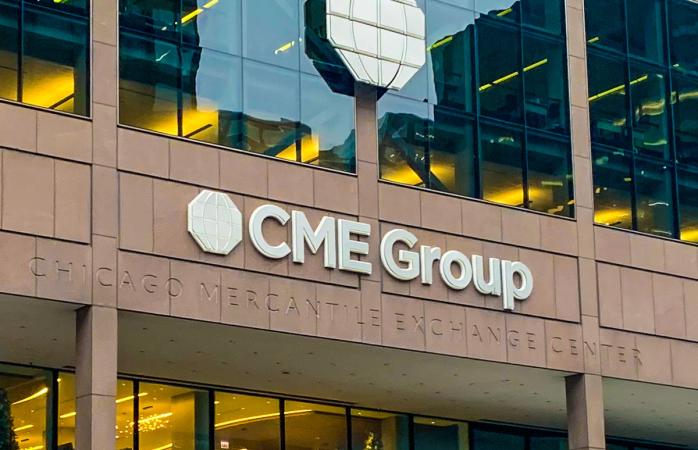
The U.S. Commodity Futures Trading Commission is asking a federal court to reject CME Group’s challenge to the agency’s policy on perpetual futures, arguing that the derivatives operator has not shown it is facing actual or imminent financial harm.
The dispute could shape how perpetual futures, commonly known as perps, develop in the United States. The CFTC opened the way for domestic perps in May when it approved the first bitcoin perpetual contract from Kalshi. The agency has indicated that it is prepared to consider similar products on a case-by-case basis as futures.
According to CoinDesk, the CFTC’s latest court filing says CME cannot establish the legal standing needed to challenge that policy merely by pointing to the possibility of greater competition. The agency also says trading volumes in crypto futures at CME have increased since the policy change.
Why the CFTC says CME lacks standing
In its brief, filed on Friday, the regulator argued that claims of increased competition are insufficient unless they are linked to a plausible and imminent financial injury. The CFTC said CME had not demonstrated either kind of harm.
“Allegations of increased competition, without any plausible inference of an imminent financial injury,” do not provide CME with the legal standing to bring the case, the agency argued.
The CFTC also pointed to statements CME has made to investors. The agency said CME has told investors that it has not seen demand for perpetual futures and that the products are not substitutes for the futures it already offers. It argued that those statements undermine CME’s claim in court that the new policy threatens its business.
“CME must plausibly allege an actual or imminent increase in competition,” the CFTC wrote. “CME has not even done that.”
The commission previously asked a federal judge to dismiss the lawsuit last month. The latest filing expands on that request by focusing on whether CME has the right to bring the challenge at all. CME representatives did not immediately respond to a request for comment on the filing, according to the source material.
The disagreement over what a perp is
Perpetual futures let traders speculate on the future price of an asset, generally through a leveraged position, without the fixed expiration date found in conventional futures contracts. The products have become a major part of crypto-derivatives trading in overseas markets.
The CFTC’s May action was intended to clarify how such contracts could begin operating domestically. The agency said it would regulate perps as futures on an individual, case-by-case basis. The move followed an aggressive crypto policy agenda from President Donald Trump that included bringing perpetual futures into U.S. markets.
CME disputes the CFTC’s characterization. The exchange operator argues that contracts without an end date should not be treated as futures. Instead, it says, perpetual contracts are more appropriately viewed as swaps, which would place them under a different regulatory framework.
That classification matters because it could determine which rules apply to the products and how they can be offered in the United States. The court’s decision on CME’s challenge may therefore affect not only the parties but also the structure of a potential domestic market for perpetual contracts.
Market growth adds urgency to the case
Jaret Seiberg, a policy analyst at TD Cowen, said CME could still have an advantage both in establishing its standing as a competitor and in arguing that perpetual contracts should be treated as swaps. But he also warned that the market may develop faster than the litigation proceeds.
The concern is that continued growth in perpetual futures could make any later reversal more difficult. If CME ultimately prevails, unwinding a market that has expanded during the legal process could create complications, Seiberg wrote in a Monday note to clients.
Moneyiar market data at 21:59 on October 19, 2026, showed Bitcoin at $81,941.48, up 0.99% over 24 hours but down 0.64% over seven days. Polygon’s former MATIC token was listed without a price, while Polygon (prev. MATIC), now identified as POL, stood at $0.0920, up 3.36% in 24 hours and down 8.26% over seven days. Celestia was priced at $0.6077, gaining 2.85% in 24 hours and 14.14% over seven days.
The court fight now centers on two linked questions: whether CME has shown a sufficiently direct injury to challenge the CFTC’s policy, and whether perpetual contracts belong legally in the futures category or should instead be regulated as swaps. As trading develops, the answer could influence the future of perps in U.S. crypto markets.




