
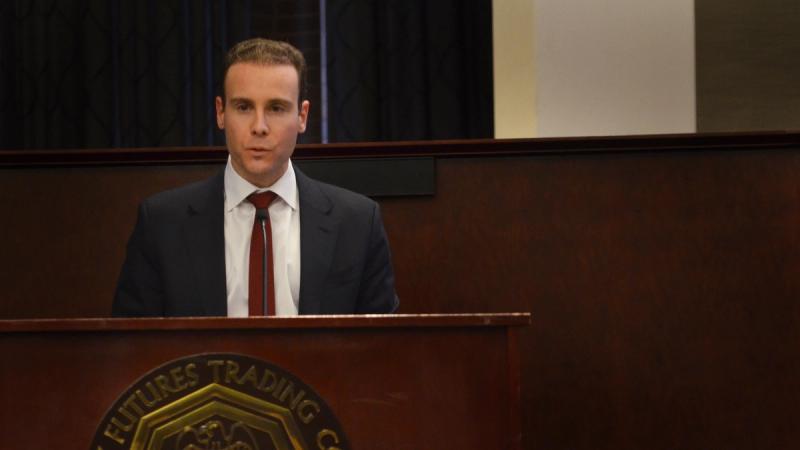
The U.S. Commodity Futures Trading Commission is taking steps to formalize its claim that prediction-market contracts traded on platforms such as Kalshi and Polymarket fall under its exclusive federal oversight, rather than state gambling regulation.
CFTC moves to define the contracts
The agency issued an interim final rule on Friday while also proposing a separate rule that would expressly include event contracts in the legal definition of “swaps.” The measures cover contracts linked to sports, politics, cultural events and weather, which are traded on prediction-market platforms.
Under the CFTC’s approach, these products are transactions between parties that belong within the agency’s federal derivatives jurisdiction. The interim final rule also seeks to clarify which forms of sports wagering do not qualify as swaps. Casino-style gambling would remain outside the swaps definition, while event contracts offered through prediction markets would remain within it, under the agency’s proposed interpretation.
The distinction is central to the dispute. If the contracts are treated as swaps, the CFTC argues that it should be the sole regulator. State gambling authorities, by contrast, have maintained that they possess authority over sports-related wagering conducted through these platforms, with several states accusing the businesses of operating illegal gambling operations.
The interim final rule takes effect as policy immediately, although the public can submit comments as it is implemented. The second measure is still only a proposal and provides a 30-day period for comments. Together, the actions represent a more explicit attempt by the CFTC to establish a regulatory framework for prediction-market contracts.
A legal fight with the states
The agency’s policy push comes as the CFTC and several states continue to litigate over who has authority over event contracts. According to CoinDesk, the states and former federal officials involved in creating the relevant laws submitted their views to the U.S. Supreme Court during the week. The court has been asked to resolve the broader dispute.
Federal court decisions have not been uniform. One federal appellate ruling went against the states, while two other federal appellate decisions supported their position. The conflicting rulings have left the legal status of sports-related prediction-market contracts contested.
The CFTC’s latest actions could give the agency additional evidence if it must defend its interpretation before the Supreme Court. By beginning to implement its view that event contracts are swaps, the regulator can point to an active rulemaking process rather than relying only on an existing interpretation.
The agency is also attempting to answer a criticism raised by the states: that defining swaps broadly could make wagers placed at state or tribal casinos and sportsbooks federally illegal. The interim final rule’s exclusion of casino-style gambling is intended to distinguish traditional gambling operations from the event contracts traded on prediction-market platforms.
Jaret Seiberg, a policy analyst at TD Cowen, wrote in a note to clients that the interim rule appeared designed to strengthen the CFTC’s position in court. He added that it was not clear whether the approach would ultimately succeed.
Kalshi, Polymarket and the regulatory question
Companies such as Kalshi are aligned with the CFTC’s position because they are seeking to establish the federal agency as their only regulatory watchdog. The outcome matters to these businesses because state-level gambling oversight could expose their sports-related contracts to different rules, challenges or restrictions across the country.
Event contracts generally allow participants to take positions on whether a specified outcome will occur. The products at issue can relate to subjects including elections, sporting events, weather and cultural developments. The CFTC is seeking to place those contracts within the swaps framework, while drawing a line between them and casino-style gambling.
The measures were submitted for White House review less than two weeks before the agency acted, reflecting a rapid process. The speed of the effort comes as the regulator faces immediate legal challenges to its position that prediction markets belong within its sole domain.
The CFTC’s ability to move quickly is also connected to its current leadership structure. Mike Selig is the agency’s chairman and its only commissioner, even though the CFTC is designed to have five commissioners. President Donald Trump has not named additional commissioners. A similar staffing situation has developed at the Securities and Exchange Commission, which has two members on a five-member commission.
Moneyiar market picture
Moneyiar market data at the stated times show mixed performance among four tracked digital assets:
- OriginTrail (TRAC): $0.4044305337, up 0.35% over 24 hours and down 9.87% over seven days, as of October 11, 2026, at 11:33 a.m. +03:30.
- Four (FORM): $0.2798052717, up 0.74% over 24 hours and down 0.96% over seven days, as of October 11, 2026, at 11:34 a.m. +03:30.
- Request (REQ): $0.0544932883, down 0.65% over 24 hours and down 2.15% over seven days, as of October 11, 2026, at 11:33 a.m. +03:30.
- Ontology (ONT): $0.0604895281, down 0.22% over 24 hours and up 1.64% over seven days, as of October 11, 2026, at 11:33 a.m. +03:30.
These figures describe the selected assets’ recent market performance and are separate from the CFTC’s rulemaking and the legal dispute over prediction-market oversight.





