
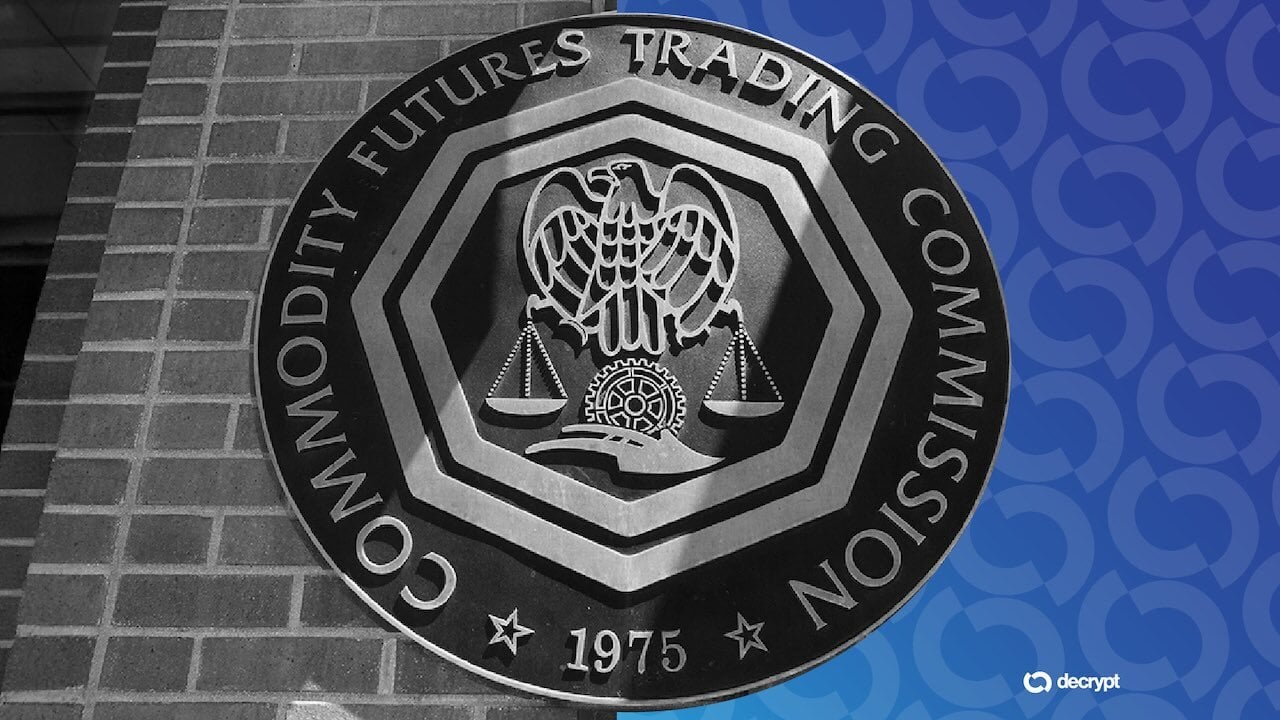
The U.S. Commodity Futures Trading Commission is moving to draw a formal legal boundary between prediction-market contracts and traditional gambling, asserting federal authority over event-based financial products while excluding sportsbooks and casino games from the derivatives framework.
CFTC’s proposed definition
The agency issued two measures on Friday. One is a proposed rule that would explicitly add event contracts to the federal definition of a “swap.” The proposed category would cover contracts linked to outcomes in areas including sports, politics, cultural events and weather.
The CFTC said these instruments are financial products commonly treated in the market as swaps and that the proposal is intended to remove uncertainty about their regulatory status. Chairman Michael Selig said event contracts are “commodity derivatives squarely within the CFTC’s regulatory remit” and fall under the agency’s “exclusive jurisdiction.”
If that position is upheld, prediction-market platforms such as Kalshi and Polymarket would be treated as operating in an area overseen by the federal derivatives regulator, rather than by state gambling authorities. Both the proposed rule and the separate gambling measure have 30-day comment periods.
Gambling products excluded
The second measure is an interim final rule that takes effect upon publication. It codifies the CFTC’s view that casino-style gambling products do not belong within the definition of a swap. The agency specifically cited sportsbook wagers and casino games.
Selig described the distinction as a clarification of the limits of the CFTC’s authority, saying that “casino-style gambling products are not derivatives.” In general terms, a derivative is a financial contract whose value or payout is linked to an underlying asset, event or outcome. The agency’s approach treats some event-based contracts as financial derivatives while keeping conventional gambling products outside that category.
The measures formalize proposals the CFTC sent to the White House for review late last month. They also arrive as the agency seeks to establish its position through regulation rather than waiting for Congress to resolve the issue.
Legal fight over prediction markets
The CFTC’s position has significant consequences for prediction-market operators. Several states have sued such platforms, alleging that their contracts amount to illegal gambling. The CFTC has countersued in an effort to defend its claimed jurisdiction.
According to Decrypt, the dispute has also reached the courts in a case involving Kalshi, the NFL and others. A disagreement over whether event contracts qualify as federally regulated swaps has attracted the attention of the Supreme Court. That means the legal question addressed by the CFTC’s new rules could ultimately be considered by the justices.
The agency has generally taken a supportive approach toward traditional and cryptocurrency markets. It recently issued no-action relief allowing crypto applications to offer regulated derivatives and advanced separate rulemaking related to crypto markets.
Moneyiar market picture
Moneyiar data at 11:43 on October 11, 2026, showed Polygon (prev. MATIC), now listed as POL, at $0.1010307851, up 0.39% over 24 hours but down 6.6% over seven days. Lighter (LIT) traded at $3.5732351945, down 2.83% in 24 hours and 1.2% over seven days. OriginTrail (TRAC) stood at $0.4050122115, down 0.19% over 24 hours and 9.75% over seven days.



