
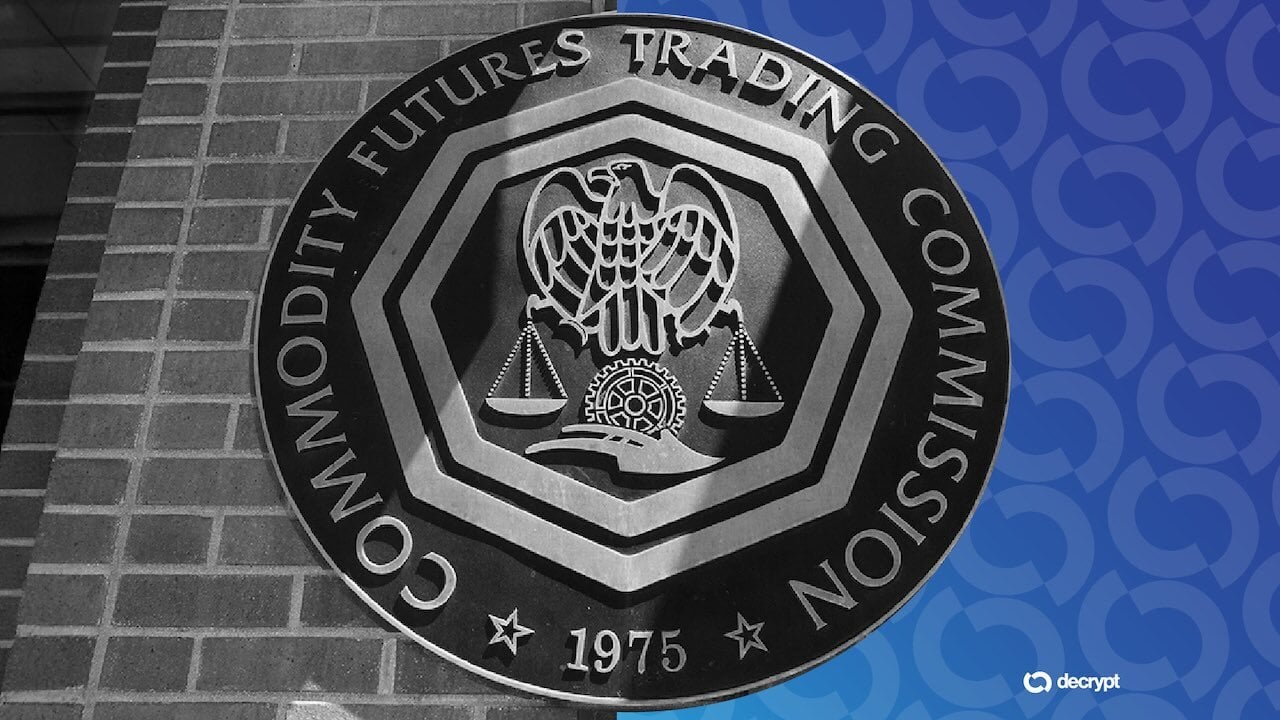
The U.S. Commodity Futures Trading Commission has sent two proposed rules to the White House that could strengthen its authority over prediction markets, including platforms such as Kalshi and Polymarket.
The filings seek to clarify how federal law treats event contracts—yes-or-no instruments tied to outcomes such as elections, public events or other real-world developments. According to Decrypt, the CFTC submitted both measures on Sept. 28 to the Office of Information and Regulatory Affairs, the White House office that reviews federal regulations before they are published.
Two rules, one jurisdictional dispute
One proposal, identified as RIN 3038-AF82, would expressly include event contracts within the definition of a “swap.” It would be published for public comment before any final rule is adopted. The second measure, RIN 3038-AF81, is an interim final rule that would remove “casino-style gambling products” from the swap definition and could take effect after approval.
The agency classified both measures as not economically significant. Their full text has not yet been made public.
The classification of event contracts as swaps is central to a wider legal fight. If the contracts are treated as swaps, the CFTC’s position is that they come under its authority, potentially limiting the role of state gambling regulators. CFTC Chairman Michael Selig has argued that the commission’s authority in this area is exclusive.
Several states have sued prediction-market operators, alleging that their products amount to illegal gambling. The CFTC has responded with litigation of its own, seeking to prevent state regulators from overseeing the platforms. Appeals courts have issued conflicting decisions on whether event contracts fall within the relevant legal definitions, and the dispute has reached the attention of the Supreme Court.
Regulation advances as scrutiny grows
The proposed rulemaking would allow the CFTC to settle through regulation an issue that has so far been contested in court and between federal and state authorities. It also follows a broader post-Clarity Act approach in which the commission has moved to develop its own rules rather than waiting for Congress to establish every detail of crypto-market policy.
The CFTC recently sent a separate crypto-markets rulemaking to the White House. At the same time, agency staff have raised concerns about “mention” contracts—markets that settle on whether a named person says particular words—warning that such products may be especially vulnerable to manipulation.
Federal scrutiny also includes an investigation of former Representative Adam Kinzinger over Kalshi bets linked to his own pardon. At the state level, New York sued Polymarket last week in an effort to prohibit the platform from operating in the state, following an earlier action involving Kalshi.
Current market picture
Moneyiar market data as of the times shown below reports the following cryptocurrency prices and moves:
- OriginTrail (TRAC): $0.4753220912, up 15.3% over 24 hours and 32.68% over seven days, as of Oct. 1, 2026, at 09:29 +03:30.
- RedStone (RED): $0.1820882341, up 10.14% over 24 hours and 20.48% over seven days, as of Oct. 1, 2026, at 09:29 +03:30.
- Ontology (ONT): $0.0585946673, up 0.58% over 24 hours and 7.04% over seven days, as of Oct. 1, 2026, at 09:28 +03:30.
- would (WOULD): $0.0351412837, up 0.33% over 24 hours and 10.6% over seven days, as of Sept. 22, 2026, at 21:04 +03:30.
The CFTC’s submissions are not final rules. They nevertheless signal an attempt to establish the legal treatment of prediction-market contracts through agency regulation, rather than leaving the question to separate court cases and state-level enforcement actions.





