
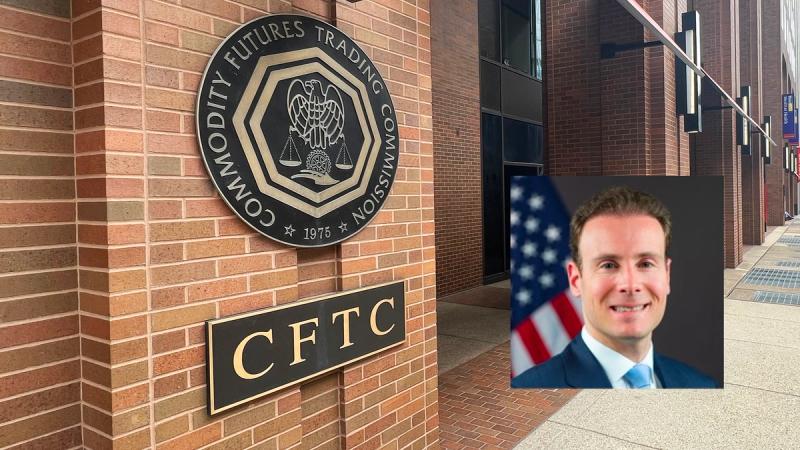
The U.S. Commodity Futures Trading Commission has filed a federal lawsuit seeking to block Utah from enforcing its ban on Kalshi’s prediction-market contracts, escalating a broader legal fight over whether states or the federal government should control event-based trading.
Utah prohibits gambling under its constitution, and the state’s attorney general recently moved to restrict Kalshi’s offerings to residents. The CFTC is challenging that enforcement effort, arguing that federal authority over derivatives and event contracts takes precedence over Utah law. According to CoinDesk, the agency entered the dispute after Kalshi had already suffered a setback in federal court, where a district judge sided with Utah in a case that remains under appeal.
The lawsuit adds Utah to a growing list of states facing legal action from the federal derivatives regulator. The CFTC is currently in court against 10 states and has pursued more than a dozen legal actions as Chairman Mike Selig seeks to preserve what he considers the agency’s exclusive authority over prediction markets.
Why Utah is challenging Kalshi
Kalshi offers event contracts tied to the outcomes of future events. These contracts allow participants to take positions based on whether a specified event will happen. The CFTC maintains that such products fall within the federal framework for derivatives and should be overseen by the agency rather than state gambling authorities.
Utah takes a different view. Attorney General Derek Brown said last week that offering gambling to Utah residents is illegal and that no state law permits Kalshi’s activities. He accused the company of operating an online casino, reflecting the state’s position that the contracts are gambling products rather than federally regulated financial instruments.
The dispute is part of a wider conflict over federal preemption, the legal principle that federal law can override conflicting state rules in areas where Congress has granted the federal government authority. Kalshi and other prediction-market companies have argued that federal oversight prevents individual states from stopping their operations. Several states, including Utah, have challenged that interpretation.
The courts have not reached a consistent conclusion. Three federal appellate courts have issued two rulings favoring states and one ruling that backed Kalshi’s position. In Utah, a federal district court judge has sided with the state, although that decision is also being appealed. The competing rulings have made the legal boundaries around prediction markets increasingly unsettled.
CFTC defends its federal role
In a statement, CFTC Chairman Mike Selig said event contracts have purposes beyond hedging and investment. He argued that they can also provide information about the likely outcomes of future events. His comments reinforced the agency’s position that prediction markets belong primarily under federal supervision.
The CFTC’s intervention places the agency directly against Utah’s effort to apply its gambling restrictions. Rather than leaving Kalshi to contest the state’s action alone, the regulator is asking the federal court to stop Utah’s enforcement campaign.
The agency’s legal push comes as it faces constraints of its own. The CFTC has lost legal staff while the administration of President Donald Trump has pursued efforts to reduce the size of U.S. regulatory agencies. Despite those staffing reductions, the agency has continued filing arguments in cases involving prediction markets across different levels of the federal court system.
The disagreement also has a prominent opposing voice from within the CFTC’s history. Former Chairman Gary Gensler, a Democrat who later led the Securities and Exchange Commission, submitted a brief to the U.S. Supreme Court arguing that Selig’s interpretation of federal law is incorrect. Gensler said the Dodd-Frank Act did not move authority over sports betting from the states to the CFTC.
Former Senator Chris Dodd, one of the law’s authors, also filed an amicus brief supporting the states’ interpretation. An amicus brief is a filing by a person or organization that is not a direct party to a case but offers arguments or expertise to the court.
Moneyiar market picture
Moneyiar market data at 22:38-22:39 on October 25, 2026, showed mixed performance among selected digital assets:
- Solana (SOL) was priced at $101.5978856709, up 0.03% over 24 hours but down 1.52% over seven days.
- Sui (SUI) stood at $0.9236567057, down 0.79% over 24 hours and 5.59% over seven days.
- Lighter (LIT) traded at $3.1819342396, down 1.45% over 24 hours but up 5.12% over seven days.
- Horizen (ZEN) was priced at $5.7259060904, up 0.09% over 24 hours and down 1.51% over seven days.
The Utah lawsuit could become significant beyond the immediate dispute because it addresses who has the final say over prediction-market products: state authorities applying gambling laws, or the CFTC applying federal derivatives law. With appeals pending and federal courts issuing conflicting decisions, the case adds another legal test to an unresolved regulatory question.





