
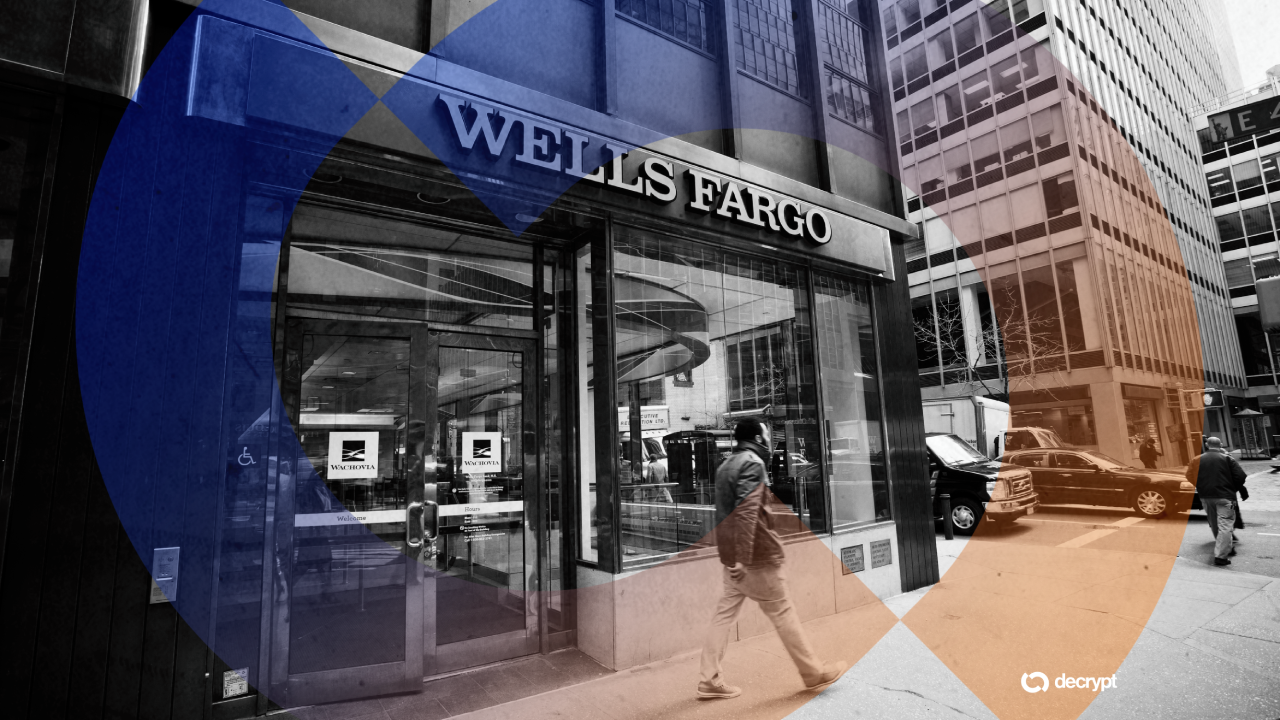
Six more companies have objected to the proposed trading of their shares on a tokenized-stock platform being developed by OKX and Intercontinental Exchange, according to an Oct. 23 notice. The additions include Wells Fargo, Cisco Systems and Marvell Technology, bringing the number of objecting issuers to 22.
The updated notice also names Arm Holdings, Moderna and Intuit. The total has risen sharply from nine companies listed on Oct. 15 and 16 named in a notice dated Oct. 19. The notices do not state why the companies objected or explain whether an objection prevents their shares from being traded on the planned venue.
Objections spread across financial and technology sectors
Wells Fargo is the second major U.S. bank identified as an objector, following Goldman Sachs. The broader list already included Microsoft, Alphabet, Verizon, Broadcom and UnitedHealth Group.
The latest additions also expand the representation of semiconductor, networking and technology companies. Arm, Cisco and Marvell join existing technology names such as Microsoft, Broadcom and Qualcomm. Moderna, a biotechnology company, and Intuit, a financial-software company, complete the six-company update.
The growing list matters because OKXICE TSV is intended to create a new way to trade shares outside the operating hours of traditional stock markets. It is a 50-50 joint venture between Intercontinental Exchange, the owner of the New York Stock Exchange, and OKX’s U.S. holding company.
According to Decrypt, the platform plans to allow approved users to trade tokenized U.S. stocks around the clock. Tokenized stocks are digital representations of shares recorded and transferred using blockchain technology. The planned system would use Uniswap v4 liquidity pools on OKX’s XLayer blockchain, with stablecoins such as USDC used as the trading pair.
How the proposed platform would work
The venue is expected to operate under an innovation exemption introduced by the Securities and Exchange Commission in September, after the Clarity Act stalled in the Senate. Since its Oct. 19 notice, OKXICE TSV has said that its platform could list shares tokenized either by the issuers themselves or by outside parties.
None of the companies identified in the objection notices appears to have chosen the issuer-tokenization route. However, the public documents do not clarify the practical consequences of an objection, including whether it affects the availability or legal status of a token linked to a company’s shares.
The proposal reflects a broader effort to extend securities trading onto blockchain networks. Unlike conventional stock exchanges, the planned venue would be designed for continuous access, including periods when the underlying U.S. market is closed. The International Monetary Fund has found demand for tokenized stocks, particularly during off-hours, while also warning that the market remains volatile and illiquid.
Notice highlights trading and technology risks
The latest notice provides more detail about the risks associated with the venue. The platform would pause trading when the underlying stock is halted, but it would not use additional circuit breakers. Circuit breakers are mechanisms that temporarily stop trading after unusually large price moves.
The notice also says the venue has no policies addressing maximal extractable value, or MEV. In blockchain markets, MEV can allow traders or other participants to profit by influencing the order in which transactions are processed.
Other risks could affect participation by regulated financial firms. Broker-dealers face unresolved questions involving trade reporting and best execution, the obligation to seek the most favorable terms reasonably available for a customer order. Those uncertainties could limit broker-dealer involvement and reduce liquidity on the platform.
The notice further states that administrators may upgrade the relevant smart contracts without giving users advance notice. In addition, the contract controlling who is permitted to trade has undergone only an internal audit. Smart contracts are blockchain-based programs that enforce the rules of a transaction or platform, making changes to them a material operational consideration.
Moneyiar market picture
Moneyiar data at 22:38-22:39 on Oct. 25, 2026, showed mixed performance among the tracked digital assets:
- Monad (MON): $0.0215496181, down 0.49% over 24 hours and up 2.33% over seven days.
- Compound (COMP): $21.1287447338, down 10.42% over 24 hours and up 0.30% over seven days.
- Ore (ORE): $164.7502665491, up 4.48% over 24 hours and 56.42% over seven days.
- Ontology Gas (ONG): $0.076819855, up 0.23% over 24 hours and 2.59% over seven days.
OKX and ICE began working together on tokenized securities earlier this year and unveiled the planned venue this month. Nasdaq, which received SEC approval for its own tokenized-securities pilot, has said it will opt its shares out of the exemption. The accumulating objections, combined with the platform’s disclosed operational and regulatory uncertainties, underscore the unresolved questions surrounding how tokenized equities will be issued, traded and supervised.





