
Six more companies have declined to let OKXICE list blockchain-based versions of their shares, taking the total number of objections to 22 as the joint venture seeks to build a new market for tokenized U.S. stocks.
Six companies join growing list of objections
Cisco, Wells Fargo, Marvell Technology, Arm Holdings, Intuit and Moderna were identified in an updated public notice filed Friday by OKXICE, a joint venture between crypto exchange OKX and Intercontinental Exchange, the parent of the New York Stock Exchange.
The companies have opted out of the venture’s plan to offer trading in tokenized versions of their shares. Tokenized stocks are digital representations of securities recorded and traded on blockchain networks. The structure is intended to allow shares to be bought and sold through blockchain-based systems rather than only through conventional stock-market infrastructure.
The six additions bring the total number of companies objecting to participation on the OKXICE venue to 22, according to reporting attributed to CoinDesk and the public notice described in the report. The list already included major corporations such as Microsoft, Alphabet, Goldman Sachs and McDonald’s.
The objections do not all represent companies withdrawing from the original proposed roster. OKXICE initially identified 62 companies for its planned trading list. Wells Fargo and Arm were not included in that selection, while Cisco, Moderna, Intuit and Marvell were. Cerebras Systems, which had also objected earlier, was likewise outside the original roster.
As a result, the total of 22 objections should not be read as 22 companies departing from the 62-stock list. In addition, a company’s objection prevents trading on the venue that issued the notice, but does not necessarily mean the company opposes every possible form of stock tokenization.
A new SEC framework gives issuers a say
The dispute comes as the Securities and Exchange Commission’s five-year “Innovation Exemption” creates a framework for qualifying tokenized securities venues to test blockchain-based trading. Under the arrangement described in the report, issuers are notified before their shares can be offered and have 30 days to block participation.
The framework is designed to permit trading through automated market makers. These are software systems that execute transactions using pools of assets, rather than relying exclusively on the traditional order-book model used by stock exchanges. The proposed structure would also allow U.S. investors to trade participating stocks around the clock on blockchains.
OKXICE issued its initial public notice on Oct. 4. Its proposal calls for Uniswap liquidity pools on OKX’s XLayer blockchain, with transactions settled in stablecoins. Stablecoins are digital assets designed to maintain a relatively stable value, commonly in relation to a fiat currency, and are often used to settle transactions in crypto markets.
The number of objections highlights one of the central challenges facing the venture: companies retain control over whether their shares appear on the new venue, while the project is still testing how tokenized stock trading will work in practice. A large number of companies choosing not to participate could limit the breadth of the initial market, although the objections apply specifically to the notifying venue and do not resolve the broader question of whether companies may participate in tokenization elsewhere.
OKXICE says companies are waiting to see the market develop
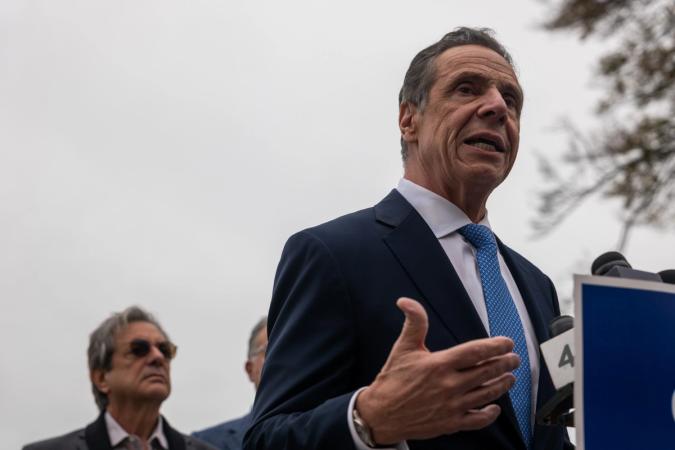
Andrew Cuomo, OKXICE’s co-chairman and a former governor of New York, said the objections were anticipated. He said many companies would prefer to observe the market’s development before becoming early participants because the model represents a significant change in how shares could be traded.
Cuomo also described the current framework as a “sandbox” and a model demonstration, pointing to limits on participating companies and trading volumes. His comments suggest that OKXICE views the initial launch as a test phase rather than a fully developed alternative to established equity markets.
The project combines the reach of a major crypto exchange with the backing of one of the world’s largest exchange operators. Its proposed use of blockchain infrastructure, liquidity pools and stablecoin settlement places it at the intersection of digital assets and traditional securities markets.
For now, the 22 objections show that participation is not automatic under the SEC framework. Companies can use the 30-day process to prevent their shares from being listed on the notifying venue, leaving OKXICE to develop its offering with a narrower group of issuers than its original proposal may have suggested.
Current market picture
Moneyiar market data at 22:38-22:39 on Oct. 25, 2026, showed mixed performance among the tracked digital assets:
- Monad (MON): $0.0215496181, down 0.49% over 24 hours and up 2.33% over seven days.
- Compound (COMP): $21.1287447338, down 10.42% over 24 hours and up 0.30% over seven days.
- Ore (ORE): $164.7502665491, up 4.48% over 24 hours and 56.42% over seven days.
- Ontology Gas (ONG): $0.076819855, up 0.23% over 24 hours and 2.59% over seven days.
These figures are Moneyiar data at the stated times and provide a snapshot of selected crypto-market movements alongside the debate over blockchain-based stock trading.





