
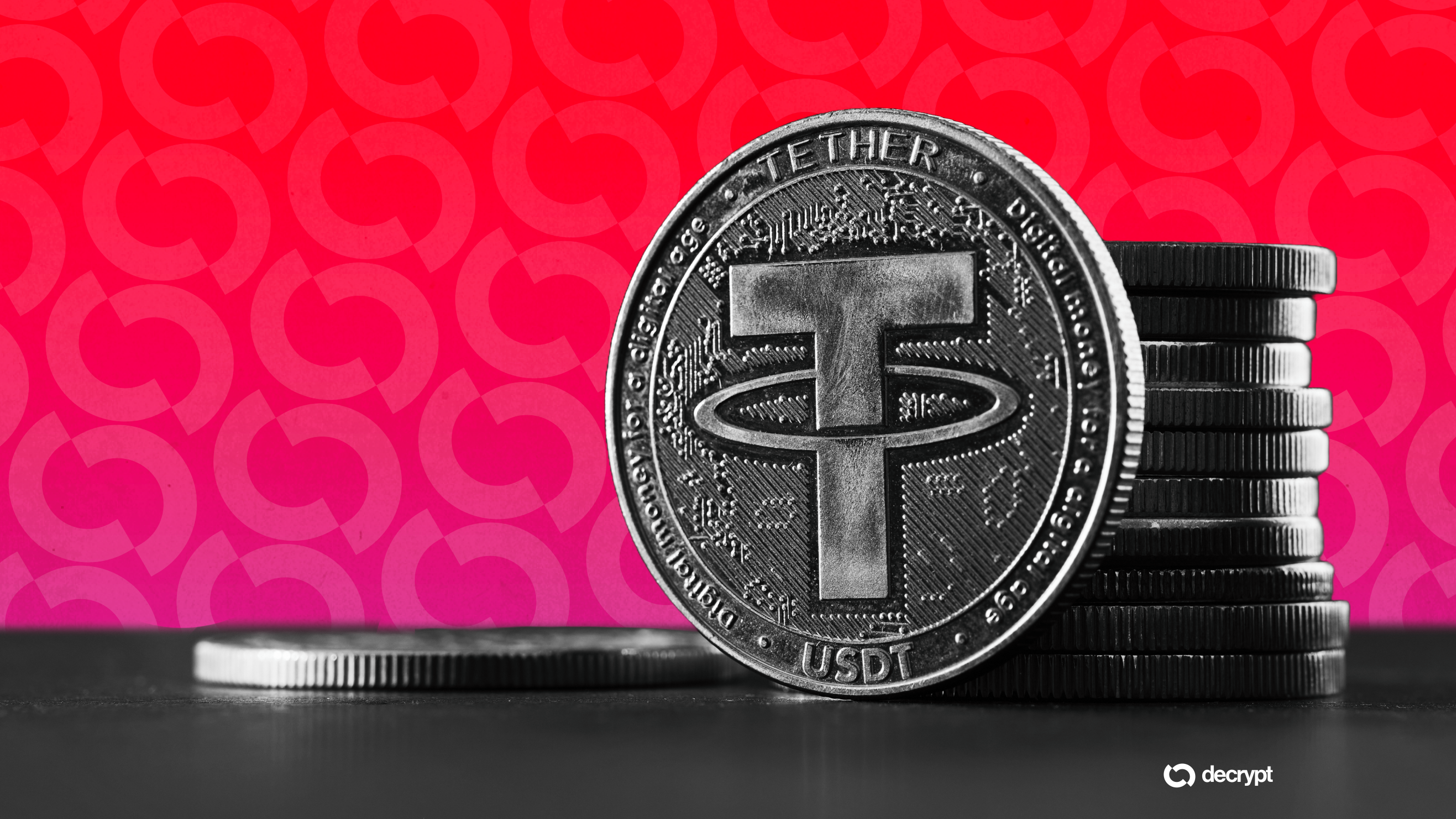
Cross-border payments company Conduit has sued Tether in New York, alleging the stablecoin issuer froze $2.76 million in USDT held in its treasury wallet and has refused to release the funds for more than a year.
According to Decrypt, Conduit filed its complaint in the U.S. District Court for the Southern District of New York. The company says Tether blocked the wallet on Sept. 24, 2025, without a valid justification. It is seeking the return of the funds and damages through claims including conversion, unjust enrichment, breach of fiduciary duty and computer fraud.
Dispute centers on Brazilian investigation
The freeze appears to be connected to a Brazilian police investigation involving entities associated with Onix, a firm that had previously used Conduit’s platform. Conduit argues that its own wallet was wrongly linked to that inquiry.
The company says the wallet was created in May 2025, almost a month after Onix completed its last transaction through Conduit. It also says the wallet never contained funds belonging to Onix.
Conduit further alleges that Brazil’s Federal Police did not identify or request the freeze. Instead, the company says the decision was made by T3 Financial Crime Unit, a unit associated with Tether. Conduit says police officials did not know which criteria Tether used to restrict the wallet.
Tether’s USDT is a stablecoin designed to maintain a value close to the U.S. dollar. When tokens are frozen, the wallet can no longer transfer them, effectively preventing the holder from using the assets even though they remain visible on the blockchain.
Conduit says freeze damaged operations
Conduit says the wallet handled more than $1.1 billion in transaction volume during the roughly four months before it was frozen. The company describes the wallet as its treasury account—the digital equivalent of an operating bank account—and says losing access to the funds caused a severe liquidity shortage.
According to the complaint, the impact included employee layoffs and the closure of offices. Conduit also alleges that Tether continued to earn interest from U.S. Treasury securities backing the frozen tokens, allowing the issuer to benefit financially while retaining control of the funds.
The lawsuit adds to broader scrutiny of Tether’s ability to restrict USDT. The company was also sued this year over a separate $42.4 million freeze, while Tether has frozen hundreds of millions of dollars in tokens it linked to illicit activity. Tether and Circle recently froze funds associated with the Bitget hack.
At the same time, Tether has faced criticism from lawmakers who argue it has not done enough to block alleged sanctions evasion. Senator Richard Blumenthal has described USDT as a “superhighway” for sanctions evasion, citing Iran’s use of the stablecoin.
Market picture
Moneyiar market data at 10:28-10:29 on Oct. 7, 2026, showed USDT at $0.999666599, essentially near its dollar target, with a 0% 24-hour change and a 0.02% seven-day gain. Ethereum was trading at $2,587.6199526294, down 4.67% over 24 hours and 3.87% over seven days. Sui stood at $1.1283016966, down 5.8% and 2.69% over those periods, respectively, while STABLE was at $0.0276512128.




