Crypto is playing a growing role in U.S. election campaigns, but not in the way the digital-asset industry hoped. Rather than presenting cryptocurrency as a voter movement or a policy success, Democratic candidates are using the sector’s campaign spending and relationship with President Donald Trump to raise questions about corruption, corporate influence and political self-dealing.
Democrats Turn Industry Spending Into a Campaign Issue
Crypto advocates have argued that voters focused on digital assets could influence election results. Yet the industry’s own political advertising has largely avoided mentioning crypto. Campaigns funded by the sector instead focus on broader issues that its political action committees believe will appeal to voters.
That has left Democrats with more room to define the subject. Candidates are pointing to the millions of dollars spent by crypto-backed groups as evidence that technology companies and wealthy donors are attempting to shape congressional races.
Former Ohio Senator Sherrod Brown has made the spending against him central to his campaign to return to the Senate. Brown, who previously chaired the Senate Banking Committee, said in a recent interview that the crypto and data-center sectors had spent about $40 million opposing him. He has presented the contest as a struggle between ordinary voters and technology billionaires, arguing that the industry is targeting his race because he would hold it accountable.
Fairshake, the leading crypto-focused super PAC, spent tens of millions of dollars trying to defeat Brown two years ago and has again begun spending heavily against him. The group’s spending in the Ohio contest could make it one of the most expensive congressional races in U.S. history.
Other Democratic candidates have used similar arguments. Florida congressional candidate Oliver Gilbert highlighted a $2 million Fairshake effort that failed to defeat him in the primary, accusing crypto interests of using undisclosed political money to attack his record. Minnesota Senate candidate Peggy Flanagan and Illinois Senate candidate Juliana Stratton also drew attention to crypto-backed advertising during their primary campaigns.
Trump’s Crypto Ties Are Under Scrutiny
The issue has become particularly potent because the midterm elections are widely being treated as a referendum on the Trump presidency. Democrats are connecting the administration’s support for digital assets with Trump’s personal financial interests in crypto.
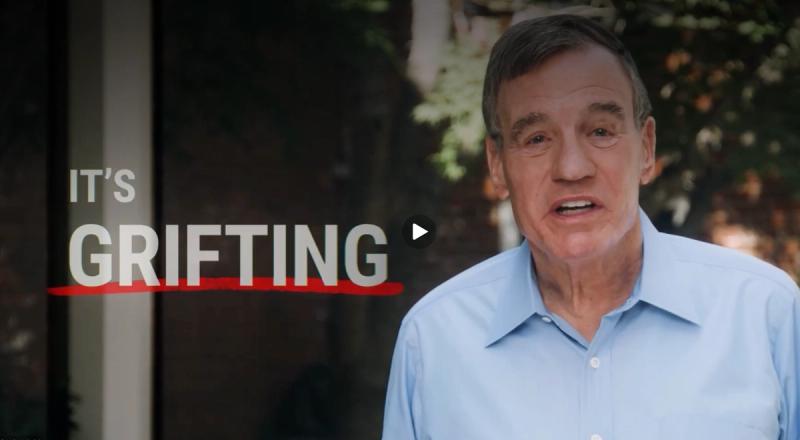
Virginia Senator Mark Warner, in a campaign advertisement, cited Trump’s gains from his crypto memecoin alongside other examples of the president’s personal financial benefits while in office. Warner characterized those activities as corruption rather than governing.
The broader political environment may give such attacks additional force. The source report cited a Fox News poll showing that 88% of respondents were at least very concerned about government corruption, making it a more prominent concern than inflation, gas prices and healthcare in that survey.
Will Ragland of the Center for American Progress said crypto interests had closely aligned themselves with Trump and Republican allies since 2024. An analysis by his organization found that the sector contributed almost $89 million to MAGA Inc., Trump’s primary super PAC, more than any other industry identified in the analysis.
That alignment has brought advantages to the industry, including regulators viewed as friendly to crypto and the withdrawal of some enforcement actions, according to the report. However, Democrats have also used Trump’s crypto businesses as part of their criticism. Ragland’s organization currently tracks the president’s crypto earnings at around $2.4 billion.
The Blockchain Association said the industry’s policy goals are not dependent on which party controls Washington. Its chief policy officer, Lindsay Fraser, said the group would continue working with Democrats and Republicans on rules intended to support U.S. leadership in digital-asset technology and innovation.
Legislative Ambitions Face a More Difficult Path
Trump’s business connections may also have affected the sector’s most important legislative objective: the Digital Asset Market Clarity Act. Democratic lawmakers demanded stronger ethics provisions for government officials, arguing that the measures acceptable to Trump did not go far enough. The market-structure bill failed to advance in the Senate last month, and the source report said its prospects for further action this year were limited.
Fairshake continues to support dozens of incumbents in the general election and has recorded a large majority of victories in this year’s primaries. Its largest donors include Coinbase, Ripple and a16z Crypto. Even so, the group’s advertisements generally do not identify crypto as the industry financing them.
A CoinDesk poll released in May found that cryptocurrency ranked low among voters’ priorities. The survey also found that respondents did not trust the Trump administration to oversee digital assets, suggesting that the sector’s political spending has not necessarily turned crypto into a decisive public issue.
The November 3 elections could shift control of the House of Representatives to Democrats and could also alter the Senate majority. Such a result would create a less favorable environment for crypto lobbyists and make passage of legislation supported by the industry more difficult. Brown’s return to a powerful committee position could further complicate those efforts.
Moneyiar Market Picture
Moneyiar data at 22:58-22:59 on October 22, 2026, showed mixed performance among the listed digital assets:
- Official Trump (TRUMP) traded at $1.7272105474, down 6.05% over 24 hours and 8.27% over seven days.
- WINkLink (WIN) traded at $0.0000605162, up 2.42% over 24 hours and 9.07% over seven days.
- Ontology Gas (ONG) traded at $0.0779967992, down 3.32% over 24 hours and 5.37% over seven days.
These market moves do not establish how voters will respond to the political debate, but they show the range of performance among the assets tracked at that time.