
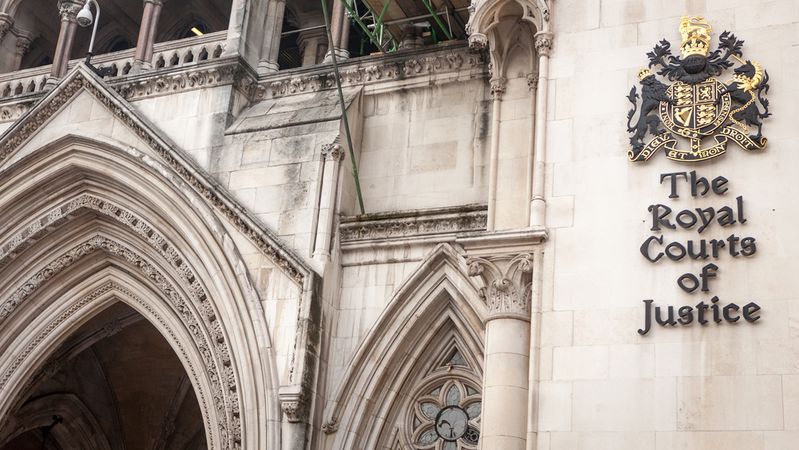
Two subsidiaries of crypto market maker DWF Labs have brought a lawsuit in London against digital-asset custodian BitGo, alleging that it sold two token holdings before agreed lock-up periods ended.
DWF Maas and Falcon Digital are seeking $114 million in damages, arguing that BitGo’s alleged early sales contributed to steep declines in the prices of Falcon Finance’s FF token and ESPORTS. The case was reported by CoinDesk, citing reporting by the Financial Times.
What the lawsuit alleges
The dispute concerns private token sales, in which digital-asset projects sell tokens to selected investors, often at a discount and under contractual conditions. A lock-up provision prevents the buyer from selling or transferring the tokens for a specified period. Such arrangements are intended to reduce the risk of a large holder immediately selling into the market after acquiring tokens.
According to the allegations filed in London’s High Court, DWF Maas, a British Virgin Islands-based company, and Panama-based Falcon Digital agreed to sell FF and ESPORTS tokens to BitGo at discounted prices. The agreements allegedly required the tokens to remain locked for three months.
DWF claims BitGo moved the tokens to cryptocurrency exchanges before the relevant unlock dates. The subsidiaries argue that this breached the contracts and caused direct financial losses by adding selling pressure while the tokens were still subject to the agreed restrictions.
The claimed damages total $114 million. That figure is based on the losses DWF says resulted from the decline in both tokens’ market prices after BitGo allegedly sold them early.
Token prices and the claimed losses
The lawsuit points to sharp falls in FF and ESPORTS during the periods covered by the alleged lock-ups. FF was worth about 8 cents at the beginning of its lock-up in early March and had fallen to approximately 7 cents by late April, according to the source material.
ESPORTS was trading at roughly 28 cents in mid-March, but had declined to about 7 cents by early June. DWF says BitGo’s alleged sales were responsible for direct losses associated with those price moves.
DWF said the discount granted to BitGo was conditional on the tokens remaining locked. The company also said the tokens were transferred to exchanges roughly two months before the first scheduled unlock.
DWF said it raised the matter with BitGo in April and May. The subsidiaries pursued court action after, according to DWF, BitGo did not provide an undertaking addressing the alleged breach. Neither DWF nor BitGo immediately responded to CoinDesk’s request for comment.
The allegations remain claims in a court case. The source material does not state that the court has reached a decision on whether BitGo breached the agreements or whether DWF will receive any damages.
Why lock-ups matter in crypto markets
Token lock-ups are a common feature of private digital-asset transactions. They can give projects time to develop their networks and may limit the immediate supply of tokens available for trading. When a large holder sells during a restricted period, the transaction can become especially significant in markets where trading volumes are limited or where prices can move quickly.
The case therefore focuses on both the contractual terms and the market impact DWF attributes to the alleged sales. Its central argument is that the price discount BitGo received came with a condition: the tokens could not be sold until the lock-up expired. BitGo’s position has not been provided in the source material.
The dispute involves BitGo, a cryptocurrency custodian, and investment subsidiaries of DWF Labs, a digital-asset market maker. It is separate from DWF’s earlier purchase of $25 million of WLFI tokens, the native asset of World Liberty Financial, a crypto project backed by President Donald Trump and his family.
That investment had drawn concern from some lawmakers in Washington over alleged links between DWF founder Andrei Grachev and Russia. Grachev was chief executive of the Russian arm of crypto exchange Huobi from 2018 to 2019. The source material also says Huobi has faced sanctions in various jurisdictions over allegations that it helped Russia evade Western sanctions.
Moneyiar market picture
Moneyiar market data recorded at the stated times on October 11, 2026, showed mixed performance among the listed assets:
- Ethereum Name Service (ENS): $6.1209405606, down 3.52% over 24 hours and 9.77% over seven days, as of 11:34 a.m. +03:30.
- Ailey (ALE): $0.2680201509, up 0.04% over 24 hours and down 0.57% over seven days, as of 11:34 a.m. +03:30.
- BAS: $0.0219923998, down 0.72% over 24 hours and 8.44% over seven days, as of 11:33 a.m. +03:30.
- Alchemy Pay (ACH): $0.0060338539, up 4.86% over 24 hours and down 1.1% over seven days, as of 11:34 a.m. +03:30.
These figures are Moneyiar data and represent market conditions at the times specified; they do not include prices for FF or ESPORTS.





