
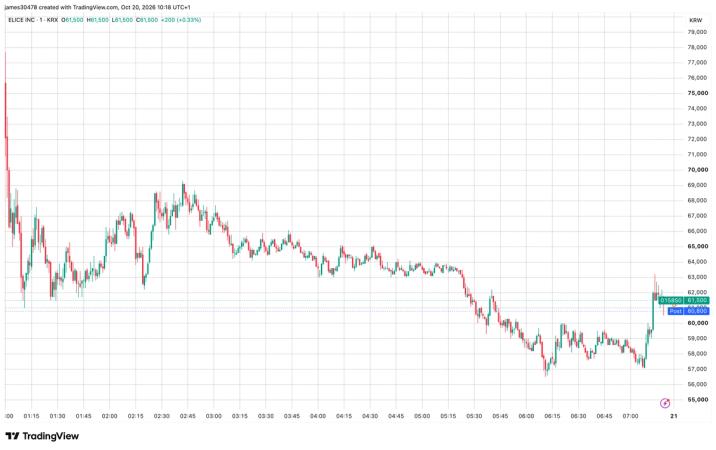
South Korean data-centre operator Elice suffered a sharp drop on its first trading day, adding to broader concerns about the value of artificial-intelligence infrastructure investments. The company’s shares closed at 60,500 won ($45.57), more than 30% below the 90,500-won initial public offering price, even though its retail offering was oversubscribed by more than 400 times, according to CoinDesk.
The debut came as investors were already questioning whether the large sums being directed toward data centres and related computing capacity will produce adequate returns. The sector has also drawn scrutiny over borrowing costs, elevated debt and the profitability of expansion projects that require substantial capital.
Elice’s IPO raised $151 million and valued the company at approximately $755 million, according to Bloomberg. The Seoul-based company is described as a neocloud provider, a type of cloud-computing business focused on supplying specialised infrastructure and capacity, including resources used for artificial-intelligence workloads.
South Korean shares fall sharply
Elice’s performance was part of a wider sell-off in South Korean equities. The benchmark KOSPI dropped almost 4% to finish at 5,552. Samsung Electronics fell around 3%, while SK Hynix declined roughly 4%.
The weak listing also affected sentiment in related U.S. trading. CoreWeave, another company operating in the neocloud space, was down a further 3% in pre-market trading. The moves showed how concerns about the economics of AI infrastructure can extend beyond a single newly listed company.
Technology shares, bitcoin and gold were also lower on Tuesday morning, according to the source material. The market reaction points to a broader risk-off backdrop around the session, although the available information does not identify a single cause for all of those moves.
Oil adds to market uncertainty
Energy markets provided another source of pressure. Brent crude rose above $111 a barrel, its highest level since May, while West Texas Intermediate traded around $100.
Brent’s premium over WTI was roughly $11 a barrel. The difference reflected persistent concerns about possible disruptions to Middle Eastern supplies and shipping risks, according to the source material. Higher oil prices can add to uncertainty for markets because they affect energy costs and inflation expectations, though the report did not provide a forecast for their economic impact.
Moneyiar market picture
Moneyiar market data at 08:32-08:33 on October 21, 2026, showed mixed performance among the listed digital assets:
- Compound (COMP): $25.5859913358, up 19.29% over 24 hours and 11.1% over seven days.
- Astar (ASTR): $0.0061698883, up 4.25% over 24 hours but down 5.44% over seven days.
- Ore (ORE): $127.2179781817, up 13.06% over 24 hours and 1.18% over seven days.
- Ark (ARK): $0.1731929864, up 0.08% over 24 hours and down 7.74% over seven days.
These figures cover a separate set of digital assets and do not measure the performance of Elice, the KOSPI or crude oil.





