
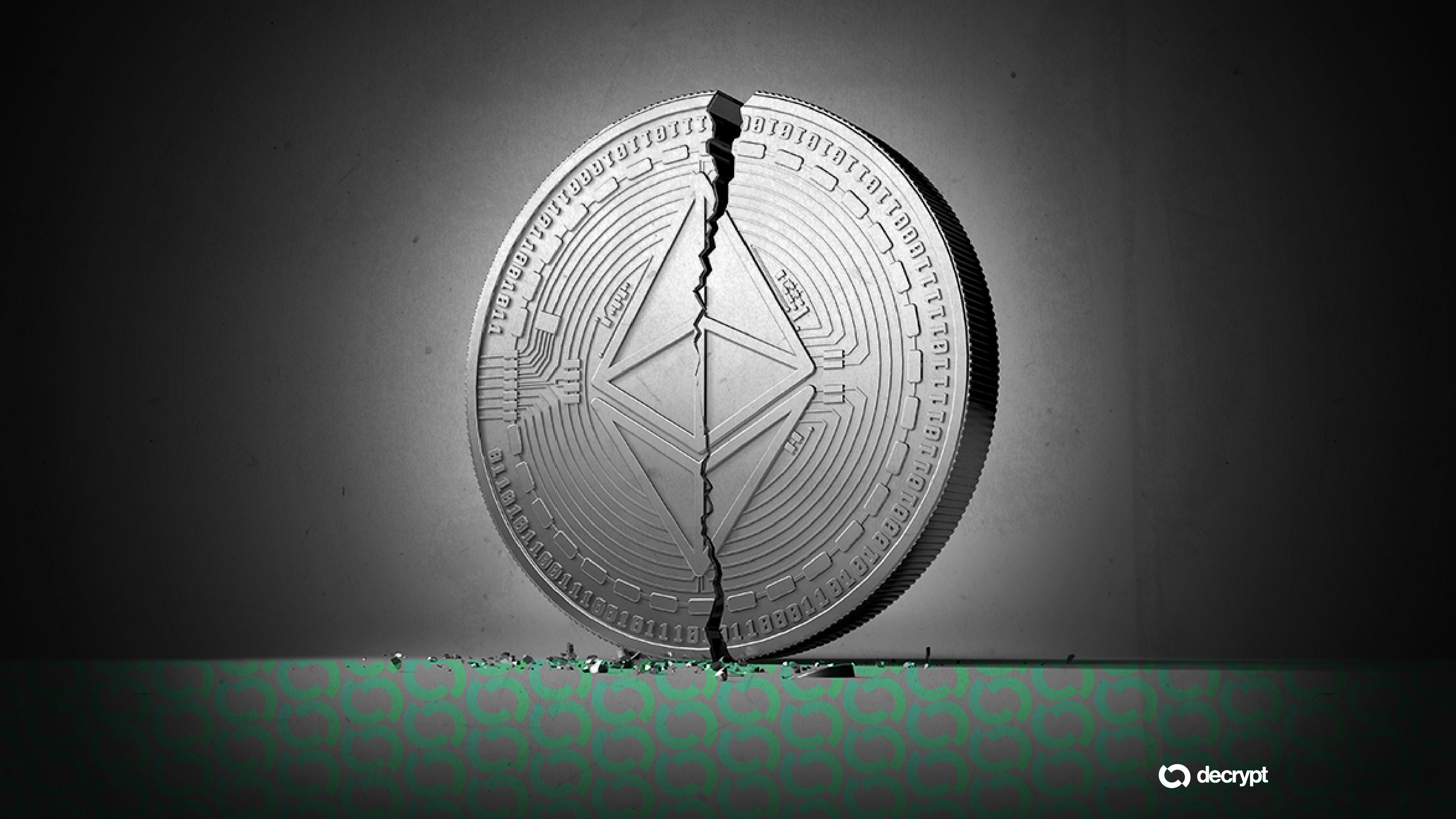
Justin Drake, a researcher at the Ethereum Foundation, has urged the cryptocurrency industry to begin planning for what he calls “bunker mode,” warning that artificial intelligence could potentially undermine the encryption used by Bitcoin and Ethereum before sufficiently powerful quantum computers arrive.
Drake said the industry should prepare calmly for a controlled, large-scale transfer of funds into new blockchain addresses whose public keys have not yet been exposed. According to Decrypt, he made the recommendation in a post on X on October 7.
His warning focuses on ECDSA, or the Elliptic Curve Digital Signature Algorithm. Bitcoin and Ethereum use this signature system to verify that a transaction was authorized by the holder of the relevant private key. When a wallet signs a transaction, its public key becomes visible on the blockchain. If ECDSA were compromised, an attacker could theoretically use that exposed public key to derive the corresponding private key and take control of the funds.
What “bunker mode” would mean
Drake’s proposed defensive step is a gradual migration of assets to fresh addresses that have never signed a transaction. These addresses keep their public keys concealed behind a cryptographic hash until they are used.
The aim would not be to introduce a new wallet technology or require an immediate change in the way people hold cryptocurrency. Instead, it would reduce the number of funds sitting in addresses with publicly visible keys if ECDSA became vulnerable.
Drake said holders should not panic or rush into moving their assets. He described the process as something the industry should begin planning in a controlled manner, with large holders among those considered for early action. He also called on Binance, Bitbank, Robinhood, Bitfinex and Tether to strengthen their cold-storage arrangements.
The researcher said wallets holding less than 50 BTC could receive partial protection from what he termed “Satoshi’s shield.” His reference was to approximately 20,000 exposed addresses associated with Bitcoin’s creator, each holding 50 BTC, which he said would likely be targeted first if the relevant cryptography were broken.
AI risk arrives ahead of the quantum timeline
Drake has previously focused on the possibility that quantum computers could eventually defeat widely used cryptographic systems. The latest warning broadens that concern: he said AI-powered mathematical progress could make ECDSA vulnerable before the arrival of “Q-Day,” the point at which quantum computers become powerful enough to break current encryption.
In the worst-case scenario, Drake said the timetable could be “months not years.” By breaking ECDSA, he was referring to the possibility of recovering a private key in about a week using available hardware such as a large GPU cluster.
He cited a burst of AI-related mathematical work, including 722 results published by OpenAI on October 6, as evidence that assumptions about the pace of progress may need to be reconsidered. Drake argued that elliptic-curve systems could be particularly exposed because of their complex mathematical structure, while hash functions are designed to resist a different class of attacks.
The warning represents a significant escalation in concerns about the long-term security of blockchain networks. In March, after a Google paper suggested quantum computers might threaten cryptography sooner than previously expected, Drake put the probability of Q-Day occurring by 2032 at 10% or higher.
Ethereum’s post-quantum response
The Ethereum Foundation established a dedicated post-quantum team earlier this year. Ethereum co-founder Vitalik Buterin has also described plans for moving the network toward cryptography designed to withstand quantum attacks.
Drake said Ethereum’s roadmap toward hash-based cryptography should now move faster, writing that he would push for “maximum defensive acceleration.” Hash-based cryptography relies on cryptographic hash functions rather than elliptic curves and is being considered as part of the broader effort to prepare blockchain systems for future threats.
The practical issue for users is therefore not an immediate instruction to abandon existing wallets. Drake’s comments instead call for exchanges, custodians, developers and asset holders to prepare before a cryptographic emergency occurs. Any transition would need to be coordinated across networks and services, since the security of exposed addresses, custody systems and transaction infrastructure are closely connected.
Moneyiar market picture
Moneyiar market data at 09:19 on October 8, 2026, showed Ethereum at $2,556.8649924604, down 1.91% over 24 hours and 4.9% over seven days. Shiba Inu was $0.0000054046, down 1.92% in 24 hours and 5.99% over seven days.
Uniswap stood at $7.7713421493, falling 3.82% over 24 hours and 13.45% over seven days. Pepe was priced at $0.0000040339, down 1.87% over 24 hours and 6.73% over the week.
These market figures describe price performance at the stated time and do not indicate whether any individual cryptocurrency is exposed to the cryptographic risks outlined by Drake.




