
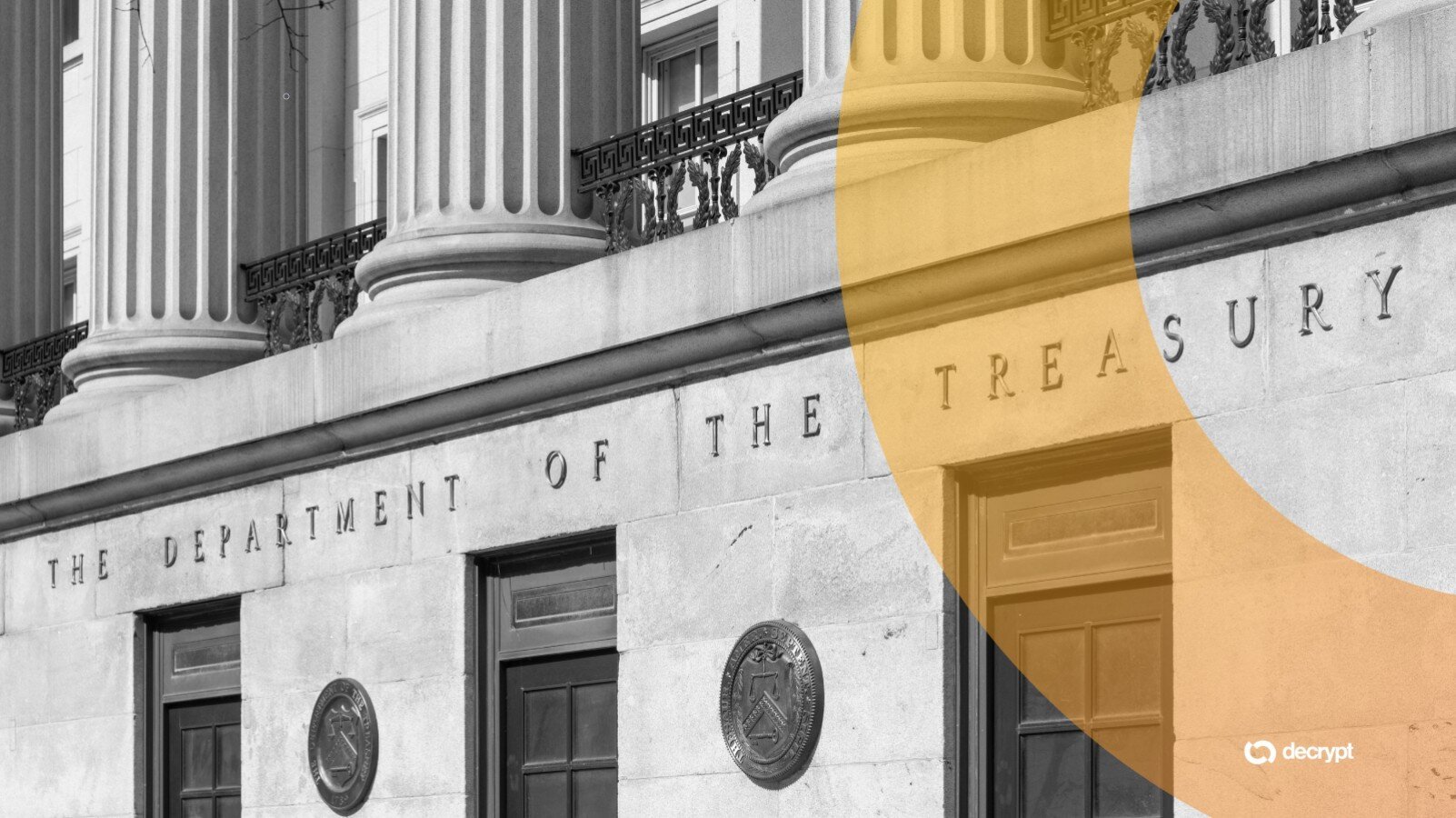
The U.S. Treasury Department’s Financial Crimes Enforcement Network has withdrawn two proposed cryptocurrency surveillance measures that had drawn strong opposition from privacy advocates and parts of the crypto industry.
According to Decrypt, FinCEN formally abandoned its long-pending “unhosted wallet” proposal and a separate plan concerning international crypto mixing. Notices filed by the agency were scheduled for publication in the Federal Register on Tuesday, marking the end of two proposals that had remained unresolved for years.
What the withdrawn wallet rule would have required
The first measure originated in December 2020, during the final weeks of President Donald Trump’s first term. It focused on transactions involving self-custody, or “unhosted,” wallets.
Unlike wallets controlled by an exchange, bank or other intermediary, self-custody wallets are managed directly by their users. The proposed rule would have required banks and money services businesses to maintain records for transactions involving those wallets when the value exceeded $3,000. Transactions above $10,000 would also have had to be reported, including information about the other party involved.
The plan would therefore have extended elements of existing Bank Secrecy Act compliance procedures to transactions involving personal crypto wallets. FinCEN said in its withdrawal notice that it would take no further action on the proposal.
For privacy advocates, the issue was not only the reporting thresholds. The proposal raised broader questions about whether people using blockchain networks without an exchange or other financial intermediary should be subject to surveillance requirements designed for traditional financial institutions.
Mixer proposal also abandoned
FinCEN separately withdrew a 2023 proposal from the Biden administration that would have designated international cryptocurrency mixing as a category of transactions presenting a “primary money laundering concern” under the USA PATRIOT Act.
Crypto mixers combine and shuffle digital coins in an effort to make the movement of funds more difficult to trace. The withdrawn proposal would have required financial institutions to report wallet addresses, transaction hashes and IP addresses connected to suspected mixing activity.
The agency said public comments had raised concerns that its broad definition of mixing could discourage lawful uses. The proposal had sought to portray international mixers as a national-security threat, but FinCEN’s notice said the agency would continue monitoring mixers for illicit finance and could take action in the future.
Both withdrawal notices referred to the White House’s July 2025 digital asset report. The notice on mixers cited the report’s support for the ability of lawful digital-asset users to transact privately on a public blockchain.
The withdrawals do not mean that all future oversight of self-custody wallets or mixing services has been ruled out. FinCEN said it may take further steps regarding mixers, while the policy authority behind potential future rules remains an important issue for industry groups.
Coin Center welcomes decision but warns of future rules
Coin Center, a Washington-based cryptocurrency policy organization that had opposed both proposals, welcomed the decision. Its executive director, Peter Van Valkenburgh, described the withdrawals as a positive development for crypto privacy, while cautioning that the Treasury Department still retains the legal authority to propose similar measures.
That warning reflects the difference between ending the current proposals and changing the underlying law. The notices remove the two specific rulemaking efforts, but they do not eliminate the possibility of future regulations based on the same statutory powers.
The decision also comes amid a broader debate about self-custody. Early last year, the Consumer Financial Protection Bureau floated an interpretive rule that could have brought wallets such as MetaMask within consumer payment law. That initiative attracted criticism from industry participants and showed that regulatory attention to user-controlled wallets extends beyond FinCEN’s anti-money-laundering proposals.
For crypto users, the immediate significance is that the two withdrawn FinCEN measures will not take effect in their proposed form. For regulators and policymakers, the continuing challenge is how to address illicit finance while preserving lawful activity and privacy on public blockchains.
Moneyiar market picture
Moneyiar market data at 10:33–10:34 a.m. on October 7, 2026, showed mixed but mostly weaker performance among the tracked crypto assets:
- Monad (MON) was priced at $0.0267137206, down 6.51% over 24 hours and 3.30% over seven days.
- OriginTrail (TRAC) stood at $0.4004083068, down 3.30% in 24 hours and 7.35% over seven days.
- Walrus (WAL) traded at $0.0364987328, down 1.57% over 24 hours but up 6.96% over seven days.
- ONEchain (ONE) was priced at $0.1377533791, down 5.90% over 24 hours and 0.33% over seven days.
These figures provide a snapshot of the assets tracked by Moneyiar at the stated time and are separate from FinCEN’s policy decision.




