
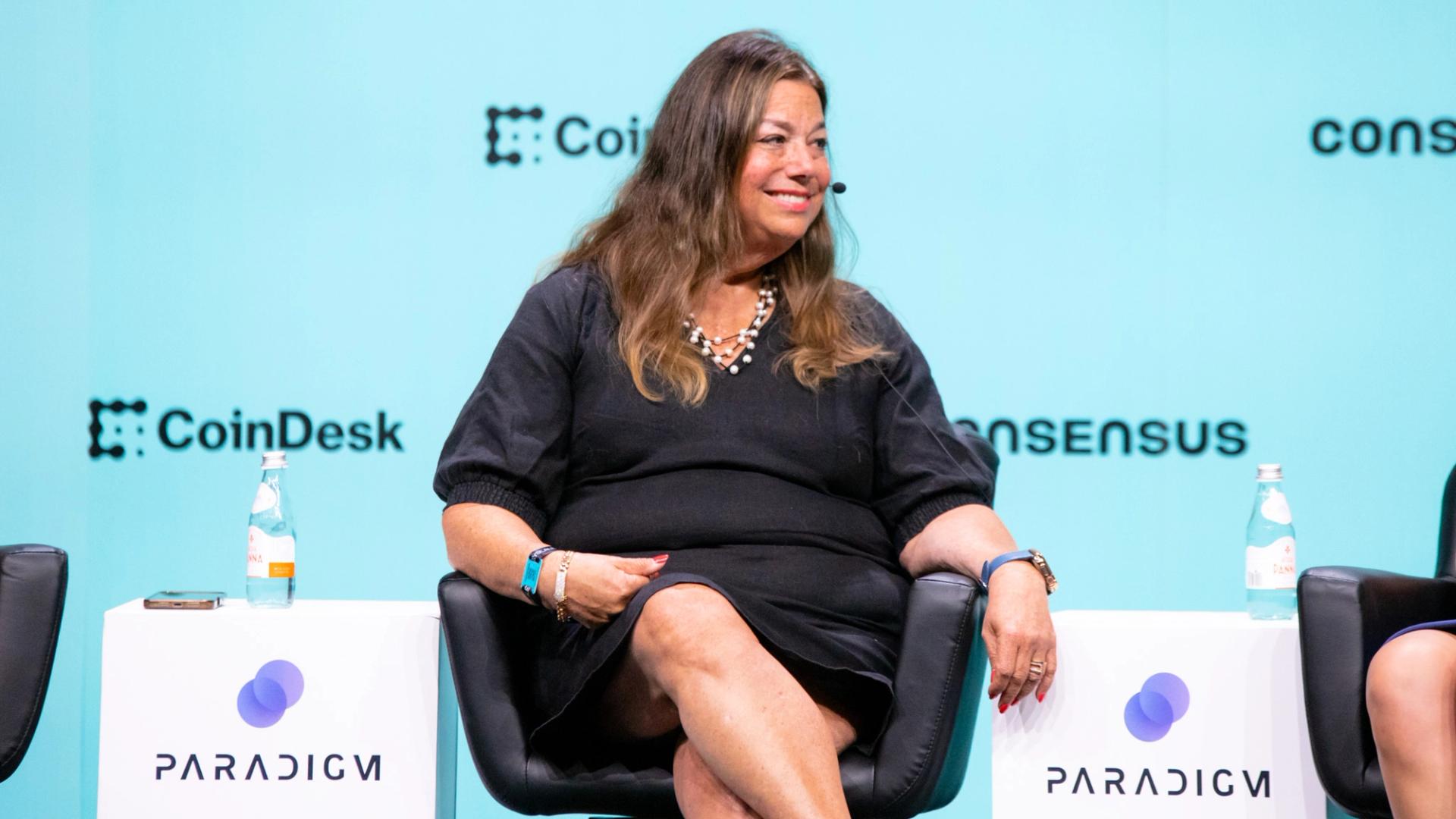
Franklin Templeton is extending its tokenized collateral program to Bybit, allowing eligible users to pledge shares in its blockchain-recorded money market funds to obtain USDT or USDC trading credit while the underlying assets continue to generate yield.
According to CoinDesk, the arrangement covers tokenized money market fund shares representing about $686 million in net assets. Rather than transferring those assets to Bybit, users will keep them with ByCustody, a regulated custody platform. Bybit will mirror the value inside its trading environment, making the shares available as collateral without placing the underlying holdings directly on the exchange.
How the Bybit arrangement works
The partnership is designed to separate custody of the assets from their use as trading collateral. A user holding Franklin Templeton’s tokenized money market shares can pledge them through the arrangement and receive access to borrowing or trading credit denominated in USDT or USDC. The fund assets remain held off-exchange, while their mirrored value supports the credit line on Bybit.
That structure aims to preserve the income-producing characteristics of the underlying money market investments while making the value usable for crypto trading. In general terms, collateral is an asset pledged to support borrowing: if the borrower does not meet the required terms, the collateral can be subject to the lender’s remedies. The source material does not specify the applicable loan-to-value ratios, liquidation thresholds, fees or eligibility requirements for Bybit users.
The shares are created and administered through Franklin Templeton’s Benji Technology Platform. The platform is the asset manager’s blockchain-integrated system for record keeping and transfer-agent functions. Franklin Templeton’s latest seven-day rate for Benji is equivalent to an annualized yield of 3.7%, according to the source material.
The service therefore combines three elements: tokenized fund ownership, regulated off-exchange custody and a representation of asset value within a crypto-exchange trading system. Tokenization refers to recording ownership or claims to an asset using blockchain-based infrastructure; it does not, in this case, mean that the underlying assets must be deposited on Bybit.
Franklin Templeton’s wider collateral strategy
The Bybit rollout is not Franklin Templeton’s first partnership of this kind. The firm already makes its tokenized money market funds available as off-exchange collateral to customers of Binance and OKX. Sandy Kaul, Franklin Templeton’s head of digital assets and innovation, said the approach allows investors to use collateral across major exchanges while continuing to earn yield.
Kaul also described the arrangement as an opportunity for asset managers to develop products for wallet-based investing, in which users hold and manage assets through digital wallets and connect them to different financial services. Her comments, included in the source material, framed collateral mirroring as a way to use the same asset more efficiently across the crypto market.
The expansion comes as crypto platforms experiment with tokenized traditional financial products as backing for trades. Crypto.com and Deribit, for example, accept BlackRock’s BUIDL fund as collateral for eligible institutional and professional users, including for derivatives positions.
For exchanges and traders, tokenized funds can potentially provide a form of collateral linked to traditional money market assets while remaining connected to digital-asset market infrastructure. For custodians and asset managers, the model creates a way to keep assets outside an exchange while allowing their value to support trading activity. The arrangement also leaves important operational details—such as valuation, custody controls and the conditions for using the credit—central to how such programs function.
Current market picture
Moneyiar market data recorded on September 25, 2026, at 22:03 +03:30, showed USDT at $0.9998097238, up 0.01% over 24 hours and 0.01% over seven days. USDC stood at $0.9999090583, with a 24-hour change of 0.00% and a seven-day gain of 0.01%.
The same Moneyiar data, recorded at 22:04 +03:30, put MON at $0.0259233891, up 3.26% in 24 hours and 3.03% over seven days. ONE was priced at $0.1452523174, down 4.60% over 24 hours but up 7.69% over seven days. USDT and USDC are stablecoins—digital tokens intended to maintain a value close to the U.S. dollar—and they are the two assets named for the credit lines in Franklin Templeton’s Bybit program.




