
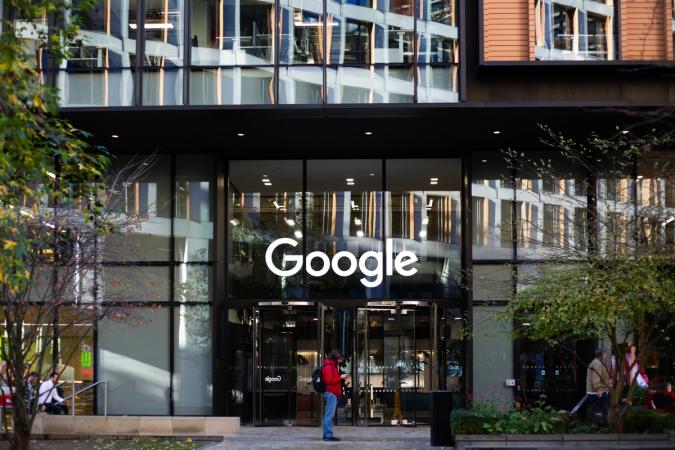
Google is preparing a new security service for banks and other financial institutions that need to safeguard and transfer cryptocurrencies and tokenized assets, as blockchain adoption increases and private-key theft remains a major industry risk.
The product, called Google Multi-Party Compute, is currently in private preview. Several major financial institutions and other design partners are testing it, while Alphabet has begun using the technology to protect its own digital assets on the Ethereum and Solana blockchains. Google has not identified the participating institutions or disclosed which assets Alphabet is securing.
The company plans to make the service commercially available in early 2027. Pricing has not been announced. Google presented the system at its inaugural digital-assets symposium in New York, according to CoinDesk.
A different approach to protecting crypto keys
A private key is the cryptographic credential that authorizes transactions from a blockchain wallet. If an attacker obtains control of that key, assets can potentially be moved without the owner’s permission. Transactions recorded on most blockchains are generally difficult or impossible to reverse, making key management especially important for banks and other regulated institutions.
Google Multi-Party Compute, or MPC, is designed to avoid placing the entire signing key in one location. Instead, the key is divided into separate fragments and distributed among different systems. A transaction can be approved only when the required participants or environments combine their information to produce a signature.
For example, a bank could keep one key share in Google Cloud, another on its own hardware and a third with a different cloud provider. The complete private key is never stored in one place, according to Google. The company also says customers retain control of their key material and that Google cannot access it in unencrypted form, even when some shares are held on its infrastructure.
The service builds on Google’s existing security capabilities but is intended specifically for digital assets. Google Cloud already offers Key Management Service and Cloud HSM for cryptographic-key protection. Its new product adds MPC-based signing, transaction policies and key recovery in a dedicated service, rather than requiring customers to assemble those functions themselves.
Before a transaction is signed, it enters Google’s Confidential Space, a hardware-isolated computing environment. A policy engine can check the transfer against rules set by the institution, including maximum amounts, permitted destination wallets and requirements for approval by multiple departments. The system can support signing thresholds such as two of three or five of seven participants.
That structure could allow institutions to use cloud infrastructure without giving one provider sole control over the credentials needed to move assets. However, Google’s system does not remove all operational risks. Security will also depend on how a customer configures the service, protects the participating systems and controls access to transaction policies.
Why the timing matters
The announcement comes as financial institutions examine blockchain-based payments, tokenized assets and digital-asset custody. These activities require reliable ways to authorize transactions while meeting internal approval and control requirements.
The industry has already experienced substantial losses connected to compromised credentials. Chainalysis found that compromised private keys represented 43.8% of cryptocurrency stolen in 2024. DeFiLlama data showed that blockchain projects had lost a cumulative $16.69 billion to hacks and exploits by June of this year, with about 40% of those losses attributed to private-key compromises.
Recent incidents illustrate the potential consequences. A March attack on stablecoin protocol Resolv involved a compromised private key controlling a privileged account and weaknesses in its minting system; the attacker extracted about $25 million. In June, attackers compromised private keys belonging to a Humanity Protocol foundation member and drained more than $32 million from at least 17 wallets. The project’s token subsequently fell more than 80%.
Google is also presenting MPC as part of a response to increasingly sophisticated cyber threats. Chainalysis reported that scams linked to AI-tool vendors extracted an average of $3.2 million per operation in 2025, compared with $719,000 for scams without such links. That comparison does not establish that AI directly caused the higher proceeds, but it indicates that fraudsters may be operating at greater scale.
Google’s current protections focus on compromised credentials and unauthorized transfers, not on an AI breakthrough against the cryptography used by major blockchains. The service’s policy checks may stop transactions that violate preset rules, but they cannot necessarily prevent a legitimate user from being tricked into approving a malicious transfer.
Preparing for future cryptography
Quantum computing represents a separate, longer-term concern. Google says the architecture is designed to accommodate post-quantum cryptography, which aims to protect digital signatures from sufficiently powerful quantum computers. The company plans to support conventional ECDSA and Ed25519 signing algorithms when the service becomes generally available.
Google has not given a timetable for post-quantum signing. It says upgrades could be introduced as blockchain networks adopt the required cryptography, without forcing institutions to redesign their systems or suspend operations.
The company’s entry places it alongside specialist providers such as Fireblocks, Fordefi and BitGo. Google is emphasizing its banking relationships and broader security infrastructure, while positioning itself as a neutral technology supplier for institutions that want to operate their own custody businesses.
The commercial test will be whether banks regard the distributed architecture as a meaningful improvement over existing custody arrangements and how much infrastructure they are willing to place with a major cloud provider. Google’s planned launch also does not eliminate the need for institutions to evaluate third-party software, operational controls and policy management.
Moneyiar market picture
Moneyiar data at 22:39 on October 25, 2026, showed Ethereum at $2,342.0570017305, up 0.02% over 24 hours and down 1.77% over seven days. Solana was $101.5978856709, up 0.03% in 24 hours and down 1.52% over seven days.
Shiba Inu stood at $0.0000048638, down 0.75% over 24 hours and 1.21% over seven days. Uniswap was $6.9787690874, up 2.51% in 24 hours and down 2.12% over seven days.




