
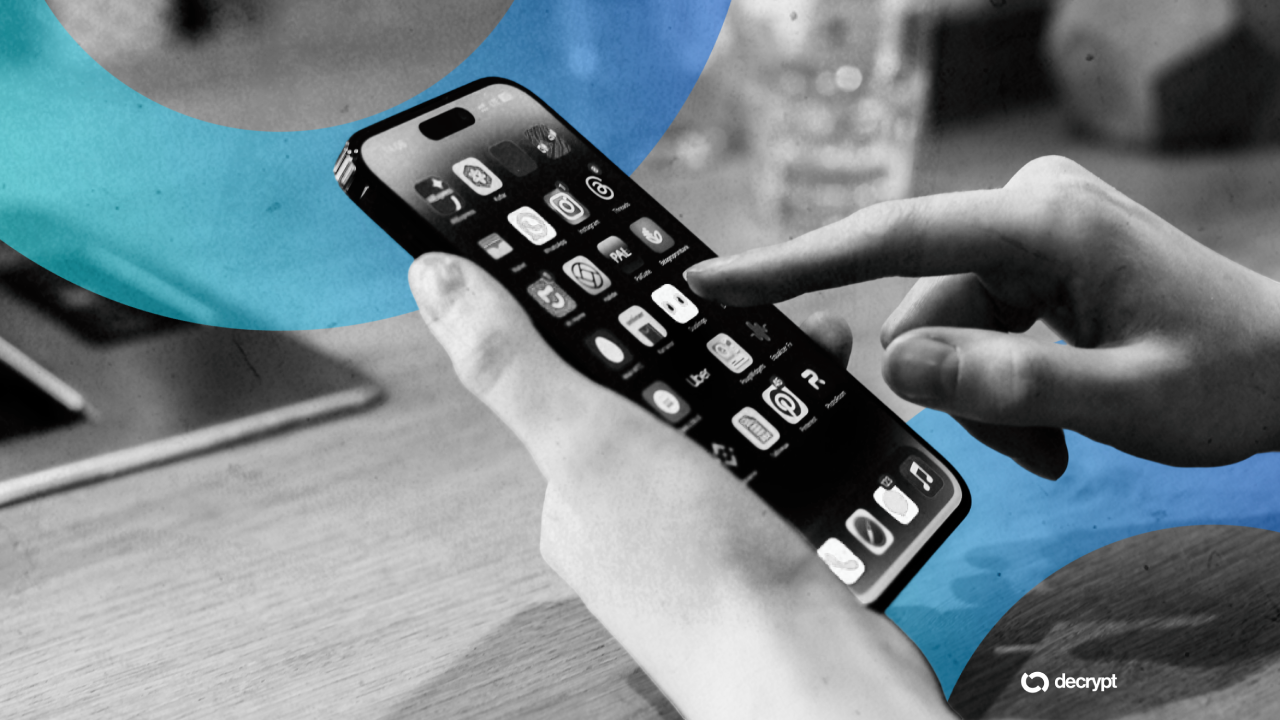
Videos showing Apple’s iOS running on Android phones have attracted millions of views, highlighting a technically difficult effort to separate smartphone hardware from the operating system normally tied to it.
According to Decrypt, demonstrations posted on X include iOS 16 booting on a Redmi Note 12 and a Nothing 3a. The Redmi video, posted on October 18, had passed 2 million views. The projects remain experimental: key phone functions do not work, and the available builds are not ready for everyday use.
What the demonstrations show
Apple designs iOS to run on iPhone hardware, creating a close relationship between the device and its operating system. The recent Android-phone demonstrations challenge that assumption by placing iOS components on hardware built for Google’s mobile platform.
The most accessible public code is an open-source GitHub project called ios-sweet. It is built for the Redmi Note 10 Pro and combines Apple’s XNU kernel with unmodified iOS 16.7.16 files taken from an iPhone X. XNU is the core part of an operating system: it manages communication between software and components such as the processor, memory and storage.
The project modifies XNU so it can work with the Redmi’s Qualcomm Snapdragon 732G chip. Its developers describe the result as an “experimental bring-up, not a usable phone OS.” The device can reach the lock screen, home screen, Control Center and Settings, while the touchscreen and physical buttons respond.
That progress comes with major limitations. Wi-Fi, Bluetooth, mobile data, audio and the camera are unavailable. The gesture used to leave an app does not work, and the lack of a graphics driver leaves the processor drawing the display at approximately 20 to 30 frames per second. The first boot can also take four to five minutes while the phone remains on Apple’s logo.
The Redmi Note 12 clip that circulated widely is separate from the public ios-sweet project’s stated Redmi Note 10 Pro target. Another demonstration showed a build running on a Nothing 3a, while a group known as OOSexGang says its HackiOS project runs iOS 16.5 on a Poco X5 Pro.
A reverse direction from earlier projects
The achievement is notable because the better-known examples historically moved in the opposite direction. In April 2010, the iDroid project enabled early iPhones to boot Android. Around a decade later, security company Corellium’s Project Sandcastle brought Android 10 to iPhones using Apple’s A10 chip.
Running iOS on non-Apple hardware has proved more difficult. The HackiOS effort reportedly uses a custom UEFI, the firmware that starts a device, together with the XNU kernel. However, the researcher sharing the demonstration said that the project had no public source code or independent verification at the time of reporting.
One newer clip showed Safari downloading an Android APK installation file from APKMirror before failing to open it. That behavior is consistent with the software mismatch: an APK is an Android app package, while iOS does not natively run Android applications.
The work is part of a wider enthusiast interest in making software operate outside the environments for which it was designed. Recent advances in AI-assisted coding have made it easier to examine and adapt complex software, while tools such as the free Reverse Engineer Anything, or REA, toolkit are designed to help AI coding assistants take software apart. One demonstration associated with that broader trend showed Grand Theft Auto V running on iOS.
The source material also notes that security firm Calif.io recently jailbroke an iPhone 18 Pro on stage at the Hexacon conference in Paris. Jailbreaking removes Apple’s software restrictions and gives users deeper control over a device, although it is distinct from the effort to boot iOS on Android hardware.
Security and practical limits
For now, the public results are better understood as a proof of concept than as an alternative way to use an iPhone operating system. Reaching the iOS home screen demonstrates that the kernel and system files can be made to start on selected Android hardware, but a phone needs working connectivity, sound, cameras, graphics and input controls to be useful in daily life.
The installation process also carries clear risks. It erases the Android user data stored on the phone and leaves most security protections disabled. The project’s developers advise users not to keep personal information on a device running the experimental software.
The demonstrations therefore matter mainly for what they show about software compatibility and reverse engineering. They do not yet indicate that Android phones can provide a complete iOS experience, or that the projects are ready for general release.
Moneyiar market picture
Moneyiar data at 22:24 on October 19, 2026, showed mixed performance among the listed digital assets:
- ECOMI (OMI) was priced at $0.0002782409, up 0.84% over 24 hours and down 0.66% over seven days.
- ONEchain (ONE) was at $0.1027786178, up 2.59% over 24 hours and down 17.54% over seven days.
- Notcoin (NOT) stood at $0.0003882923, up 4.30% over 24 hours and down 13.73% over seven days.
- Propy (PRO) traded at $0.3398133838, down 1.88% over 24 hours and down 4.33% over seven days.




