
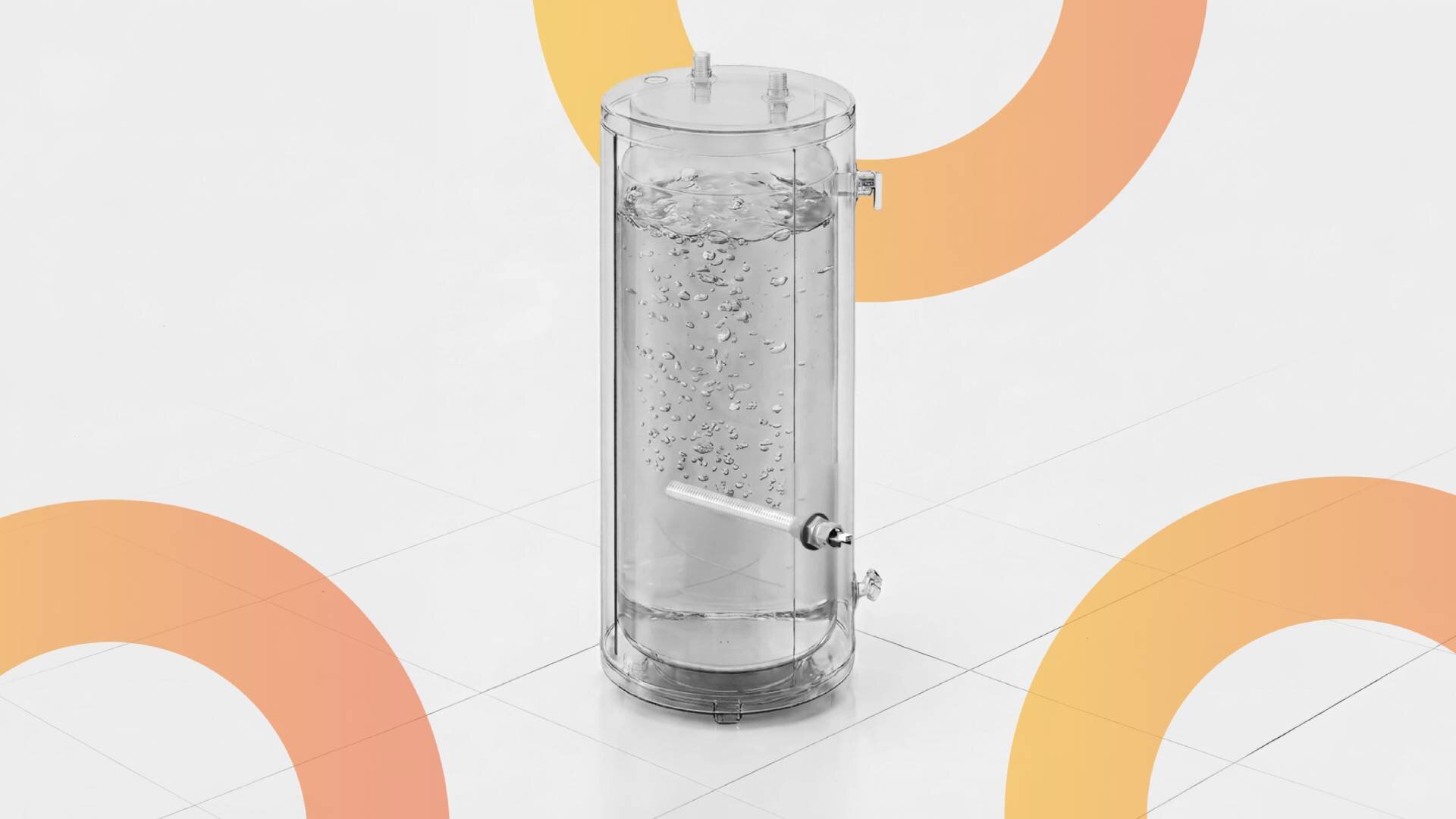
Heatbit is taking its home Bitcoin-mining concept into the utility room with Bitwater, a replacement heating element designed to mine cryptocurrency while warming water in an existing electric tank.
The company says the device uses 20 Bitcoin-mining chips in place of the resistance wire found in a conventional electric water-heater element. As the chips operate, the heat they generate is transferred into the tank’s water. Heatbit’s pitch is that households can use electricity they were already spending on hot water while also contributing computing power to the Bitcoin network.
According to Decrypt, Bitwater was announced on October 22 and is intended for standard electric water heaters in the United States and Canada. The first production run, called the Genesis batch, is available to preorder for $899. Later batches are expected to cost as much as $1,299. The company says refundable preorders are scheduled to ship in the first quarter of 2027.
How Bitwater works
Bitwater is built around 20 BM1370 mining chips from Bitmain. Heatbit rates the element at up to 34 terahashes per second, or TH/s, while consuming as much as 600 watts. Its stated efficiency is 12 joules per terahash.
Unlike a conventional Bitcoin-mining machine that typically requires fans to remove waste heat, Bitwater uses the water in the tank to cool the chips. Heatbit says this design eliminates fans and keeps the unit quiet. The company describes the resulting proposition simply: the device produces hot water and mines Bitcoin using the same electricity.
The unit is designed to screw into the existing one-inch opening used by standard electric water-heater elements. Heatbit says it fits regular 30- to 80-gallon tanks made by manufacturers including A. O. Smith, Rheem, Bradford White, Whirlpool and GE. Its stated installation process involves turning off the circuit breaker, draining the tank, removing the existing element and installing Bitwater with the supplied wrench. The company says no plumbing modifications or additional electrical circuit are required.
At 600 watts, Bitwater uses substantially less power than the 4,500-watt elements common in U.S. tanks. That means it heats water more gradually and operates for longer periods, according to Heatbit. When hot-water demand rises, the tank’s existing upper element remains available as backup.
An accompanying app is intended to show the water temperature, mining hashrate and earnings. Customers can either mine independently, known as solo mining, or connect to a mining pool. Heatbit says mined Bitcoin is sent to an address controlled by the user.
Mining returns depend on network conditions
Heatbit has not released its own formal earnings projection. It shared an estimate from xAI’s Grok chatbot of roughly $1 to $1.25 per day, while emphasizing that estimates are not guarantees.
Decrypt’s calculation, using a hashprice of approximately $36.73 per petahash per second per day from Hashrate Index, placed the potential output at about $1.25 per day when Bitwater runs at its full 34 TH/s. That would equal approximately $455 over a year before considering the purchase price, household electricity arrangements or changes in mining conditions.
The figures are not fixed. Bitcoin mining revenue changes with the cryptocurrency’s price and the network’s difficulty, among other factors. Heatbit says Bitwater is designed to operate more than 80% of the time, but actual output would depend on how the product is used and prevailing network economics.
Heatbit previously applied a similar idea to space heating. Its first product, a space heater with an integrated Bitcoin miner, sold for almost $700 in 2023. The company’s argument then was that mining revenue could offset some of the cost of heat that a household would otherwise produce with a conventional heater. Heatbit has also indicated that it is working on a product for homes using gas water heaters, although it has not provided details in the material available.
Heatbit’s decentralization argument
The company is presenting Bitwater not only as a household appliance but also as a way to distribute Bitcoin-mining capacity among individual homes. Heatbit says households worldwide consume about 300 terawatt-hours of electricity annually to heat water, compared with approximately 170 terawatt-hours used by the entire Bitcoin network.
That argument comes as some large Bitcoin miners expand into artificial-intelligence infrastructure. Bernstein has said Bitcoin miners have entered 17 deals worth more than $110 billion over two years, involving about 6 gigawatts of contracted power for companies including Google, Amazon, Microsoft, Nvidia and CoreWeave. The bank expects AI revenue among the miners it covers to rise from $1.2 billion in 2026 to $10.7 billion by 2030.
Bitcoin mining and AI data centers have different power requirements. Mining operations can be switched off to reduce pressure on the electricity grid, while AI facilities generally require continuous power. Heatbit is using that flexibility to frame small, distributed miners as an alternative to concentrating mining capacity in large commercial facilities.
Moneyiar market picture
Moneyiar market data recorded at 08:19 on October 24, 2026, showed Bitcoin at $80,680.6637, down 1.28% over 24 hours and 1.16% over seven days.
The same Moneyiar data showed USD.AI (CHIP) at $0.0419467878, down 8.22% in 24 hours and 9.36% over seven days. Nesa (NES) was priced at $0.1141532591 at 07:54, up 0.56% over 24 hours but down 6.65% over seven days. These market figures provide a snapshot of prices at the stated times; they do not represent a forecast for Bitwater’s mining revenue.




