
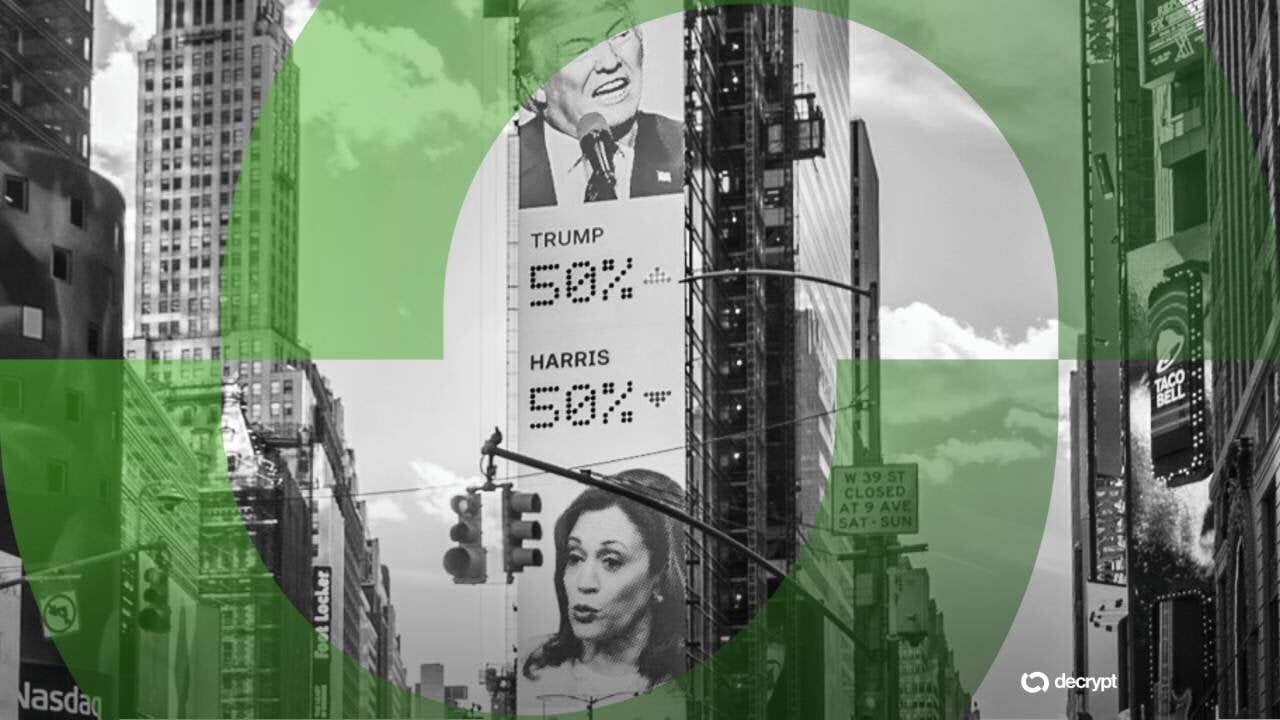
A new House proposal would make it a civil offense for federal candidates, their spouses and campaign committees to trade prediction-market contracts tied to the candidates’ own elections.
Representative Don Davis, a Democrat from North Carolina, introduced the No Betting on Your Own Race Act on Monday. According to Decrypt, the bill would impose a fine of $10,000 for each violation or three times the net financial gain from the transaction, whichever amount is larger.
The measure would amend federal election law and apply to candidates for federal office. Davis compared the proposed restriction with rules barring athletes from betting on games in which they participate, arguing that candidates should not be able to trade contracts linked to their own political contests.
What the bill would prohibit
The proposed ban is broader than a simple prohibition on betting that a candidate will win or lose. It would cover contracts that settle on whether a person remains a candidate, as well as contracts tied to vote share, the margin of victory or defeat, and a candidate’s position in a race.
The restriction would apply to several people and entities connected to a campaign:
- The federal candidate.
- The candidate’s spouse and dependent child.
- The candidate’s authorized campaign committee.
The bill would also address indirect participation. A violation could involve inducing another person to trade, retaining a beneficial interest in a position under a different name, or financing another person’s trade while knowing the purpose of that position.
Its definition of a political event contract would extend beyond general-election outcomes. It would include contracts related to caucuses, nominations, control of Congress and other political or governmental events that the Commodity Futures Trading Commission, or CFTC, designates through regulation. The ban would cover conduct from the date the legislation is enacted.
Duties and protections for trading platforms
A significant portion of the proposal is directed at prediction-market exchanges and their employees rather than only at candidates. Platforms and staff would not face penalties under the bill’s prohibition. They would also receive protection from liability when acting in good faith to prevent a suspected breach.
That protection would cover actions such as restricting, suspending or closing an account, along with cancelling, voiding or unwinding a position. Platforms could also report suspected violations to the CFTC, the attorney general or the Federal Election Commission without liability. The bill would not require them to inform the person who was reported.
To help exchanges identify covered participants, the FEC would be required to publish a free, machine-readable list of every federal candidate. The list would be updated at least weekly and would include each candidate’s name, campaign-committee identifier, office sought and the dates on which the person entered and left the race.
The FEC and state election boards would also have to notify candidates about the restrictions when they file to run. The bill includes a limited transition period: if a person already holds a position that becomes covered after declaring candidacy, holding or selling it would not constitute an offense during the minimum divestment period allowed by the platform.
Background on the proposal
Prediction markets offer contracts whose payouts depend on the outcome of a future event. Political contracts can be structured around election winners, vote margins or other measurable developments. The bill is aimed at preventing candidates and closely connected campaign interests from having a direct financial position in markets tied to their own political prospects.
Exchanges have largely handled such situations through their own policies so far. Decrypt reported that Kalshi fined several congressional candidates earlier in 2026 for trading on their own races and has suspended candidates since then.
Separately, the CFTC is investigating former Representative Adam Kinzinger over trades connected to his own presidential pardon. Agency staff also warned exchanges last month that contracts settling on the conduct of named individuals should generally be presumed vulnerable to manipulation.
The proposal therefore comes amid wider scrutiny of contracts involving identifiable political figures. The source material does not indicate whether the bill has passed either chamber of Congress or received a vote.
Moneyiar market picture
Moneyiar market data shows the following prices and changes at the stated times:
- WOULD: $0.0351412837, up 0.33% over 24 hours and 10.6% over seven days, as of September 22, 2026, at 21:04 +03:30.
- BILL: $0.0139971939, down 0.59% over 24 hours and up 10.04% over seven days, as of September 21, 2026, at 01:39 +03:30.
- RED: $0.1500459344, down 9.5% over 24 hours and 10.22% over seven days, as of October 7, 2026, at 10:33 +03:30.
- ACE: $0.2793144821, up 45.34% over 24 hours and 146.86% over seven days, as of August 20, 2026, at 18:44 +03:30.
These figures are Moneyiar data at the times shown and are separate from the proposed election-trading restrictions.





