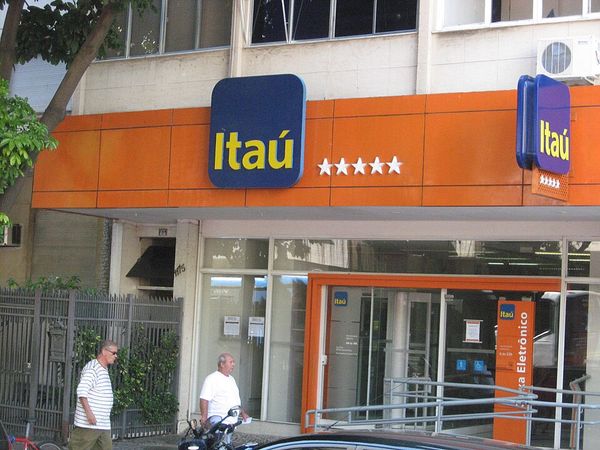
Itaú Unibanco has notified Brazil’s central bank that it is operating cryptocurrency trading and custody services under the country’s new digital-asset framework, making it the first bank in Brazil to formalize those activities under the rules.
The notification was submitted on Tuesday, ahead of the Oct. 30 compliance deadline. CoinDesk reported the development, citing Brazilian news outlet Valor Econômico. Itaú is Brazil’s largest private bank and has offered its crypto service since December 2023.
What Itaú notified the central bank about
The bank’s activities cover both the buying and selling of cryptoassets and the safekeeping of those assets for customers. Under Brazil’s regulatory terminology, that combination falls within the brokerage category.
Itaú’s service currently supports 15 cryptoassets. Its offering includes bitcoin, ether and USDC, a stablecoin designed to maintain a value pegged to the U.S. dollar. The bank has not disclosed how many customers use the service or the trading volumes generated since its launch.
The notification process is available to financial institutions that already hold authorization from Brazil’s central bank. Rather than applying for a new operating license for the crypto activity, eligible banks can notify the regulator that they are providing the services and submit the required documentation.
Dedicated virtual-asset service providers, commonly known as VASPs, face a different route. They must apply for authorization to operate under the framework. Brazilian crypto exchange Mercado Bitcoin has said it is seeking authorization to operate as a virtual-asset brokerage.
Brazil’s compliance timetable
The rules are set out in Central Bank Resolution 520, which took effect on Feb. 2. The resolution gave financial institutions that were already active in crypto 270 days to notify the central bank of their operations.
A notification must include independent technical certification confirming that the institution meets the regulator’s requirements. The deadline for submissions is Oct. 30. Institutions that fail to meet the deadline must stop providing crypto services within 30 days.
The same Oct. 30 deadline applies to authorization applications from dedicated crypto providers that were already operating when the rules took effect. This creates separate compliance tracks: established banks such as Itaú can use the notification process, while specialist crypto firms must seek authorization.
The central bank has also set restrictions affecting relationships between authorized institutions and providers that have not received approval. In September, it moved to Nov. 6 the date from which banks and other authorized institutions will be prohibited from conducting crypto business with unauthorized providers.
Why the move matters
Itaú’s filing places a major traditional financial institution at the front of Brazil’s formal regulatory transition for digital-asset services. The bank was already offering crypto trading and custody, but the notification brings those operations within the framework created by Resolution 520.
The distinction between trading and custody is important. Trading allows customers to transact in cryptoassets, while custody involves holding or safeguarding those assets. By providing both services, Itaú fits the brokerage category identified by the rules.
The framework also clarifies how different types of market participants must engage with the regulator. Banks that already have central-bank authorization are not treated in the same way as standalone crypto companies. The latter must obtain a specific authorization, while existing banks must complete the notification process and demonstrate compliance through independent technical certification.
Itaú has not released customer or volume figures, so the size of its crypto operation cannot be assessed from the information available. Its disclosed asset list nevertheless shows that the service extends beyond the two largest cryptocurrencies, bitcoin and ether, to include USDC.
Current market picture
Moneyiar market data, recorded on Oct. 25, 2026, at approximately 22:38-22:39 local time, showed mixed performance among the tracked cryptoassets:
- Uniswap (UNI) was at $6.9787690874, up 2.51% over 24 hours and down 2.12% over seven days.
- Four (FORM) was at $0.2210079715, up 0.66% over 24 hours and down 7.29% over seven days.
- Comedian (BAN) was at $0.0575169485, down 4.44% over 24 hours and up 7.23% over seven days.
- Zilliqa (ZIL) was at $0.0018973706, down 5.04% over 24 hours and down 14.28% over seven days.
These figures cover assets tracked by Moneyiar and do not represent Itaú’s customer activity or the performance of the 15 cryptoassets available through its service.