
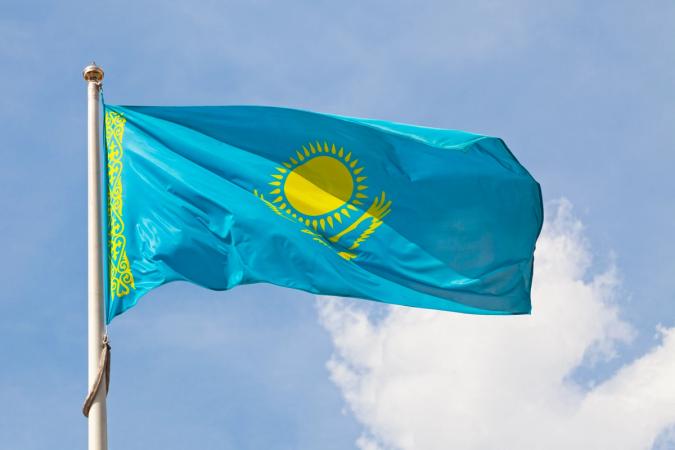
Kazakhstan’s central bank has joined Tether and the Alatau City Authority to examine whether a stablecoin linked to the country’s currency could support digital-money use cases, while also developing a framework for putting real-world assets on blockchain networks.
The agreement is exploratory. It does not commit Kazakhstan to issuing a tenge-pegged token, adopting Tether’s technology or launching a permanent digital-asset programme. Instead, the parties will study international experience, identify possible applications and prepare a proposal for a pilot project.
According to CoinDesk, the National Bank of Kazakhstan, Tether and the Alatau City Authority signed a memorandum of understanding covering stablecoins, tokenization and decentralized finance. The initiative places Kazakhstan’s central bank at the centre of discussions about how blockchain-based financial products might be tested under the country’s existing digital-asset framework.
Study of a potential tenge stablecoin
One part of the memorandum focuses on a possible stablecoin pegged to the Kazakhstani tenge. A stablecoin is a digital token designed to maintain a relatively stable value against an underlying currency or asset. In this case, the proposed reference would be Kazakhstan’s national currency rather than the US dollar.
The group plans to examine how comparable stablecoins operate in other markets and consider practical uses for digital money. Those findings would feed into a proposal for a pilot. The source material does not say that the central bank has decided to issue the token, nor does it provide a launch date, proposed supply or specific use case.
The parties will also hold workshops covering stablecoin reserves, issuance and tokenization. The sessions are intended for central bank employees and officials from other government agencies, giving policymakers an opportunity to review the operational and regulatory issues involved before any pilot moves forward.
Tokenizing assets in Alatau City
The partnership extends beyond currency-linked digital tokens. Kazakhstan, Tether and the Alatau City Authority also intend to create a framework for tokenizing real-world assets.
Tokenization refers to representing an asset on a blockchain through a digital token. Depending on the design and applicable rules, such tokens could represent assets such as bonds or real estate and could potentially be transferred, traded or used as collateral through digital networks. The agreement says the parties will first identify which assets may be suitable for experimentation.
A pilot is planned for Alatau City, which operates under a special legal regime intended in part to encourage financial technology. That location gives the project a defined setting in which the authorities can examine possible applications and the regulatory treatment of tokenized assets.
Tether’s Hadron platform is among the technologies being considered. Hadron provides infrastructure for issuing and managing tokenized assets. However, the memorandum does not require Kazakhstan to use the platform, and it does not establish that a tokenized-asset pilot will definitely proceed.
Tether’s expanding role
Tether is best known for issuing USDT, the largest US-dollar stablecoin. The source material puts USDT’s circulation at about $140 billion. Tether also issues XAUT, a tokenized gold product valued at roughly $3.3 billion and backed by physical bullion held in Swiss vaults.
The company has increasingly moved into areas beyond its core stablecoin business, including payments, energy, commodities and tokenization infrastructure. Its involvement in Kazakhstan therefore reflects both the country’s interest in digital-asset experimentation and Tether’s effort to develop tools for a broader digital-finance ecosystem.
For Kazakhstan, the memorandum provides a way to investigate stablecoin issuance and asset tokenization without announcing a final product. The central bank has been developing the country’s digital-asset framework while maintaining a close role in the process. Deputy Governor Binur Zhalenov said the institution intends to study international best practices as part of its tokenization pilots.
Market picture
Moneyiar market data recorded at 09:03-09:04 on October 8, 2026, showed USDT at $0.9994739222, down 0.02% over 24 hours and up 0.01% over seven days. Ethereum was at $2,562.1555393489, down 1.83% in 24 hours and 4.62% over seven days, while Chainlink stood at $13.0884246422, down 4.34% and 8.05% over the same periods.
The STABLE token was priced at $0.0261474301, with a 24-hour decline of 6.26% and a seven-day decline of 6.67%. These figures are Moneyiar data at the stated times and describe market prices, not the terms or expected outcome of Kazakhstan’s proposed study.




