
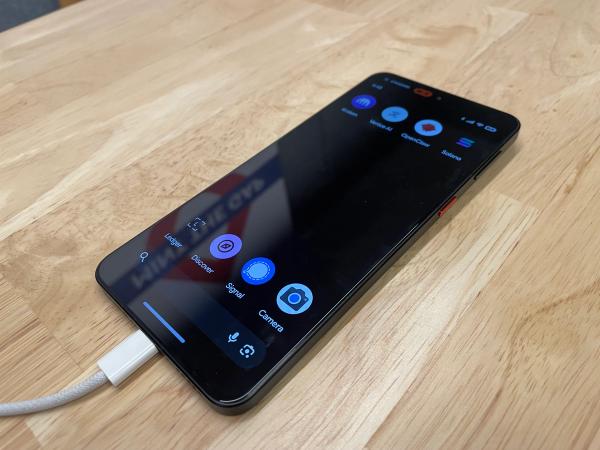
Ledger is developing a new hardware wallet that will operate more like a conventional smartphone, while retaining a protected environment for managing digital assets. The company’s Ledger Atom is scheduled for release in mid-2027, according to CoinDesk.
A crypto wallet designed for everyday use
The Atom will run Android, allowing users to install familiar applications including WhatsApp, Instagram and TikTok. It will also integrate with the OpenClaw artificial-intelligence assistant, according to the company’s plans.
Users will be able to move between ordinary smartphone functions and a protected mode intended for digital-asset management. That represents a significant change from the traditional hardware-wallet model, in which devices are generally designed primarily to secure private keys and are often stored away when they are not being used.
Private keys are the credentials that control access to crypto assets. A recovery phrase—typically a sequence of words generated when a wallet is created—serves as a critical backup for restoring access. Keeping those credentials away from exposed software and hardware is a central purpose of a hardware wallet.
Ledger’s approach is to combine that security-focused design with the functions of a smartphone. The company said the Atom will be manufactured at its facility in Vietnam, where it produces its more complex devices.
Security measures follow CryptoBilis breach
The announcement comes after a supply-chain security incident involving Malaysian distributor CryptoBilis. Attackers reportedly altered devices before they reached customers, highlighting the risks that can arise before a hardware wallet is delivered to its owner.
Onchain researchers estimated that losses connected to the incident could reach $93.2 million across more than 300 wallets. Tether also froze $10 million in USDT, its dollar-pegged stablecoin, that was linked to the theft.
The affected wallets allegedly contained concealed chips capable of reading signals from device screens. Those chips were reportedly used to intercept users’ 24-word recovery phrases, which should normally be known only to the wallet owner.
The incident primarily affected users in Southeast Asia. Ledger cited research indicating that no losses had been reported in Europe, according to the source material.
Ledger said the Atom would include protections aimed specifically at blocking this type of manipulation. The planned features include:
- A protective enclosure around the device’s most sensitive components.
- Sensors designed to detect attempts to remove the screen or back cover.
- Packaging intended to show whether the product had been opened before delivery.
- A separate battery for the tamper-detection system, allowing it to operate even when the device is switched off.
A Ledger spokesperson told CoinDesk by email that the enclosure, called the “Core protection enclosure,” would block the screen-reader implants described in the CryptoBilis incident.
Direct sales and the competitive landscape
Ledger initially plans to sell the Atom only through its own website. The company says this approach should reduce exposure to third-party distribution channels, including those implicated in the CryptoBilis breach.
However, Ledger does not plan to offer trade-ins for existing customers affected by the incident. The company has not ruled out introducing upgrade promotions in the future, but no such program was announced with the Atom plan.
The idea of a smartphone with hardware-based protection for crypto credentials already has a precedent. Solana launched its Saga smartphone in 2023 and followed it with the Seeker the next year. Both included built-in hardware safeguards for private keys.
Ledger is taking the opposite route. Rather than begin with a conventional phone and add crypto features, it is starting with a digital-asset security device and adding the capabilities of an everyday smartphone. The Atom therefore places equal emphasis on usability and protection, while its planned release remains in mid-2027.
Moneyiar market picture
Moneyiar data at 20:58-20:59 on October 15, 2026, showed the following prices and moves:
- Cosmos (ATOM): $1.7440126822, down 0.99% over 24 hours and down 0.39% over seven days.
- Gram (prev. Toncoin) (GRAM): $1.3825715066, up 1.77% over 24 hours and down 0.76% over seven days.
- Decentraland (MANA): $0.0895666816, up 0.13% over 24 hours and down 4.51% over seven days.
- edgeX (EDGE): $0.3164299766, down 0.77% over 24 hours and down 14.89% over seven days.
These market figures are separate from Ledger’s planned product launch and do not represent the price of the Atom or any Ledger security product.



