
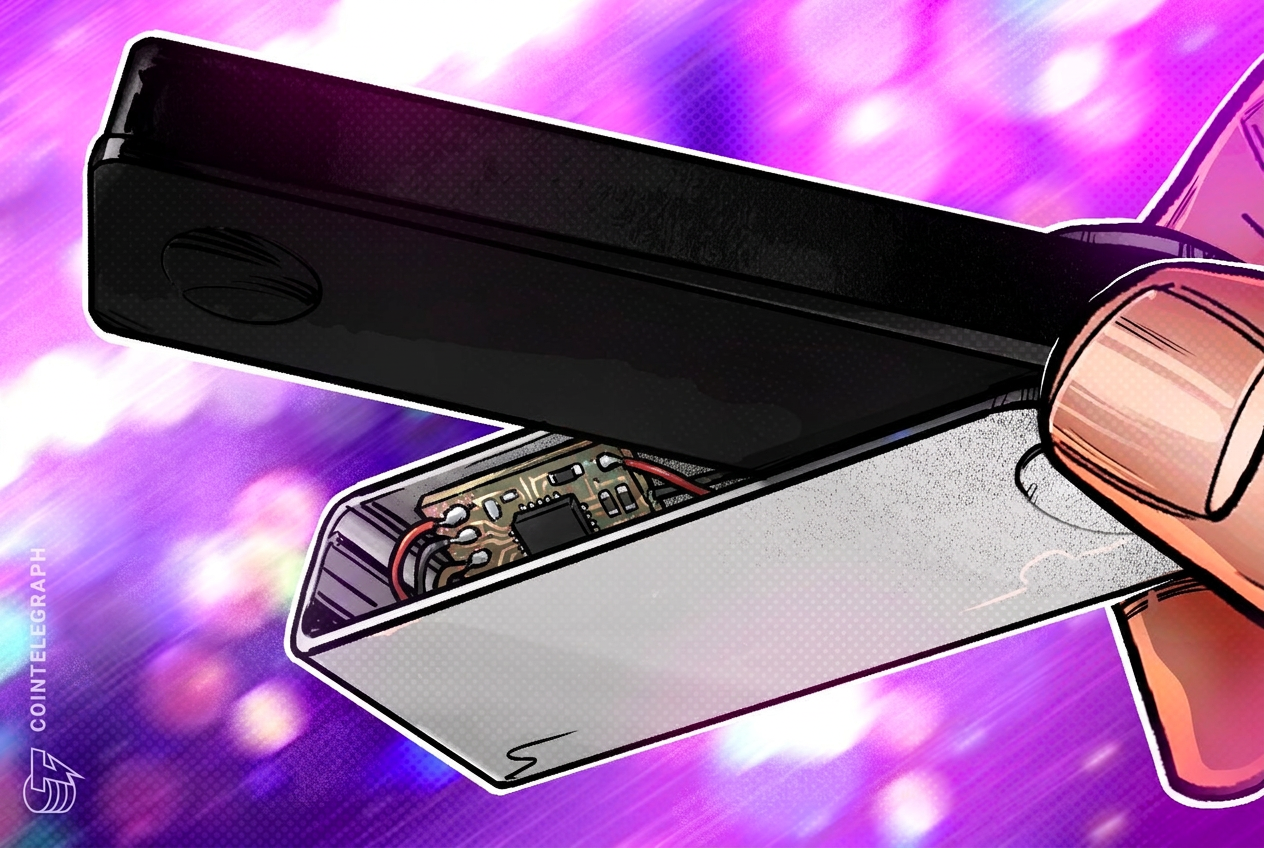
Ledger has confirmed that at least one hardware wallet linked to reported cryptocurrency losses contained an unauthorized hardware implant, escalating an investigation involving a reseller in Southeast Asia.
What Ledger confirmed
The hardware-wallet maker said the device was identified during its investigation into losses reported by customers who bought Ledger products through CryptoBilis, a reseller operating in the region. According to Cointelegraph, Ledger described the incident as apparently limited to that reseller and its Southeast Asian market.
An unauthorized hardware implant is a physical component added to a device without the manufacturer’s approval. Hardware wallets are designed to help users control the private keys needed to authorize cryptocurrency transactions, so an implant can raise concerns about the security of a device before or during setup. Ledger has not publicly confirmed how the implant was used or established a final explanation for the reported losses.
Investigator Specter estimated that losses connected to the case could exceed $86 million across Bitcoin, Ethereum and Tron. Ledger has not confirmed either the total value of the losses or the number of customers who may have been affected.
Ledger said it was contacting users as the inquiry continued and asked anyone with relevant information to contact its bounty program at bounty@ledger.fr. The company also directed users seeking assistance to its official customer-support channel at support.ledger.com.
Guidance for affected customers
Ledger advised people who purchased a device from the reseller not to begin setup if they have not already done so. Customers who have set up their devices were advised to consider transferring their assets to a new Ledger signer, including by using a new seed.
A seed is the recovery phrase used to restore access to a crypto wallet. Creating a new seed is therefore a significant part of moving wallet control to a replacement signer, rather than simply continuing to rely on the potentially affected device.
CryptoBilis confirmed that it had stopped selling all hardware-wallet inventory as a precaution while the investigation proceeds. Ledger said it is in active communication with the reseller about the next steps.
Ledger previously listed CryptoBilis as an authorized reseller in Indonesia, Malaysia and the Philippines. The company said its own infrastructure, systems and services were not compromised, and that the investigation remained ongoing.
Current market picture
Moneyiar market data at 09:54 on October 13, 2026, showed broad declines among the listed assets:
- Solana (SOL): $106.9339081356, down 4.06% in 24 hours and 10.56% over seven days.
- edgeX (EDGE): $0.3348509403, down 6.83% in 24 hours and 26.06% over seven days.
- RedStone (RED): $0.1560060748, down 5.74% in 24 hours and 5.47% over seven days.
- Ark (ARK): $0.1889031312, down 6.1% in 24 hours and 12.35% over seven days.
These market movements are separate from Ledger’s investigation. The company has not said that the reported incident affected its wider systems or services.




