Liquid Network has restored full Bitcoin backing for LBTC, two months after purported white-hat hackers withdrew most of the reserves held in the network’s federation wallet.
The Liquid Federation said on November 3 that its reserves had been replenished to support every LBTC token at a 1:1 ratio with Bitcoin. The announcement means that each LBTC is again backed by an equivalent amount of BTC held for the network’s users. The federation did not disclose how the missing Bitcoin was replaced.
The development follows the restoration of BTC-to-LBTC swaps several weeks ago. Those swaps allow participating providers to exchange Bitcoin for LBTC, and vice versa, at a 1:1 rate. Adam Back, chief executive of Blockstream, which develops the technology behind Liquid, shared a dashboard showing assets matching liabilities at 100% and a reserve deficit of 0.00 BTC.
The federation said users operating their own Liquid nodes can independently verify its reserves. According to Decrypt, the reserve restoration is the latest step in the network’s recovery from a September exploit that removed almost all of the Bitcoin backing Liquid’s issued LBTC.
How Liquid and LBTC work
Liquid is a Bitcoin sidechain launched by Blockstream in 2018. A sidechain is a separate blockchain designed to operate alongside a main network. Liquid is intended to support faster and more private transfers than ordinary Bitcoin transactions.
To use Liquid, participants lock Bitcoin in a wallet controlled by the Liquid Federation, a group of exchanges and other crypto companies that operate the network. They receive LBTC in return. The token represents Bitcoin on Liquid, so the system’s reserves are central to confidence that LBTC can be exchanged back into BTC.
The federation’s announcement therefore addresses more than a technical balance-sheet figure. Restoring full reserves removes the stated shortfall between the amount of Bitcoin held and the amount of LBTC issued. It also brings the network back to the 1:1 backing ratio that its design requires.
Security changes after the exploit
Back said Liquid had strengthened several parts of its security architecture and had undergone multiple third-party audits. He described three main defensive changes:
- Peg-out authorization keys have been refreshed and are now stored in cold hardware wallets.
- Proof-validation caches have been disabled, and a bug affecting nodes has been fixed.
- Consensus rules have been hardened to “fail closed,” meaning the system is designed to stop rather than proceed when required validation conditions are not met.
Back also warned developers to be cautious about relying on software fixes suggested by artificial-intelligence tools. “Treat with suspicion,” he wrote, emphasizing that such suggestions should be verified rather than trusted automatically.
In an October 20 interview with Bloomberg Television, Back had described a growing wave of AI-assisted security analysis in the crypto industry. He said AI could help develop and secure code, as well as identify defects. At that time, he said the stolen funds were still under investigation.
The federation also said it was updating Liquid’s governance structure. The planned changes include clearer responsibilities and oversight, along with additional technical and operational safeguards. It said further details would be provided in the coming weeks.
What happened in September
On September 6, purported white-hat hackers withdrew about 4,000 BTC from the federation’s wallet. The Bitcoin was worth approximately $320 million at the time. The hackers communicated with Blockstream through PGP-signed messages embedded in Bitcoin transactions.
The following day, they returned 3,400 BTC, then valued at about $269 million, after Blockstream said Liquid’s bridge nodes had been patched. Roughly 598 BTC was not returned. Charles Guillemet, chief technology officer at Ledger, said that if the retained coins represented a negotiated reward, the situation appeared closer to extortion than conventional white-hat hacking.
Blockstream later rejected any ransom payment for the remaining Bitcoin. The company said that taking assets without authorization and withholding their return was theft rather than responsible disclosure.
The federation’s latest statement confirms that the reserves are now whole, but it does not explain whether the missing Bitcoin was recovered, replaced by the federation or covered through another arrangement.
Moneyiar market picture
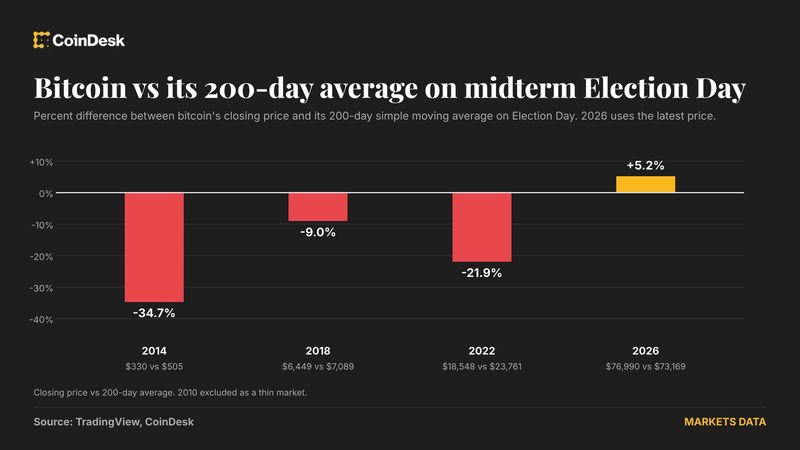
Moneyiar market data at 13:24:48 on November 3, 2026, showed Bitcoin at $77,201.383328784, down 0.38% over 24 hours and 3.65% over seven days.
Cardano was priced at $0.1899484747, up 0.02% in 24 hours but down 6.84% over seven days. Monad stood at $0.0172897717, down 5.74% over 24 hours and 19.94% over seven days, while Plasma traded at $0.0643916665, down 8.27% and 11.48% over those periods, respectively.