
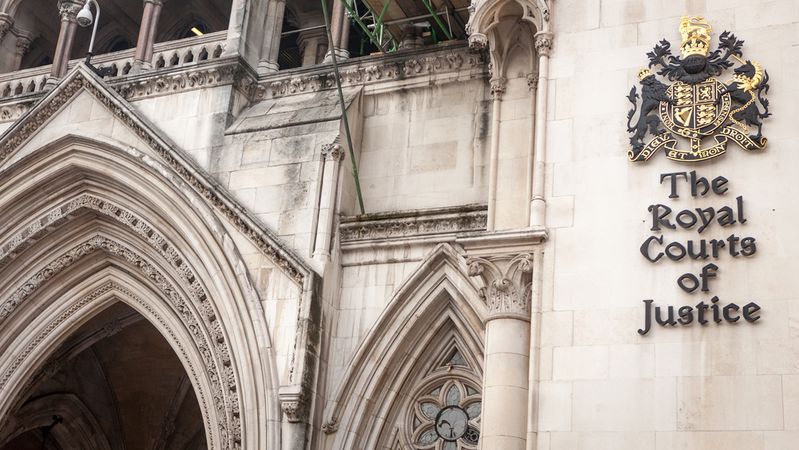
A London court ruling has improved the British government’s prospects of retaining most of 61,000 bitcoin seized in a fraud investigation, after deciding that Chinese law governs victims’ claims to the cryptocurrency. The bitcoin was worth about £3.8 billion, or roughly $5 billion, according to the source material.
The case involves Zhimin Qian, who pleaded guilty to defrauding more than 128,000 investors in China before converting the proceeds into bitcoin and fleeing to the United Kingdom. The ruling does not finally decide who owns or will receive the cryptocurrency, and the victims’ lawyers plan to appeal. However, it limits the route available to the victims to establish property rights over the seized coins and raises the likelihood that the UK Treasury could ultimately keep most of them.
According to CoinDesk, the decision concerns bitcoin seized by London’s Metropolitan Police during its investigation into Qian. The court’s finding focused on which country’s law should govern claims brought by the fraud victims, rather than making a final determination over the coins themselves.
Why the court applied Chinese law
Qian operated Tianjin Lantian Gerui Electronic Technology, the company linked to the scheme. The fraud ran from 2014 to 2017 and took the form of a Ponzi scheme, in which funds from later participants were used as part of the operation supporting earlier participants. More than 128,000 investors were defrauded, according to the source material.
The proceeds were later converted into bitcoin. Qian then fled to Britain in 2017, where the cryptocurrency was eventually seized by the Metropolitan Police.
The victims argued that English law should apply to their claims. That approach could have given them a basis for asserting property rights over the bitcoin held by UK authorities. UK authorities opposed that position, arguing that the relevant legal framework was connected to China, where the fraud took place and the losses were suffered.
In a judgment by Mr Justice Mark Turner of the London High Court, the court concluded that Chinese law must govern the victims’ property claims. The reasoning was that the critical events occurred in China: investors paid their money there, the alleged fraudulent representations were made there, and the economic harm was experienced there.
That distinction is important. The bitcoin is now in the hands of UK authorities, but the court treated the location of the original wrongdoing and loss as decisive for determining the applicable law. The ruling therefore makes it more difficult for the victims to pursue the coins through an English-law property claim.
What the decision means for the bitcoin
The judgment does not award the 61,000 BTC to the UK government, nor does it establish that the victims have no possible claim. A further hearing by the Crown Prosecution Service is expected to examine whether any victims can demonstrate an interest in the bitcoin.
The victims’ lawyers are also appealing the ruling. The appeal means the legal dispute is not over, and the final outcome regarding the cryptocurrency remains unresolved.
Nevertheless, the decision changes the balance of the case. If the victims cannot use English law to establish ownership or another enforceable interest in the seized assets, their ability to recover the bitcoin becomes narrower. That improves the chances that the British government will eventually retain most of the cryptocurrency, potentially leaving the Treasury with an asset worth billions of pounds.
The case illustrates one of the complications created when digital assets linked to an alleged crime cross borders. Bitcoin can be transferred internationally, while the underlying victims, transactions and legal claims may remain tied to the country where the alleged fraud occurred. Courts must therefore address not only the digital asset itself, but also which national law governs competing claims to it.
Moneyiar market picture
Moneyiar market data at 09:29 on October 13, 2026, showed Bitcoin at $83,353.88. The cryptocurrency was up 0.01% over 24 hours but down 2.79% over seven days.
The data also showed Polygon’s former MATIC token listed without a price, while Polygon (prev. MATIC), identified by the symbol POL, traded at $0.1046832671. POL was down 0.38% in 24 hours and 4.12% over seven days. Lighter, or LIT, stood at $3.3766336685, with a 24-hour decline of 11.11% and a seven-day decline of 14.03%.
The market figures provide a snapshot of trading prices at that time; they do not determine the value that could ultimately be assigned to the seized bitcoin in the legal proceedings. The cryptocurrency’s quoted market value can change, while the ownership dispute will depend on the court process and the applicable law.




