
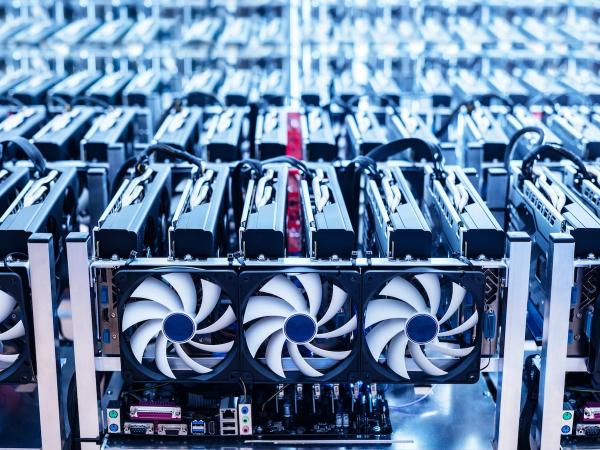
Luxor Technology has raised $16 million to expand beyond its bitcoin-mining roots and develop businesses focused on artificial-intelligence hardware and contracts for trading computing power. The Seattle-based company is positioning itself for a market in which companies may be able to secure computing capacity and manage the prices they pay for it, as bitcoin miners increasingly offer their infrastructure to AI users.
From bitcoin mining to AI infrastructure
Luxor is best known for services supporting bitcoin miners, but it is now expanding into AI hardware brokerage and computing-power trading. The company said on Tuesday that the funding round was led by CMT Digital, with bitcoin mining equipment manufacturers Canaan and MicroBT also participating.
The financing combined new investment with sales of existing shares. Luxor did not disclose how much of the $16 million represented new capital invested directly into the company. It said the funds would support its AI hardware brokerage and computing-power trading operations.
The shift reflects a broader change among bitcoin-mining companies. Mining facilities are built around substantial electricity supplies and high-capacity connections, two resources that can also be useful for AI workloads. Some miners are therefore renting out computing power or converting mining sites into data centers rather than relying exclusively on bitcoin production.
The move is already visible in the scale of contracts signed by publicly traded miners. CoinShares data cited by CoinDesk shows that these companies had signed more than $70 billion in AI and high-performance-computing contracts by the end of March. That figure indicates the extent to which AI has become a major strategic focus for the sector, although not every mining company is reducing its bitcoin activity.
Nasdaq-listed NIP Group, for example, announced plans last week to increase its mining capacity by about 48%. The company said full deployment would allow it to produce about 195 bitcoin per month.
Electricity is not enough
Luxor’s experience suggests that moving a mining site into AI requires more than access to power. Ethan Vera, the company’s chief operating officer, told CoinDesk that Luxor’s software business works with bitcoin miners representing nearly two gigawatts of power capacity.
Luxor has assessed more than half of that capacity. The company found that most of the sites it reviewed had enough electricity and adequate fiber connections to support AI workloads. However, most would still need new data centers before they could serve those workloads.
That distinction matters because AI computing requires specialized equipment and facilities, rather than simply the power infrastructure used for bitcoin mining. Luxor’s planned hardware-brokerage business is intended to help connect buyers and sellers of AI equipment, while its trading operation is aimed at the computing capacity itself.
The company is also applying ideas from financial arrangements used in bitcoin mining to the AI market. Bitcoin miners use contracts to manage fluctuations in mining revenue. In a similar way, AI companies and computing providers could agree in advance on prices for future computing capacity.
A developing market for computing prices
Luxor already offers privately negotiated contracts linked to computing rental prices. The market remains at an early stage, however, and Vera said a lack of transparency—particularly in AI hardware pricing—continues to be a problem.
Sam Hallene, a partner at CMT Digital, said AI companies could have several reasons to protect themselves from price changes. One consideration is the possibility that costly computing equipment remains useful for longer than expected, which could affect the economics of both buyers and sellers.
“We don’t know exactly what the market structure will look like at the end of the day,” Hallene told CoinDesk.
To provide a reference for participants, Luxor introduced an index in August tracking the daily asking prices for Nvidia AI server systems. Such an index can give buyers and sellers a common indication of equipment prices in a market where transactions and valuations may otherwise be difficult to compare.
The company’s fundraising therefore supports two related efforts: helping bitcoin miners and other participants obtain AI hardware, and developing contracts that could make computing capacity more tradable. Whether those contracts become a broad market remains unresolved, but the expansion shows how businesses built around bitcoin infrastructure are seeking roles in the growing AI-computing economy.
Moneyiar market picture
Moneyiar market data recorded at 22:39 on October 25, 2026, showed Bitcoin at $80,430.51, down 0.08% over 24 hours and 1.32% over seven days. Compound was $21.13, down 10.42% in 24 hours and up 0.30% over seven days. At 22:38, edgeX was $0.3244, up 0.81% over 24 hours and 13.63% over seven days, while Loaded Lions was $0.001182, down 2.39% and 3.06% over those periods, respectively.




