
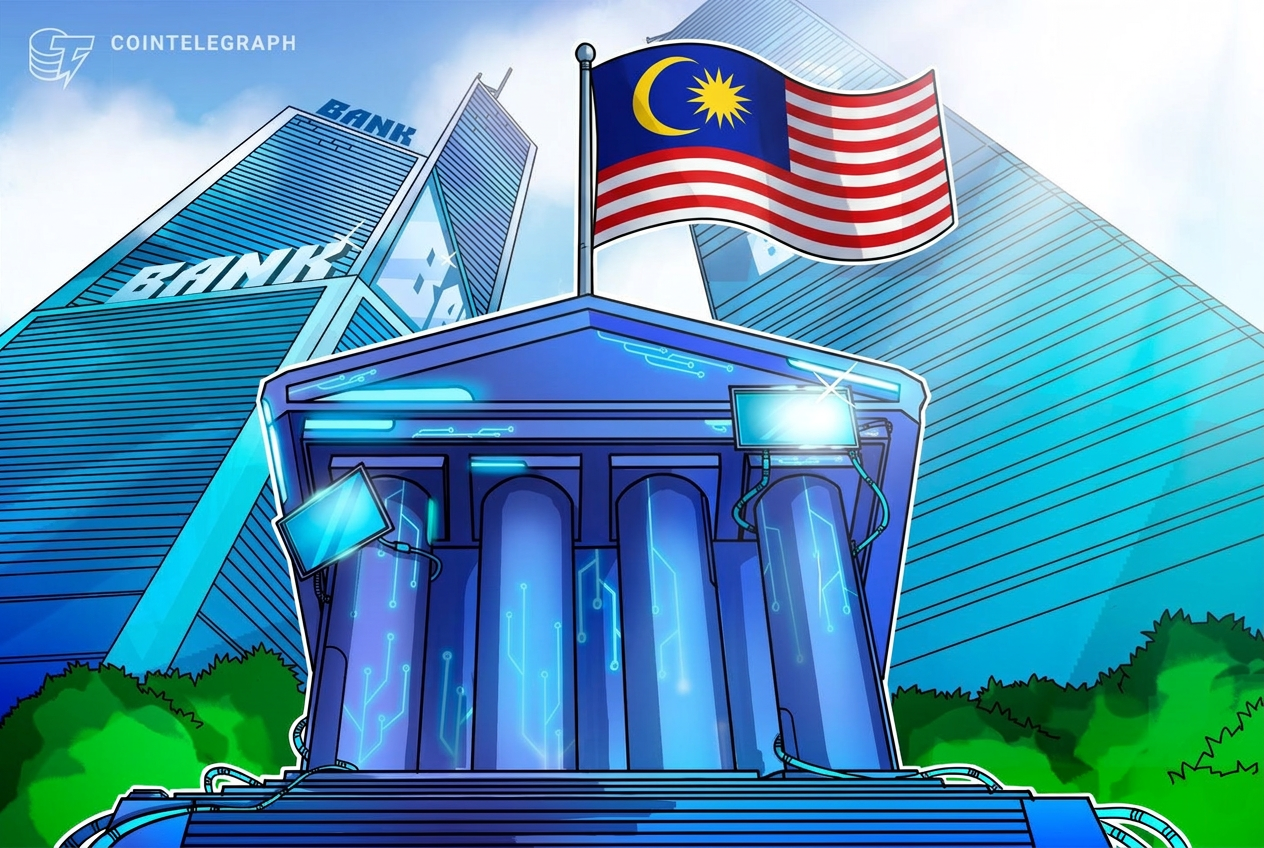
Malaysia’s central bank has launched a distributed-ledger platform designed to issue, record and safeguard tokenized bonds, including Islamic sukuk, while linking ownership records to payments settled in central bank money.
How the platform works
Bank Negara Malaysia (BNM) said its next-generation Scripless Securities Depository System, known as SSDS+, supports the issuance, depository and safekeeping of tokenized debt securities. A distributed ledger is a shared digital record that can track changes in ownership and transfers. In this case, SSDS+ records who owns tokenized securities and when those assets are transferred.
The platform is connected to the Real Time Electronic Transfer of Funds and Securities system, or RENTAS+. That system is designed to operate around the clock and handles the related bond payments in central bank money. The connection is intended to link the digital record of a security with the payment needed to complete a transaction.
Tokenization represents a bond or another financial asset digitally on a ledger. It can be used to manage ownership and transfers electronically, while the underlying financial obligations remain tied to the security being issued. Sukuk are Islamic bonds structured to comply with Islamic finance principles.
Wholesale focus, wider potential
BNM said SSDS+ was developed for wholesale issuance, but the platform is also ready to support tokenized government bonds and corporate retail bonds. The central bank did not identify securities that have already been issued through SSDS+, nor did it disclose transaction volumes.
That means the announcement describes the infrastructure now available rather than reporting a completed bond sale or a specific amount of tokenized debt. Its connection with RENTAS+ also places settlement—the exchange of the security and payment—at the center of the system’s design.
According to Cointelegraph, the launch follows a three-year asset-tokenization roadmap that BNM unveiled in November 2025. The roadmap included pilot projects covering Islamic finance, supply-chain financing and programmable payments. Programmable payments are transfers governed by predefined digital conditions or instructions.
Earlier digital-asset testing
BNM also tested ringgit stablecoins and tokenized bank deposits in February through its Digital Asset Innovation Hub. The trials involved major banks including Standard Chartered, CIMB Group Holding and Maybank, as well as investment holding company Capital A.
A stablecoin is a digital token intended to maintain a stable value against an underlying currency or asset. Tokenized bank deposits are digital representations of deposits held with a bank. The earlier tests and the new securities platform form part of BNM’s stated work on applying digital-asset technology to financial-market infrastructure.
Market picture
Moneyiar market data at 08:38–08:39 on October 21, 2026, showed all four tracked assets higher over the previous 24 hours, while each remained lower over seven days:
- Chainlink (LINK): $12.3552687722, up 3.53% in 24 hours and down 4.72% over seven days.
- Monad (MON): $0.0221414241, up 5.95% in 24 hours and down 11.15% over seven days.
- OriginTrail (TRAC): $0.4066686422, up 6.71% in 24 hours and down 9.20% over seven days.
- Four (FORM): $0.2506273446, up 2.19% in 24 hours and down 7.79% over seven days.



