
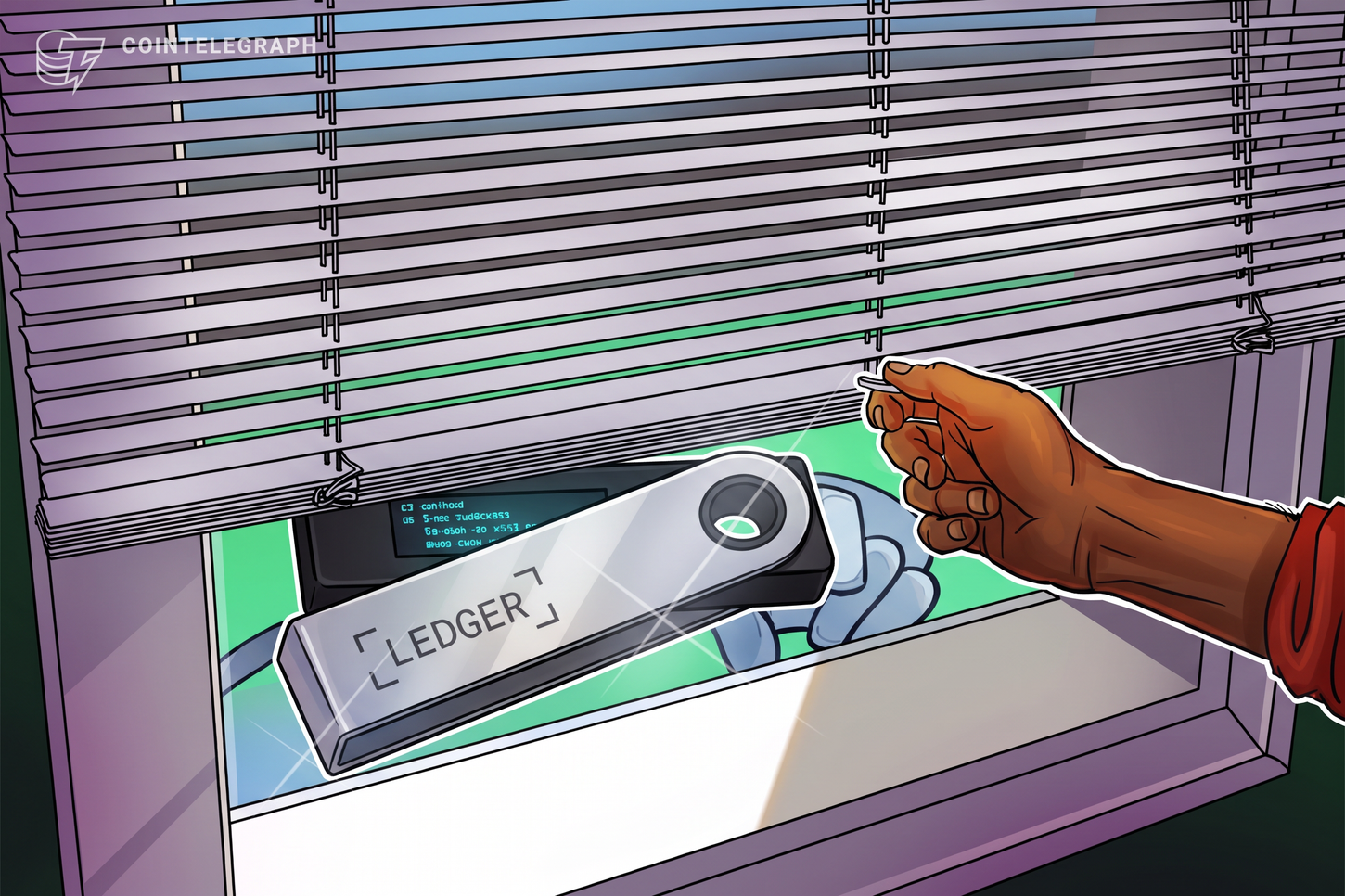
MediaMarktSaturn has withdrawn Ledger hardware wallets from its physical stores and online platforms across all countries where it operates, citing precautionary concerns after reports that some devices may have been altered before reaching customers.
Retailer pauses Ledger sales
The European electronics group, which owns the MediaMarkt retail chain, confirmed that Ledger products had been removed from its international product range. A MediaMarktSaturn spokesperson told Cointelegraph that the decision was taken as a precautionary measure.
Ledger said the retailer suspended sales in coordination with the wallet manufacturer after a customer in Germany reported a hardware implant. According to Ledger, there have been no reported losses of funds connected with that case, and the company has found no indication that its infrastructure, systems or services were compromised.
The action affects both MediaMarkt’s stores and its online sales channels, putting a major retail distribution route on hold while the reports are investigated.
Reports extend beyond Southeast Asia
The latest development follows Ledger’s investigation into devices sold by CryptoBilis, a reseller in Southeast Asia. Ledger said reports linked implants in hardware wallets to the transmission of users’ recovery phrases over cellular networks. A recovery phrase is the sequence of words used to restore access to a crypto wallet, making its protection central to self-custody.
Ledger said it was examining reports beyond the CryptoBilis case. The company’s investigation began after reports of losses involving devices distributed through that reseller.
A user on X, identified as Johannes, said he had bought two Ledger wallets from different MediaMarkt stores. He claimed that both devices contained unauthorized cables and cellular modules. Those claims are part of the wider set of reports being examined and do not, by themselves, establish that the retailer’s broader inventory was affected.
Additional Singapore claim
Mark Karpelès, the former chief executive of Mt. Gox, separately said that a Ledger Flex bought at Singapore’s airport contained a spy implant. Ledger responded by directing users to its latest update on the CryptoBilis investigation, without directly addressing the Singapore report.
The cases have raised concerns about the security of hardware wallets obtained through retail and reseller channels. These devices are designed to keep private keys isolated from internet-connected systems, but the reports focus on possible physical alterations made before sale. Ledger has maintained that it has not identified a compromise of its own infrastructure, systems or services.
Market picture
Moneyiar market data at 8:39 p.m. on Oct. 13, 2026, showed mixed performance among the listed crypto assets:
- edgeX (EDGE): $0.333113234, down 5.08% over 24 hours and 25.69% over seven days.
- AKEDO (AKE): $0.0251707391, up 4.48% in 24 hours but down 13.74% over seven days.
- Walrus (WAL): $0.0381851096, up 4.73% over 24 hours and 2.55% over seven days.
- Amp (AMP): $0.0007410112, up 10.84% over 24 hours and 19.55% over seven days.
These market movements are Moneyiar data at the stated time and are not presented as a reaction to the Ledger reports.




