
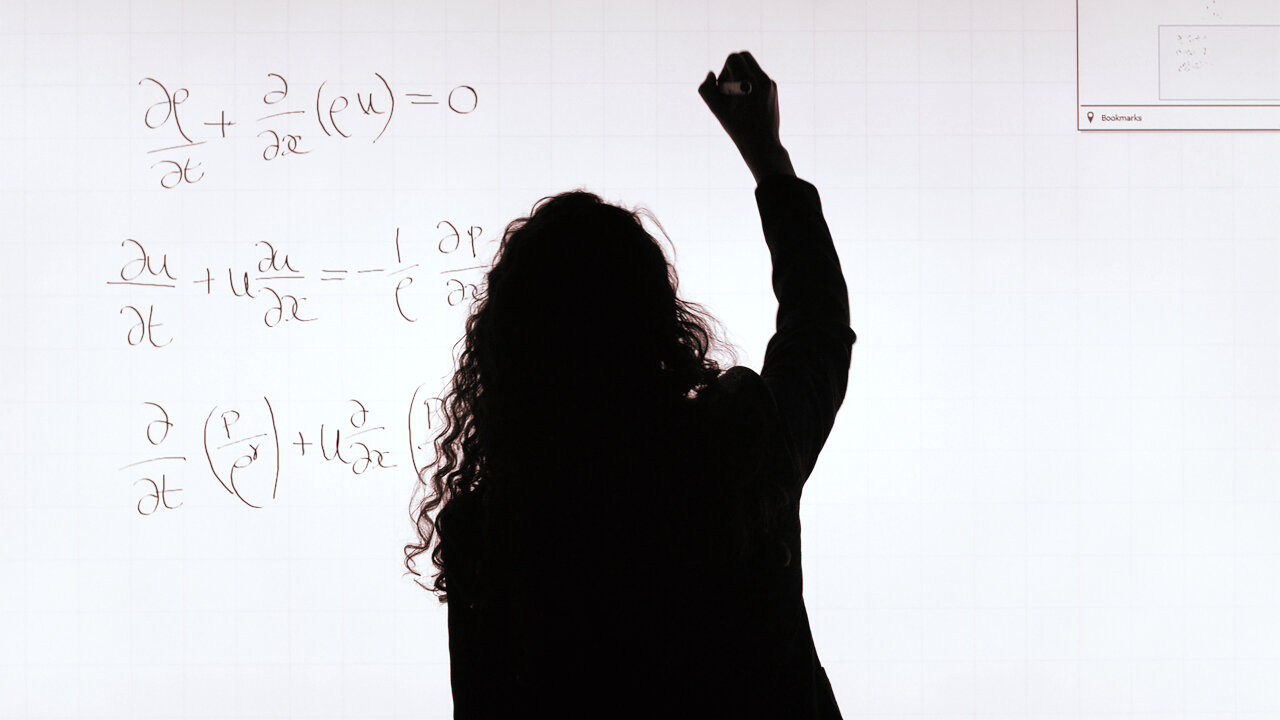
OpenAI has released 722 mathematical manuscripts generated by an internal AI model that the company has not yet made public, presenting the collection as evidence of a potentially important advance in automated research. The publication has also prompted skepticism from mathematicians, who say the central claim—that almost all of the work came from one prompt given to one AI agent—cannot be independently assessed until the model and more details about its operation are available.
The manuscripts were posted on GitHub on Tuesday and are organized into 372 families of related results. A family can contain a principal theorem alongside supporting arguments, consequences or alternative proofs, so the number of manuscripts does not represent 722 separate solved problems. OpenAI said it posed approximately 4,000 problems to the system and selected the outputs it considered significant enough to publish.
According to Decrypt, an OpenAI spokesperson said that almost everything in the collection was produced from a single prompt given to a single agent, although some results may have required more than one attempt. The company said the average result consumed the equivalent of about three hours of ChatGPT Pro thinking compute.
What has been verified so far
The most important qualification concerns formal verification. Of the 722 manuscripts, only 162 currently include a formalized main result in Lean, a computer system designed to check each logical step in a proof. That is roughly 22% of the collection. OpenAI said it plans to add more Lean formalizations as they become available, while warning that some results without them may contain errors.
A successful Lean check would establish that the proof follows from the mathematical statement entered into Lean. It does not by itself confirm that the formalized statement accurately reflects the original problem, that the result is new, or that it is important. Those questions still require mathematicians to examine the work.
OpenAI released abridged reasoning summaries for 10 results, but the material does not provide the full set of information recommended by an advisory group at the Institute for Advanced Study on September 29. The group had called for disclosure of the model’s name, the prompts used, summarized reasoning, the time spent and the computing cost for each result. OpenAI supplied average compute figures and 10 summaries, but not the prompts, and said it was still working on a responsible release of the model.
The Institute for Advanced Study said the development raises questions about scholarly responsibility when AI can produce arguments that the human who initiated the process may not understand, verify or take responsibility for. MIT mathematician Andrew Sutherland similarly told Scientific American that claims about solving problems in one attempt with a single agent should be treated as unverified until the model is released and other researchers can reproduce the results.
A potentially broad but uneven collection
The release includes work across a range of mathematical problems. Professor Abhishek Saha described it as a major day for mathematics, while also saying that most of the results appeared to be advances within existing research programs rather than breakthroughs comparable to the field’s most famous open questions.
One result stands apart in that discussion: the Quasi-Riemann Hypothesis, identified as the collection’s sole problem among the 722 that could be considered in the category of a major breakthrough. The source material does not establish whether that claim has been independently accepted or fully verified.
The collection has already drawn questions from researchers examining individual arguments. One publicly discussed proof involving the chromatic number of the plane was described as difficult to assess because of an unexpected connection in the model’s reasoning. Another researcher criticized the repository for having issues disabled and for not accepting pull requests, saying that a project seeking Lean formalizations should provide a way for outside mathematicians to submit them.
The differing reactions reflect the distinction between generating mathematical text and establishing a reliable theorem. A manuscript can contain an interesting idea, but publication by an AI company is not equivalent to independent mathematical validation. The remaining work includes checking the arguments, assessing whether their claims are correct and determining whether the results are genuinely new.
How the release compares with other AI mathematics work
OpenAI’s project also differs from another recent effort by Anthropic. Anthropic publicly posted all 13 million lines of a Lean-checked proof of Fermat’s Last Theorem. That work formalized a theorem proved by Andrew Wiles in 1995, rather than presenting newly generated mathematical results of the kind claimed in OpenAI’s collection.
OpenAI’s reported average compute use also contrasts with the Navier-Stokes effort described in the source material, which involved 10,000 coordinating agents working for 88 hours. OpenAI’s current release therefore emphasizes the output of a largely single-agent process, but outside researchers cannot yet test that description because the underlying model remains unreleased.
Current market picture
Moneyiar market data at 09:19 on October 8, 2026, show mixed performance among the listed digital assets:
- Ethena (ENA): $0.2198269404, down 6.41% over 24 hours and 15.62% over seven days.
- Polygon (prev. MATIC) (POL): $0.1013379863, down 1.02% over 24 hours and 9.38% over seven days.
- Aethir (ATH): $0.0067305728, down 0.36% over 24 hours but up 13.17% over seven days.
These market figures are separate from OpenAI’s mathematics announcement and do not indicate a market reaction to it.




