
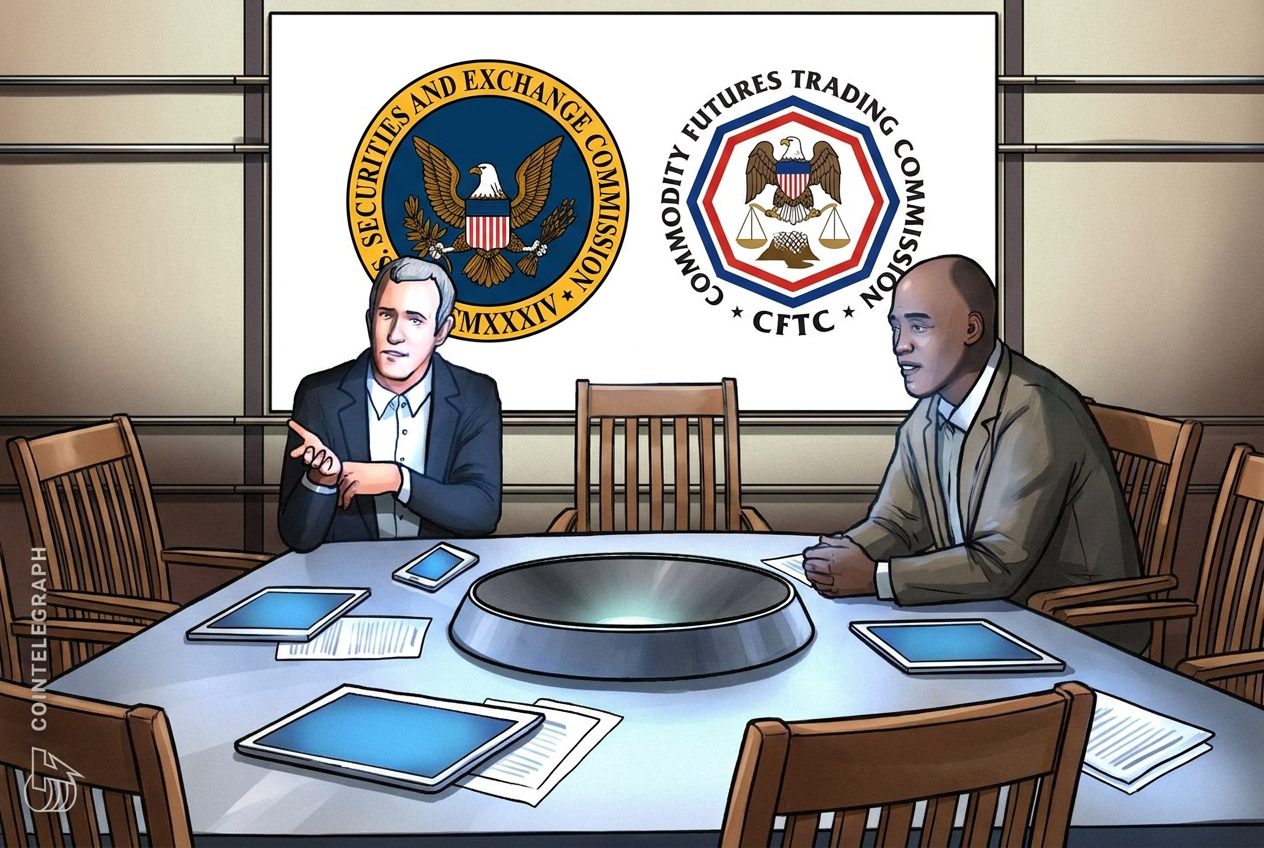
The United States’ two main financial regulators involved in digital-asset oversight will have only three commissioners between them after the departure of SEC Commissioner Hester Peirce on Friday. The leadership shortfall comes as agencies continue shaping crypto rules despite Congress failing to pass a bill that would have clarified their responsibilities.
Peirce departure leaves SEC with two commissioners
Hester Peirce, a Republican member of the Securities and Exchange Commission, is due to leave the agency on Friday after eight years in the role. Her departure will come roughly two months before the end of an 18-month extension to her second term.
Peirce became well known in the digital-asset industry under the nickname “Crypto Mom,” reflecting her views on cryptocurrency and related regulation. Once she leaves, SEC Chair Paul Atkins and Commissioner Mark Uyeda will be the agency’s only remaining commissioners.
The SEC is generally expected to have five commissioners, with a bipartisan composition. The agency has operated with only two commissioners just once before in its history, according to the source reporting from Cointelegraph. Peirce’s exit will therefore create an unusually small leadership group at an agency responsible for significant parts of US securities regulation.
The Commodity Futures Trading Commission will also have only one commissioner. Michael Selig has served as its chair and sole commissioner since December 2025, when acting Chair Caroline Pham left the agency. Together, the SEC and CFTC will therefore have three commissioners after Friday, while seven seats across the two agencies will be unoccupied.
Appointments require presidential nominations
Under federal law, President Donald Trump is the only person who can nominate candidates to fill the vacant SEC and CFTC commissioner positions. The White House had not announced nominees or a formal intention to make additional nominations at the time of the report.
All current commissioners at the two agencies were selected by Trump except Uyeda, who was appointed by President Joe Biden in 2022. A White House official said Trump intended to nominate members to both agencies “in the near future.” CNBC previously reported that White House officials were examining four possible candidates for the vacant CFTC seats, but the report did not identify them.
A CFTC spokesperson said Selig welcomed new commissioners once they had been nominated and confirmed by the US Senate. The spokesperson also said the agency was “more than equipped” to oversee its part of the crypto market. The SEC did not immediately respond to a request for comment about potential nominations.
The vacancies have also drawn criticism from Senate Democrats. In a June letter to Trump and Senate Majority Leader John Thune, they argued that Congress designed the agencies’ governing commissions to be bipartisan and gave them authority over important areas of American life. The senators said the administration appeared focused on retaining control of the agencies rather than working with Congress.
Crypto rules continue without the CLARITY Act
The leadership gap arrives while the SEC and CFTC continue to develop their approaches to digital-asset regulation. In the absence of comprehensive legislation, both agencies have been using rulemaking and interpretations of existing federal law rather than relying on a new framework passed by Congress.
The Digital Asset Clarity, or CLARITY, Act was intended to establish a clearer division of responsibility. Among other changes, it was expected to give the CFTC greater authority over parts of digital-asset regulation that currently involve the SEC. The bill failed to pass the Republican-controlled Senate earlier this month.
Without the legislation, the agencies have pursued separate regulatory initiatives. The SEC has issued staff guidance addressing how investment-contract rules may apply to token issuers. The CFTC has set out how companies could use blockchain-based recordkeeping. These actions illustrate how the agencies are continuing to address the sector even without the broader statutory framework sought by many crypto businesses and advocates.
The reduced number of commissioners could make the process of managing these responsibilities more concentrated at the top of the agencies. However, the available material does not establish how long the vacancies will last or how they will affect particular enforcement cases, rulemakings or future nominations.
Moneyiar market picture
Moneyiar market data at the stated times show mixed performance among the listed digital assets:
- ONEchain (ONE) was priced at $0.137655265, up 0.68% over 24 hours but down 6.69% over seven days, as of October 1, 2026, at 09:24 +03:30.
- Loaded Lions (LION) traded at $0.0015460096, rising 2.10% in 24 hours and 4.66% over seven days, as of October 1, 2026, at 09:23 +03:30.
- WINkLink (WIN) stood at $0.0000506647, up 7.26% over 24 hours and 30.64% over seven days, as of October 1, 2026, at 09:24 +03:30.
- Harmony (ONE) was quoted at $0.0023881901, gaining 9.13% in 24 hours and 40.01% over seven days, as of September 25, 2026, at 22:04 +03:30.
These figures cover individual assets and do not measure the effect of the US regulatory changes on the wider crypto market.




