
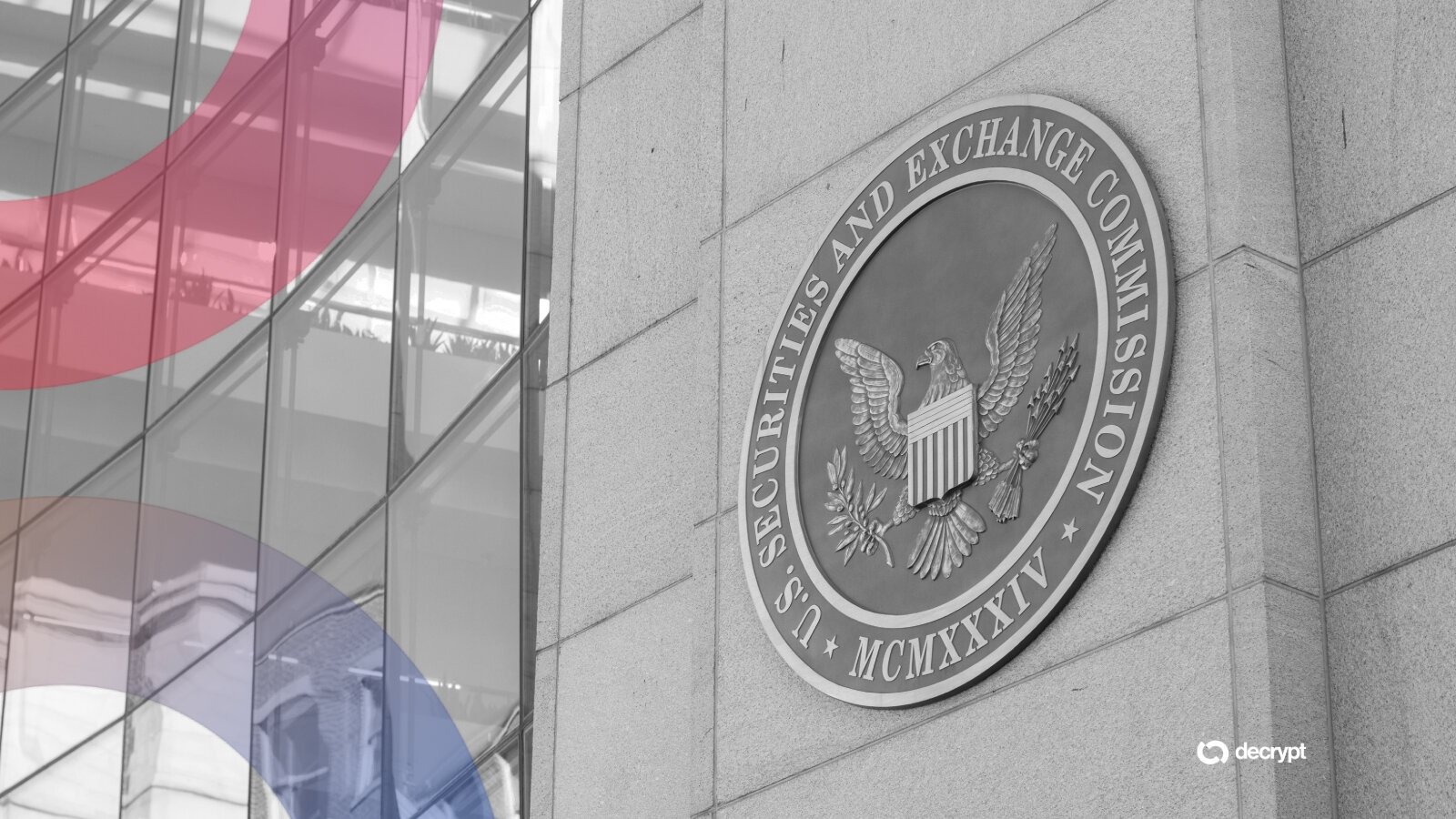
The U.S. Securities and Exchange Commission’s Division of Corporation Finance has updated its cryptocurrency FAQ with guidance that could materially change how some crypto protocols approach token buybacks. The staff said that, once a network is functional, announcing a buyback does not by itself amount to a promise that investors will rely on “essential managerial efforts” by an issuer.
The clarification matters because the Howey test, the legal framework commonly used to determine whether an arrangement is an investment contract, focuses partly on whether buyers expect profits from the efforts of others. The updated FAQ indicates that a functional network’s buyback announcement is not automatically the kind of promise that satisfies that part of the test.
According to Decrypt, the SEC staff also said that maintaining, upgrading or expanding a functional network does not, by itself, meet that standard. Promotion of a network’s existing functions is also not enough, while broad aspirational statements that do not advertise profits are treated differently from explicit return claims.
What the SEC guidance says
The update is not a blanket exemption for crypto tokens or buyback programs. The distinction is whether the network is already functional and how the buyback is presented to holders.
A project with a working product may announce that it intends to repurchase its token without that announcement automatically being viewed as a promise of returns generated by managerial efforts. By contrast, a network that has not yet become functional could still face securities-law concerns if its issuer markets a buyback as a source of yield or financial returns for token holders.
That creates a practical dividing line for crypto projects:
- Functional network plus a buyback announcement: not automatically a promise covered by the relevant Howey analysis.
- Nonfunctional network plus promotion of buybacks as yield or returns: potentially within securities-law territory.
Gabriel Shapiro, a securities attorney at MetaLeX Labs and former general counsel at Delphi Labs, said the buyback language went further than he expected. He also said the SEC’s application of securities laws to crypto was beginning to look more like an opt-in framework, although the source material presents that as his view rather than as a formal SEC conclusion.
Protocols that could benefit
Token buybacks have become a prominent way for crypto protocols to connect token economics with activity on their networks. DeFiLlama tracks buyback programs involving HYPE, PUMP, ENA, AAVE, SKY, LDO, PENDLE, AERO, RAY, JTO, NEAR, ETHFI, SYRUP, LIT, ASTER, KMNO, MET, CC, CARDS, PONS and STONK, among others.
The source material says these projects operate live products that generate revenue, putting them closer to the functional-network category described in the FAQ. Several examples illustrate the range of mechanisms being used:
- Hyperliquid directs yield from its USDC reserves into HYPE buybacks under AQAv2.
- Pump.fun has burned $451 million worth of tokens, equal to about 16.6% of its supply.
- Pons allocates approximately 80% of its version-one revenue to buybacks.
- Ethena token holders voted to direct 95% of net revenue to ENA.
These programs had operated in what the source described as a legal gray area. The updated FAQ offers a clearer framework for projects that already have functioning products and want to use revenue to support token repurchases. It does not, however, remove the need to assess how a project describes its network, token and expected returns.
The guidance also reflects a broader shift in crypto token design toward linking tokens with protocol cash flow rather than relying primarily on expectations about future development. That model can make a token’s economic purpose easier to identify, but the FAQ’s conditions remain important: functionality and the language used to market a buyback are central to the regulatory analysis.
Market picture
Crypto markets were weaker after Bitcoin recorded its strongest weekly close since January. The source material put Bitcoin down 2% at $83,000, Ethereum down 2% at $2,670, Solana down 5% at $119 and HYPE down 4% at $90. PUMP was reported up 12% in the market roundup, while the weekly protocol-revenue tracker showed Pump at $15.16 million over seven days, narrowly ahead of Hyperliquid at $15.06 million.
Bitcoin exchange-traded funds recorded $135 million in net inflows on Friday and finished the week with $2.39 billion of inflows across seven consecutive positive sessions. Ether ETFs took in $87 million on Friday and ended the week with $690 million in inflows.
Moneyiar data, recorded on September 25, showed mixed performance among selected digital assets. Ethereum Name Service was priced at $7.0685, up 0.09% over 24 hours and 12.69% over seven days. ONEchain traded at $0.1453, down 4.6% over 24 hours but up 7.69% over the week. Propy stood at $0.3610, gaining 10.25% in 24 hours and 1.49% over seven days, while Ontology Gas was $0.09517, up 2.96% daily and 20.1% weekly.




