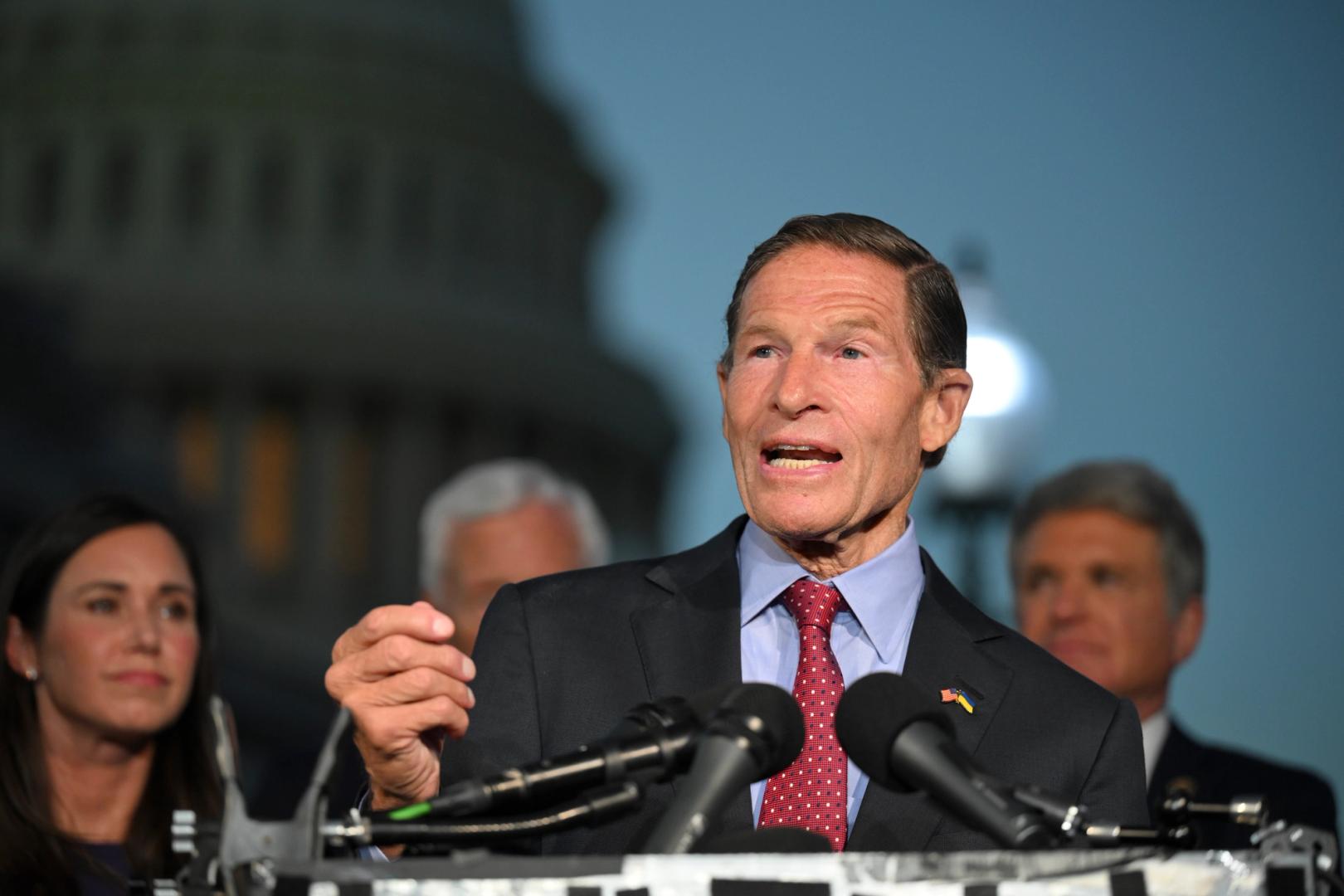
A group of Democrats on the U.S. Senate Homeland Security and Governmental Affairs Committee’s Permanent Subcommittee on Intelligence has issued a report alleging that Tether’s dollar-pegged stablecoin, USDT, is an important tool in Iran’s efforts to move money around international sanctions.
The report says Iran’s cryptocurrency-based “shadow banking network” has handled significant sums and involved various Iranian interests. It describes USDT as a “significant financial lifeline” for that network, arguing that the stablecoin has helped Iranian entities conduct transactions outside the conventional financial system.
The document does not provide a cumulative estimate for the amount of USDT allegedly transacted by the Iranian government. However, it says the government carried out an estimated $2 billion in transactions last year. The report’s claims were first reported by The Wall Street Journal, according to CoinDesk.
Report criticizes Tether’s response to Iran-linked wallets
The Senate Democrats’ report focuses not only on the alleged use of USDT, but also on how Tether responds when wallets are linked to sanctioned or illicit activity. It claims that Tether has “repeatedly failed” to block wallets connected to Iran.
According to the report, wallet freezes have sometimes taken weeks. It also alleges that Tether has, in some cases, responded to requests from authorities without actually placing the relevant wallets on a blacklist.
The lawmakers say Tether did not comprehensively and consistently freeze wallets designated by counter-terrorism agencies before 2024. They argue that this lack of a reliable deterrent encouraged further abuse of the stablecoin.
The report specifically says that terrorist organizations, including Hamas, moved from using Bitcoin and a mixture of cryptocurrencies toward promoting USDT. Its broader argument is that crypto assets are weakening efforts by the United States and its allies to restrict Iran’s regional activities and prevent terrorism financing.
Tether says it has supported Iran-linked freezes
Tether disputed the implication that it has been inactive. In a blog post published Monday, the company said it had supported freezes involving nearly $550 million linked to Iran.
The company listed several recent actions that it said were taken at the request of U.S. authorities. Tether Chief Executive Paolo Ardoino said the company remains in regular, direct coordination with authorities in the United States and other countries as governments increase efforts to disrupt sanctions evasion and terrorist financing.
The contrasting accounts highlight a central issue in the use of stablecoins: although they operate on blockchain networks, issuers such as Tether can identify and freeze certain wallets. That ability makes cooperation with law-enforcement agencies possible, while delays or inconsistent action can become a source of criticism when assets are allegedly connected to sanctioned entities.
The Senate report presents the Iranian case as part of a wider criticism of the cryptocurrency sector. Tether’s response, by contrast, emphasizes the freezes it says it has already supported and its ongoing cooperation with authorities.
Current market picture
Moneyiar market data at the stated times shows USDT trading close to its dollar peg. Tether USDt was priced at $0.9998097238 at 22:03 on September 25, 2026, with a 24-hour change of 0.01% and a seven-day change of 0.01%.
Ethereum was at $2,681.7028821295, down 0.13% over 24 hours and up 2.05% over seven days, according to Moneyiar data at 22:03 on September 25. Ethena stood at $0.2621577355, up 17.35% in 24 hours and 54.44% over seven days, while Telcoin was priced at $0.0016409013, down 0.49% over 24 hours and up 6.14% over seven days; both figures were recorded at 22:04 on September 25.
USDT’s near-$1 price reflects its design as a dollar-pegged stablecoin, a type of digital asset intended to maintain a relatively stable value against a reference currency. The Senate report’s allegations concern how the token is used and monitored, rather than a loss of its dollar peg.
The report adds fresh political scrutiny to the role of stablecoins in cross-border finance. Its claims and Tether’s response leave the key dispute centered on the scale of Iran-linked activity and whether wallet-freezing procedures have been timely and consistent.