
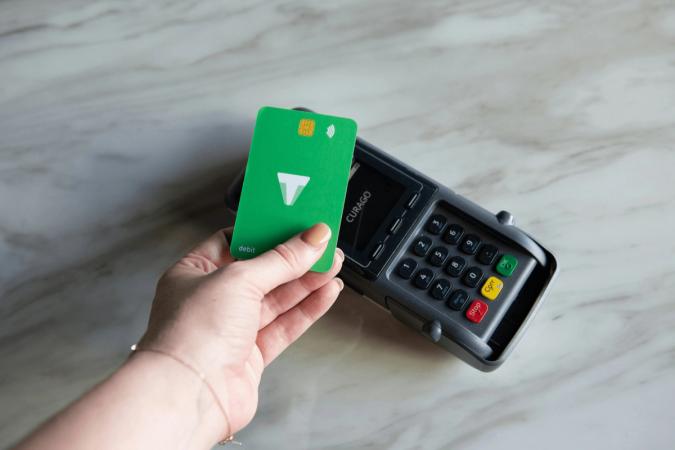
Japanese visitors to South Korea could eventually pay merchants using yen-backed stablecoins linked to payment cards under an early-stage collaboration between Shinhan Card and companies affiliated with Japan’s SBI Holdings. The groups are also examining digital wallet transfers and stablecoin-based settlement for cross-border trade.
According to CoinDesk, Shinhan Card, a South Korean card issuer, is working with SBI VC Trade, a cryptocurrency exchange, and SBI XDC Network APAC, a trade-finance blockchain company. The initiative is intended to investigate how yen-denominated digital tokens could support transactions between Japan and South Korea.
No commercial launch has been scheduled, and the companies have not identified the stablecoin that would be used in testing. The work is therefore an exploration of possible payment infrastructure rather than the announcement of a service that visitors can use today.
What the collaboration will examine
One proposed use is a card-linked payment system for Japanese travelers in South Korea. Under such an arrangement, a yen-backed stablecoin could be connected with a payment card and used in merchant transactions. Stablecoins are digital tokens designed to maintain a value linked to an underlying currency or asset. In this case, the proposed focus is the Japanese yen.
The companies will also study transfers between digital wallets. This could allow users or businesses on opposite sides of the Japan-South Korea corridor to send stablecoins directly from one wallet to another, subject to the systems and controls ultimately adopted.
A further area of research is cross-border trade settlement. Stablecoins may be used as a digital means of transferring value between parties, although the collaboration has not announced a completed system, specific participating merchants or a launch date.
The project is also expected to include tools for identifying suspicious transactions and processes designed to meet anti-money-laundering requirements. Those controls will be important if the system moves beyond experimentation and is used for consumer payments or commercial remittances.
JPYSC is available, but its role is unclear
SBI already distributes JPYSC, a yen-backed stablecoin issued by SBI Shinsei Trust Bank. The token was introduced with Startale Group in June. SBI VC Trade reported that approximately 20.1 billion yen, equivalent to $127 million, was in circulation as of September 7.
However, JPYSC has limitations that are relevant to any potential cross-border payment project. It is currently restricted to SBI VC Trade accounts and cannot be transferred to external wallets. Its circulation on public blockchains also depends on legal and tax clarity, as well as regulatory approval.
The companies have not said whether JPYSC will be included in the proposed testing. As a result, the existence of an SBI-linked yen stablecoin does not establish that it will be the token used in a Shinhan-SBI payment trial.
The absence of a named token and timetable leaves several practical questions unresolved, including how users would access the service, which merchants or wallets could participate, and how transfers would be handled across the two countries. The announcement describes a study of possible applications rather than a finalized product.
Part of Shinhan’s wider digital-asset strategy
Shinhan Card is a unit of Shinhan Financial and serves about 20 million cardholders. The company said the cross-border initiative would connect with Shinhan Financial’s broader work on digital assets.
That strategy includes an agreement signed with Visa in August to explore stablecoin issuance, transfers and card settlement. The new collaboration with SBI therefore places the Japan-South Korea project within a wider effort to examine how blockchain-based tokens could interact with established card networks and payment systems.
For Japanese visitors, the potential significance is the possibility of using a yen-linked digital asset while paying in South Korea, rather than relying only on conventional cross-border card processing. For businesses, the study also addresses wallet transfers and trade payments. Any practical rollout, however, would depend on regulatory permission, technical compatibility and the completion of the companies’ early-stage testing.
Moneyiar market picture
Moneyiar market data at 12:59 p.m. on October 21, 2026, showed the following prices and performance:
- Chainlink (LINK): $12.4042257496, up 3.53% over 24 hours and down 2.52% over seven days.
- Cronos (CRO): $0.0583863665, up 3.34% over 24 hours and up 0.23% over seven days.
- Stable (STABLE): $0.0270599418, up 5.32% over 24 hours and up 0.84% over seven days.
- Monad (MON): $0.0224762754, up 8.08% over 24 hours and down 7.42% over seven days.
These market movements cover separate cryptoassets and do not indicate that the Shinhan-SBI payment project has launched or that any of the listed tokens is connected to it.




