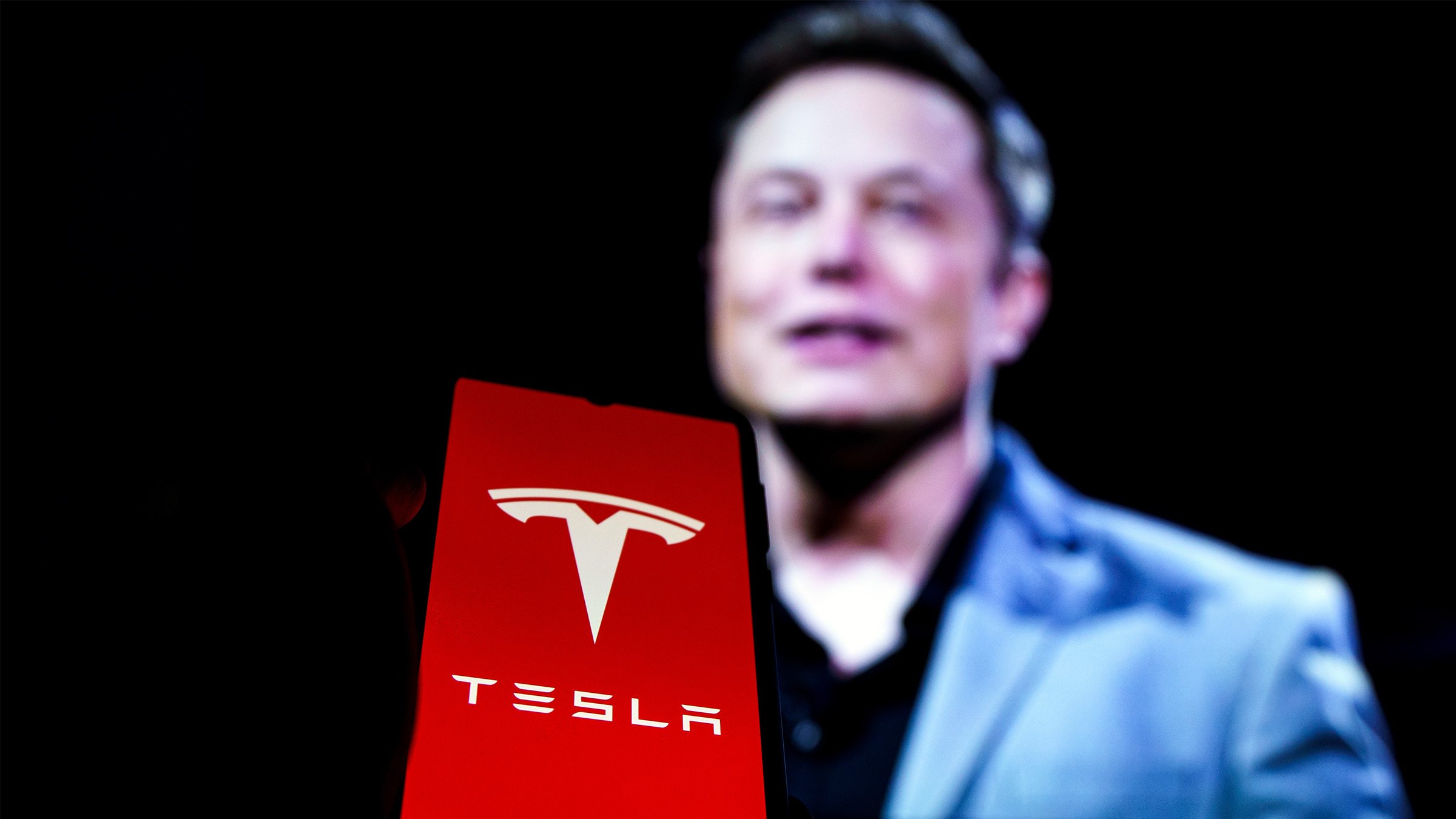
Tesla’s third-quarter net income dropped 43% to $787 million while revenue held broadly steady at $28.05 billion, as the electric-car maker sharply increased spending on research, factories and equipment. The company is also moving ahead with humanoid robots and driverless taxis, despite regulatory scrutiny surrounding its autonomous-vehicle plans.
Profit declines as spending accelerates
Tesla reported net income of $787 million for the quarter, down from $1.37 billion a year earlier. Revenue was essentially flat at $28.05 billion, while vehicle deliveries declined by about 2%.
Operating profit fell 56% to $718 million. The result reflects a much heavier investment programme: research and development spending rose 69% to $2.76 billion, and capital expenditure more than doubled to $4.73 billion. Capital expenditure covers spending on assets such as factories and production equipment.
The company is directing much of that investment toward two projects intended to expand its business beyond conventional electric vehicles. Optimus is a humanoid robot designed for dangerous or repetitive work, while the Cybercab is a two-seat autonomous taxi that has no steering wheel or pedals and is summoned through an app.
According to Decrypt, Tesla’s higher costs came as Chief Executive Elon Musk pushed forward with both programmes while the company’s established vehicle business delivered fewer cars than in the same period a year earlier.
Optimus enters production
Tesla said Optimus has begun production at its Fremont, California, factory. In its shareholder letter, the company described the units leaving the line as its first “production-quality” humanoid robots.
Musk has set a target of 20,000 Optimus units per week, but said reaching that rate would take at least a year because the robot’s design is still changing. Deliveries to customers outside Tesla are expected around the end of 2027.
Musk identified the robot’s hand as one of the most difficult hardware challenges. He also questioned how well the robot would withstand more than a month of use, highlighting the technical hurdles that remain before large-scale commercial deployment.
Tesla has previously missed an Optimus target of producing about 10,000 robots in 2025. It also faces competition from companies developing similar machines, including Figure AI, which unveiled its Figure 02 humanoid robot in 2024 with backing from Microsoft, OpenAI and Nvidia.
Cybercab target faces regulatory scrutiny
Tesla is trying to make Cybercabs available to customers by the end of 2026, according to Lars Moravy, the company’s vice president of vehicle engineering. Every Cybercab produced so far is intended for Tesla’s own robotaxi fleet.
Musk has said most of the vehicles will remain Tesla-owned and operate as a “transport as a service” business rather than being sold outright. Tesla has not identified the first buyers or announced a final price, although it recently posted a form for people interested in purchasing robotaxis. The price target previously cited by Tesla is below $30,000.
The company’s timetable is unfolding while a federal safety audit remains open. Tesla’s sworn responses to regulators are due October 30. The company has not disclosed how much revenue its robotaxi service currently generates.
Musk said the business should become visible in Tesla’s overall financial results in the second quarter of 2027 and would probably become a significant part of the company’s finances by the third or fourth quarter of that year.
Moneyiar market picture
Moneyiar data at 23:24 on October 22, 2026, show mixed moves among the listed digital assets:
- River (RIVER): $1.1015215456, down 3% over 24 hours and up 1.88% over seven days.
- Billions Network (BILL): $0.0139971939, down 0.59% over 24 hours and up 10.04% over seven days, based on the supplied September 21, 2026 timestamp.
- aelf (ELF): $0.0653659645, up 4.92% over 24 hours and 4.53% over seven days.
- RedStone (RED): $0.1397729621, down 6.11% over 24 hours and 10% over seven days.
Tesla’s results show the immediate financial cost of expanding into robotics and autonomous transport: sharply higher investment and lower profitability while revenue remains flat. The company’s ability to turn those projects into commercial businesses will depend on production, durability, regulatory clearance and customer demand.