
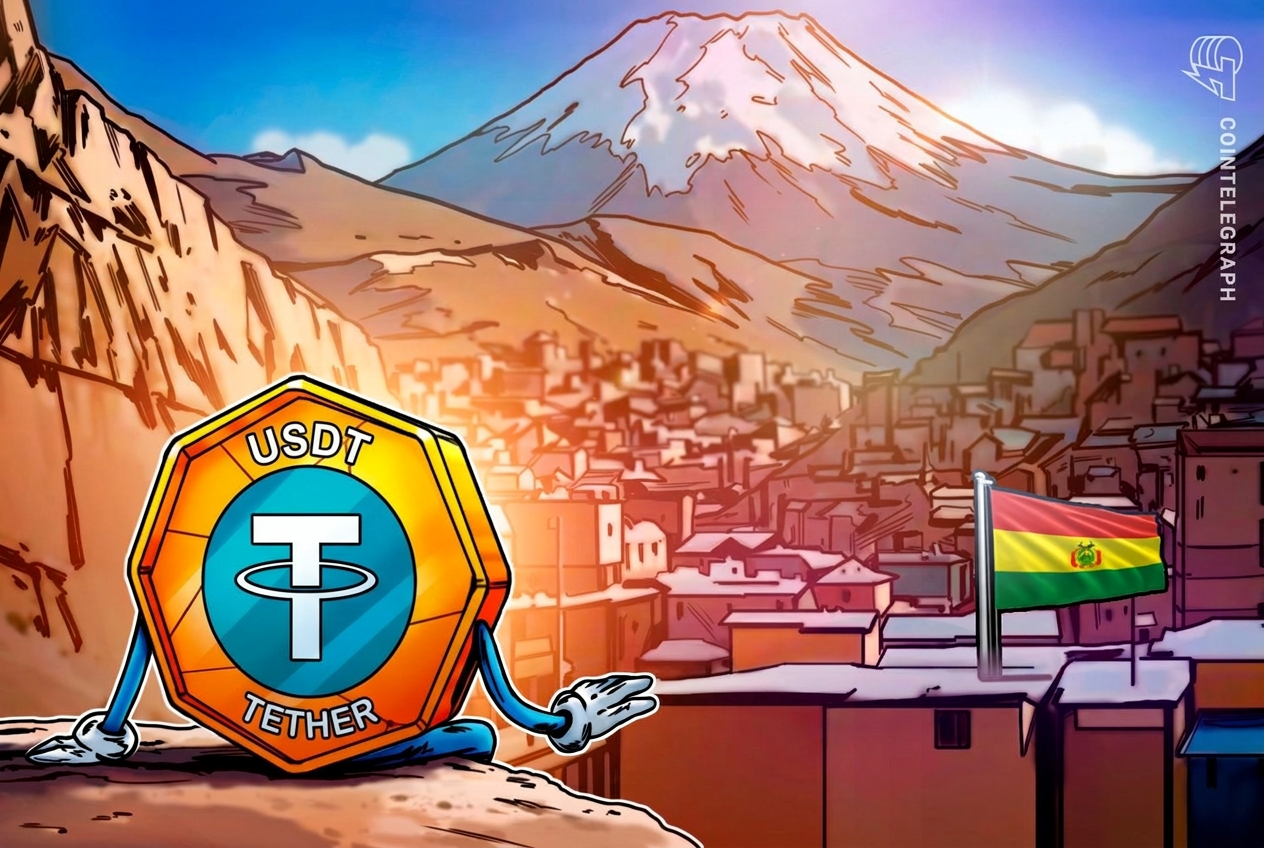
Tether has led a pre-seed funding round for Peso, a Bolivian fintech that enables payments in USDT through food delivery services, merchant tools and links to local banking networks.
According to Cointelegraph, the investment is intended to help Peso extend its stablecoin payment infrastructure into Bolivia, Brazil, Colombia and Argentina. Tether has not disclosed the amount invested.
Peso already supports USDT payments through Yango’s food delivery service in Bolivia. Customers using the service can pay for orders with Tether’s dollar-linked stablecoin. The fintech also provides QR payment services, point-of-sale tools for merchants and virtual accounts connected to Bolivia’s banking system through ACH transfers.
Expansion across Latin America
Peso’s model is designed to connect USDT with local currencies and existing financial infrastructure. Its services combine stablecoin payments with merchant acceptance and banking access, rather than limiting USDT use to crypto trading platforms.
The planned expansion covers four Latin American markets: Bolivia, Brazil, Colombia and Argentina. The announcement did not provide a timetable for the rollout or separate funding amounts for each country.
A stablecoin is a digital asset designed to maintain a relatively stable value against a reference asset, such as the US dollar. USDT is issued by Tether and is commonly used for digital payments and transfers. In Peso’s case, the company is adding USDT payment functionality to consumer delivery, merchant and banking-related services.
The investment comes as other companies develop USDT-based financial products in Bolivia. Lending platform Tala said it had partnered with El Dorado to provide credit through the latter’s digital wallet. Under that arrangement, eligible users can receive and repay loans in USDT on the Tempo blockchain.
Bolivia’s changing payments environment
Demand for stablecoins in Bolivia has increased since 2025 amid a prolonged shortage of US dollars and high inflation. Businesses have started accepting USDT for purchases as access to foreign currency became more difficult.
Bolivia’s government announced plans in November 2025 to integrate cryptocurrencies and stablecoins into the financial system. Those plans included allowing banks to provide digital-asset custody and crypto-linked financial products.
In July 2026, the government began considering a regulatory framework that would recognize USDT for payments, savings and trade alongside the boliviano and the US dollar. The proposal followed continuing pressure from a dollar shortage after Bolivia abandoned its longstanding currency peg in June, increasing interest in dollar-denominated alternatives such as USDT.
Current crypto market picture
Moneyiar market data at 23:19 on October 22, 2026, showed Ethereum at $2380.2493599126, down 3.91% over 24 hours and 2.37% over seven days. Tether USDt was priced at $0.9987554672 at 23:18, with a 24-hour decline of 0.05% and a seven-day decline of 0.01%.
Cronos stood at $0.0560949158, down 4.12% in 24 hours and 3.1% over seven days. STABLE was priced at $0.0256071983, down 2.45% over 24 hours and 6.11% over seven days.




