
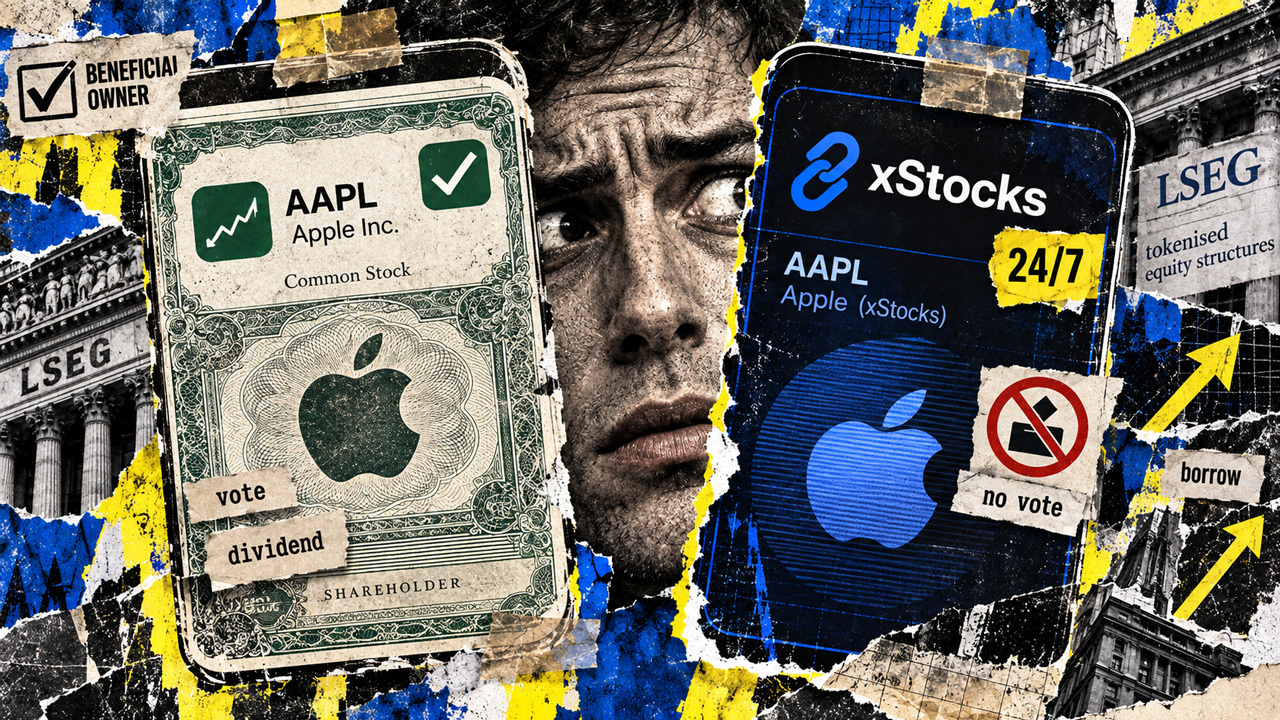
Tokenized stocks are designed to mirror the trading experience of traditional equities, but they may represent a fundamentally different asset. As CryptoSlate explains, two investors can see the same company name and a similar price in their investment apps while holding different instruments. One may own shares in the company, whereas the other holds a token linked to the stock or its price. These products can promise lower-cost trading and broader access, while some are structured to make speculation easier without transferring shareholder rights to the buyer. The distinction matters because a token that tracks a company’s market value does not necessarily provide the ownership rights associated with conventional stock. Investors therefore need to understand what an individual product represents before treating it as an equivalent to shares. The report highlights the growing overlap between traditional equity markets and digital assets, where similar labels and prices can conceal important differences in ownership and investor rights.




