
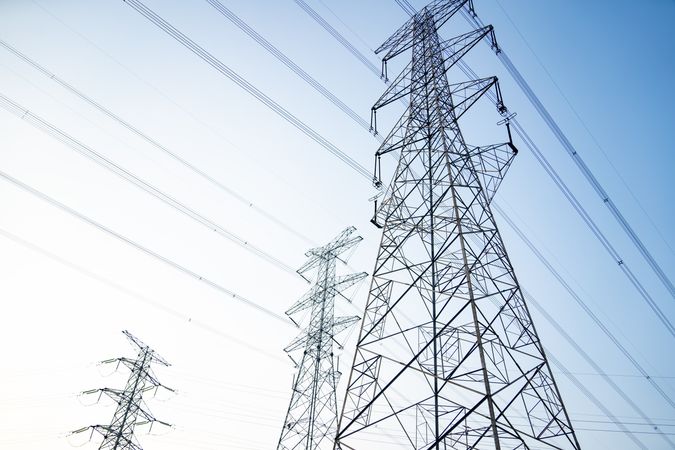
The U.S. Senate has blocked a procedural advance for legislation designed to prevent households and small businesses from paying for power and grid upgrades required by large data centers, highlighting a broader policy debate over who should finance America’s expanding digital infrastructure.
Senate measure falls short of procedural threshold
The Ratepayer Protection Act received 57 votes in favor and 43 against in the Senate. That was not enough to advance the bill, which required 60 votes. The outcome does not formally end the proposal, but it shows that lawmakers have not yet reached agreement on how the costs of serving major new electricity customers should be allocated.
The legislation was promoted by Sen. Jon Husted, an Ohio Republican, and Reps. Gabe Evans, a Colorado Republican, and Kathy Castor, a Florida Democrat. The House of Representatives previously approved the measure by a 417-3 vote.
At issue are large computing facilities whose electricity demand can reach levels comparable to major industrial operations. The bill would require state utility regulators and certain utilities to consider standards under which facilities with peak demand of at least 100 megawatts would pay the full incremental costs of the generation capacity and grid improvements needed to serve them. States would still decide whether to adopt those standards.
According to CoinDesk, the Senate debate reflects a growing question in the United States: how can the country expand the infrastructure needed for artificial intelligence and other digital businesses without shifting the financial burden onto ordinary electricity customers?
Why data centers are driving a wider policy question
AI systems, digital-asset networks and other online services depend on physical infrastructure. That includes electricity generation, transmission lines, substations, equipment, land and data centers. As computing campuses become larger, decisions about their power supply can affect utilities, local governments, residents and businesses well beyond the project itself.
A utility may need to plan new generation or grid upgrades in anticipation of a facility’s demand. That creates a risk if the project later scales back its operations, delays construction or leaves the service area. The legislation’s supporters argue that such risks and costs should be made clear before projects proceed, rather than being absorbed by families and small companies through higher bills.
The debate also matters to developers and technology companies. They need confidence that power will be available and that the rules for connecting to the grid will be sufficiently clear before committing capital. Local communities, meanwhile, may want information about the project’s effects while decisions about its location and infrastructure can still be changed.
The source article was written by Rashan Colbert, director of U.S. policy and Digital Energy Council policy lead at the Crypto Council for Innovation. Colbert said the ratepayer discussion is an early example of the policy choices that will extend across the digital infrastructure chain, from energy and data centers to chips, servers and the AI models that use them.
Industry commitments do not replace public rules
Earlier in the year, the president and leaders of Amazon, Google, Meta, Microsoft, OpenAI, Oracle and xAI agreed to the Ratepayer Protection Pledge. Under that commitment, the companies said they would cover the costs of new power generation required for their data centers.
The White House announced in July that the initiative had expanded to include more than 200 additional utilities, data-center developers, cooperatives and states. The remaining policy question is how those commitments should be reflected in enforceable public rules and utility arrangements.
Cost allocation alone, however, does not build infrastructure. Even when responsibility for an upgrade is assigned, projects still require permits, equipment, transmission capacity and construction. The source article argues that government policy should make those steps more predictable while retaining protections for communities and the environment.
That process involves several parties with different information and responsibilities. Utilities understand grid constraints, regulators oversee service and consumer protections, developers manage construction and local approvals, and computing companies determine their expected demand. The article says those operational realities should shape future rules, with communities given an opportunity to raise concerns before key decisions become fixed.
The issue is therefore broader than a single Senate vote. Energy policy affects the availability of computing capacity, while data-center decisions can influence where investment goes. Those choices have implications for AI, digital assets and other products and services that rely on the same physical foundation. Colbert’s organization says its Digital Energy Council will focus on expanding U.S. energy capacity and improving grid reliability through discussions involving companies from the digital-asset, AI and energy sectors.
Moneyiar market picture
Moneyiar data at 21:09 on October 15, 2026, showed Uniswap (UNI) at $7.4541126926, up 5.27% over 24 hours and 1.8% over seven days.
At 21:08 on the same date, ECOMI (OMI) was priced at $0.0002665234, down 1.37% over 24 hours and 1.48% over seven days. Request (REQ) stood at $0.0515645628, down 0.17% over 24 hours and 2.39% over seven days.
Moneyiar’s latest available data for Billions Network (BILL), recorded at 01:39 on September 21, 2026, showed a price of $0.0139971939, a 24-hour decline of 0.59% and a seven-day gain of 10.04%.
The market figures are provided as a snapshot and do not indicate how the Senate vote or grid-policy debate will affect any individual digital asset.




