
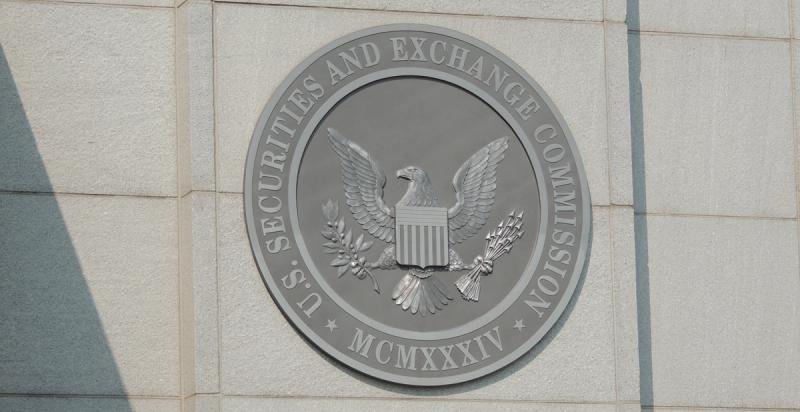
Vault12 is challenging a gap in the U.S. Securities and Exchange Commission’s proposed crypto safe-harbor rules: even if an issuer believes a token has moved beyond its original securities status, centralized exchanges may still avoid listing it because the agency could later disagree.
The crypto wallet-backup firm raised $17.45 million from 38 investors in 2018 through agreements for future tokens. It says it fulfilled, or formally abandoned, every essential commitment described in the project’s white paper. Yet the Vault Guardian Token, or VGT, has never traded on a centralized exchange.
In a comment letter submitted Tuesday, Vault12 said exchanges it approached repeatedly asked how they could be sure the SEC would not later determine that VGT remained linked to an investment contract. According to CoinDesk, the company’s submission has become an early test of how the SEC’s proposed framework could work for older crypto projects seeking a path out of securities treatment.
Why Vault12 says the proposal may not be enough
The SEC’s proposed Regulation Crypto Assets framework, issued in August, would establish conditions under which a token would no longer be subject to its original investment contract. In general terms, an investment contract is an arrangement in which investors provide money with the expectation of profits tied to the efforts of others; the classification can bring a token within U.S. securities-law requirements.
Under the proposed safe harbor, an issuer would need to complete or permanently stop the essential managerial efforts it had promised. It would also have to make no new commitments of that kind and have no intention of making them. The issuer would then file a transition report, known as Form TR, explaining why it concluded that the investment contract had ended.
Vault12 argues that VGT fits this proposed route. The company says the project has either delivered on its commitments or formally dropped them, but that the token remains effectively shut out of major centralized trading venues because exchanges want more than an issuer’s filing. They want protection against a later SEC challenge.
The proposal says the SEC could still examine whether an issuer actually satisfied the safe-harbor conditions. If a certification were inaccurate, the agency could conclude that the investment contract had not ended and that securities-law obligations continued to apply. The proposal also says the safe harbor would not stop other parties from arguing that a token was an investment contract or otherwise a security.
Vault12’s proposed 60-day solution
Vault12 is asking for a defined period in which the SEC could object to a properly submitted certification. Its suggestion is that, after 60 days without an objection, the filing would become conclusive for the agency, subject to exceptions such as fraud or material misstatements.
The company says that kind of deadline would give exchanges the certainty they need to evaluate a listing. Without it, an exchange could face a later regulatory dispute even after relying on an issuer’s transition report. For Vault12, the issue is therefore not only whether an older token meets the proposed safe harbor, but whether exchanges can confidently act on that determination.
The firm’s concerns echo those raised by The Digital Chamber, an industry group whose comment letter Vault12 said it supports. The debate centers on the practical effect of the SEC’s proposal: a framework may offer issuers a process for ending an investment contract, while leaving trading platforms exposed to uncertainty about whether that process will ultimately be accepted.
Vault12 is backed by Winklevoss Capital and Naval Ravikant. Its 2018 fundraising and the continuing absence of a centralized-exchange listing make VGT a concrete example of the problem the company wants regulators to address.
Market picture
Moneyiar market data at 12:59 p.m. on October 21, 2026, showed the following prices and moves:
- Uniswap (UNI): $7.4672353299, up 4.46% over 24 hours and 3.33% over seven days.
- Plasma (XPL): $0.0813391644, up 7.27% over 24 hours and 1.56% over seven days.
- Ethereum Name Service (ENS): $5.7937324537, up 6.74% over 24 hours and down 1.74% over seven days.
- Meteora (MET): $0.3478499189, up 5.01% over 24 hours and down 6.18% over seven days.
These market figures cover other crypto assets and do not provide a trading price for VGT. Vault12’s proposal instead addresses the regulatory certainty that could determine whether a token such as VGT can obtain access to centralized exchange markets at all.





