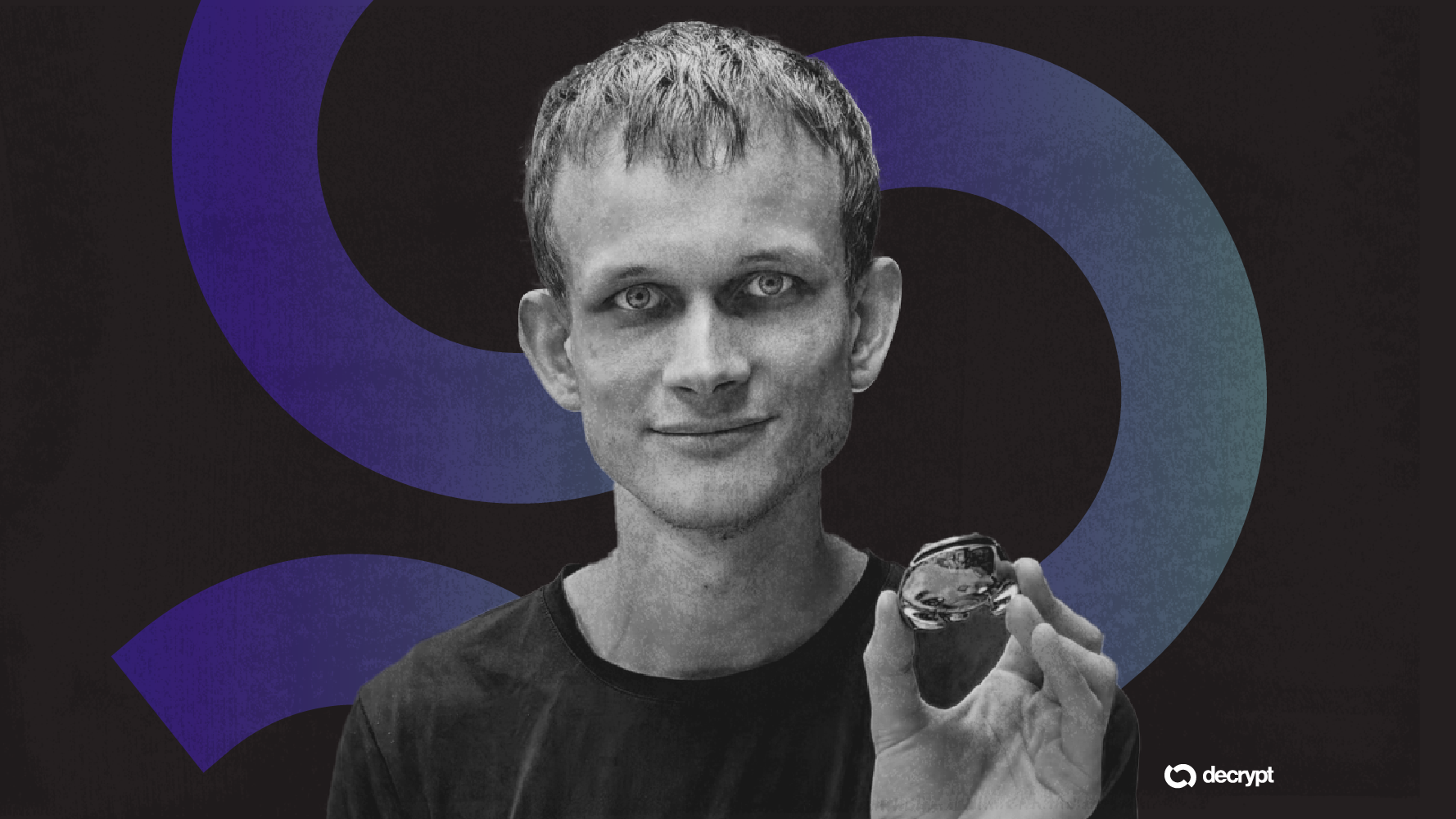
Ethereum co-founder Vitalik Buterin says it is plausible that advances in artificial intelligence could help break some forms of cryptography within the next two years, adding a new concern to the industry’s long-running effort to prepare for quantum computing.
Buterin’s warning focuses particularly on lattice-based cryptography, a class of mathematical systems that has been considered one possible way to protect blockchains against future quantum attacks. He said AI-accelerated progress in mathematics could instead weaken the security assumptions behind those systems sooner than expected.
The comments came one day after Ethereum Foundation researcher Justin Drake urged the crypto industry to prepare for what he called “bunker mode”: moving funds to addresses whose public keys have not yet been exposed. According to Decrypt, Drake said it was now reasonable to consider that AI-driven mathematical breakthroughs might undermine encryption before quantum computers become powerful enough to do so, a prospect commonly known as “Q-Day.”
Why lattice cryptography is in focus
Cryptography protects control over blockchain funds by making it computationally difficult for an attacker to derive a private key or forge a valid transaction. Different systems rely on different mathematical problems, and the concern raised by Buterin is that a major advance in mathematics could make some of those problems much easier to solve.
Lattice-based cryptography is among the approaches being examined as a possible defense against quantum computing. Projects including Cardano have considered the technology as part of efforts to make blockchain systems more resistant to quantum threats. Buterin’s latest comments raise a complication: a method chosen for its expected resistance to quantum attacks could still be exposed to attacks using conventional computers if AI accelerates mathematical research sufficiently.
“There is a good chance that the concrete security of lattices will take serious hits from the next two years of AI math,” Buterin wrote on X on October 7. He said that if AI produced roughly 50 years of mathematical progress in two years, that improvement could plausibly include a major advance in the ability to break lattice-based systems.
Isabel Foxen Duke, head of Mara Foundation and co-author of BIP-360, told Decrypt that quantum-related risks have generally been associated with elliptic-curve cryptography and RSA. Classical attacks, including those potentially enabled by AI-assisted mathematics, could affect systems widely viewed as quantum-resistant, including lattice-based cryptography, she said.
Buterin advises caution, not a rush
Buterin said the industry should take AI-related threats seriously and reduce exposure to cryptography vulnerable to both quantum and AI-assisted attacks. He has suggested that lattice systems could become safer if their sizes were increased substantially. He also described hash-based cryptography as a more attractive route for quantum protection, while acknowledging that AI-driven mathematics could theoretically create risks for hash functions as well.
His comments do not amount to a claim that current encryption has already been broken. Ananda Banerjee, founder of analytics firm Charlie Quant Lab, told Decrypt that Buterin’s two-year scenario should not be treated as a firm deadline. The post, Banerjee said, did not show that these systems had been defeated, and preparation would be preferable to hurriedly moving funds.
Buterin likewise said he was not recommending that people immediately transfer their assets to new wallets. The practical measure he highlighted was keeping funds in addresses that have not made transactions. In those cases, the associated public key has not been exposed on the blockchain, which can reduce the information available to a potential attacker.
That approach is connected to the way many blockchain accounts work: an address can receive funds without revealing the public key used to authorize spending. Once an account makes a transaction, the public key may become visible, depending on the network’s design. Avoiding exposure is therefore presented as a precaution, not as proof that funds in previously used addresses are currently unsafe.
A changing security debate
The latest warning marks a shift in emphasis for the crypto industry. Quantum computing has long been treated as the major future threat to widely used public-key cryptography. Buterin’s comments suggest that progress in AI and mathematics could create a nearer-term risk for some replacement technologies being considered for the post-quantum era.
They also follow comments Buterin made about a month earlier, when he argued that AI would not necessarily undermine crypto security because defensive capabilities could keep pace. His new assessment does not call for an emergency migration, but it does indicate that the industry may need to evaluate proposed cryptographic upgrades against more than one kind of breakthrough.
The central issue remains uncertain timing. Buterin described the possibility as plausible, while Banerjee cautioned against treating two years as a deadline. For now, the discussion is about reducing potential exposure and examining the assumptions behind different cryptographic systems before a confirmed break occurs.
Current crypto market picture
Moneyiar market data at 21:49 on October 8, 2026, showed broad declines among the tracked assets:
- Ethereum (ETH): $2,470.9471, down 3.71% over 24 hours and 8.20% over seven days.
- Shiba Inu (SHIB): $0.0000052954, down 1.79% over 24 hours and 7.82% over seven days.
- Uniswap (UNI): $7.3363, down 5.22% over 24 hours and 18.59% over seven days.
- Pepe (PEPE): $0.0000038221, down 5.76% over 24 hours and 13.22% over seven days.
These market moves are separate from the technical warning and do not establish a link between the price changes and the encryption debate.