
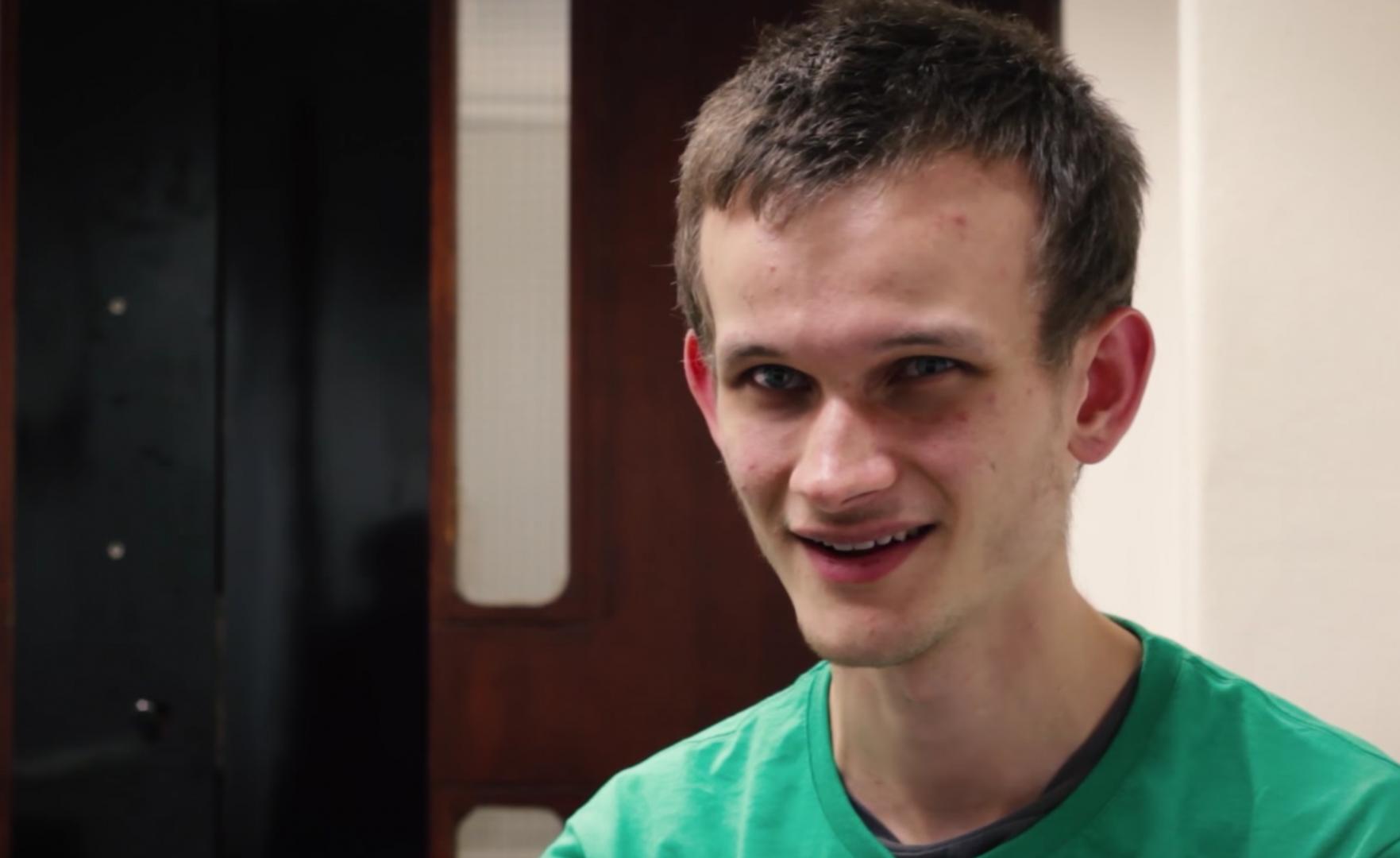
Ethereum co-founder Vitalik Buterin has outlined a 2030 vision in which the network would rely less on every computer repeating the same calculations and more on cryptographic proofs produced by computers working outside the blockchain. The proposed design aims to expand capacity, improve verification and strengthen privacy for payments, balances and wallet activity.
A different model for Ethereum
In a post titled “The cryptographic world computer,” Buterin described an Ethereum that would still use a blockchain but would operate very differently from the network users know today. According to CoinDesk, his plan combines the blockchain with mathematical proofs and networks of computers that process some activity off-chain.
Ethereum already supports payments, token trading, borrowing and other applications governed by shared software rules. The challenge is expanding that activity without making transactions too expensive or making the network increasingly difficult to verify.
At present, computers that fully check Ethereum repeat much of the work behind its transactions. They confirm, for example, that an account had enough funds to make a payment and that an application executed according to its rules. Having many computers repeat these checks helps protect the network, but it also limits the benefit of adding more machines: each computer still has to process much of the same activity.
Buterin’s proposed approach would separate the work from the verification. A computer could process transactions and provide a compact cryptographic proof that it followed Ethereum’s rules. Other computers could verify that proof without repeating the entire original calculation. Separate checks could also help confirm that the underlying transaction data remained available for inspection.
The result would be a system in which different computers perform different jobs while still checking one another’s output. Buterin said Ethereum developers had wanted to distribute work in this way for years, but earlier efforts lacked a reliable method for verification.
Capacity, coordination and finality
Previous attempts to divide Ethereum’s workload among smaller groups created coordination problems. Assigning specific tasks to separate groups could introduce delays, while a failure in one group could make it harder for the wider network to recover.
Cryptographic proofs could allow those groups to work in parallel while giving the rest of the network a faster way to check their results. That could increase Ethereum’s capacity and preserve independent verification rather than simply trusting the computers that performed the work.
The design would not eliminate every coordination issue. Ethereum would still need to resolve situations in which transaction order matters, such as two payments attempting to spend the same funds. Buterin suggested that more computation could happen before transactions reach the blockchain, with proofs combined so that less information needs to be recorded directly on-chain.
His 2030 comparison estimates that payments could become final—meaning the network treats them as irreversible—in roughly eight to 32 seconds. The source material also says that complex applications would continue to face cost and privacy limitations under the vision described.
Buterin expects the planned Hegotá upgrade next year to be Ethereum’s last “normal” fork, using technology that would be familiar to someone working on the network in 2015. After that, he expects mathematical proofs, software-verification tools and security designed to withstand future quantum computers to become increasingly central to Ethereum’s development.
He wrote that the transformation would become Ethereum’s “primary story” after Hegotá. Achieving it will require proofs to become inexpensive enough for broad use, while computers handling separate tasks must coordinate changes to shared balances and application records without conflicting with one another.
Privacy moves beyond payments
The proposed changes would also affect what users reveal when they interact with Ethereum. A wallet balance is often checked by asking an external server about an address. Even when the payment itself is private, the server may be able to infer which accounts a user follows or monitors.
Buterin’s privacy plans would seek to protect those balance requests alongside payment information and the rules an account uses to authorize spending. That could allow a business, for example, to keep payment activity confidential when an employee checks an account balance, rather than exposing the company’s wider accounts to a service provider.
The broader objective is not only to conceal transaction amounts or addresses. It is to reduce the information leaked through ordinary wallet use, including requests made to learn about balances and account activity.
Other cryptocurrency projects are pursuing similar ideas. Zcash already allows payments using encrypted addresses and amounts. CoinDesk’s earlier analysis of ZecStats data said about 4.9 million ZEC were held in shielded pools on Friday; the token traded around $1,660 earlier Sunday after rising about 15% over the week. Researchers behind the Shielded Bitcoin paper have also proposed adapting Zcash’s payment design for Bitcoin, while leaving the processes for depositing and withdrawing actual bitcoin to separate research.
Ethereum market picture
Moneyiar market data at 10:03 p.m. Iran time on September 25, 2026, showed Ethereum at $2,681.7028821295, down 0.13% over 24 hours and up 2.05% over seven days.
Other selected assets in the same Moneyiar data were:
- Shiba Inu at $0.0000058406, up 0.46% over 24 hours and 6.1% over seven days.
- Uniswap at $9.4332270255, up 2.98% over 24 hours and 4.82% over seven days.
- Pepe at $0.0000044327, down 0.06% over 24 hours and up 14.7% over seven days.
These market figures describe recent price movements and do not determine whether Buterin’s proposed technical changes will be delivered. The vision remains dependent on substantial engineering work, particularly cheaper proof generation and secure coordination among parallel computing tasks.




