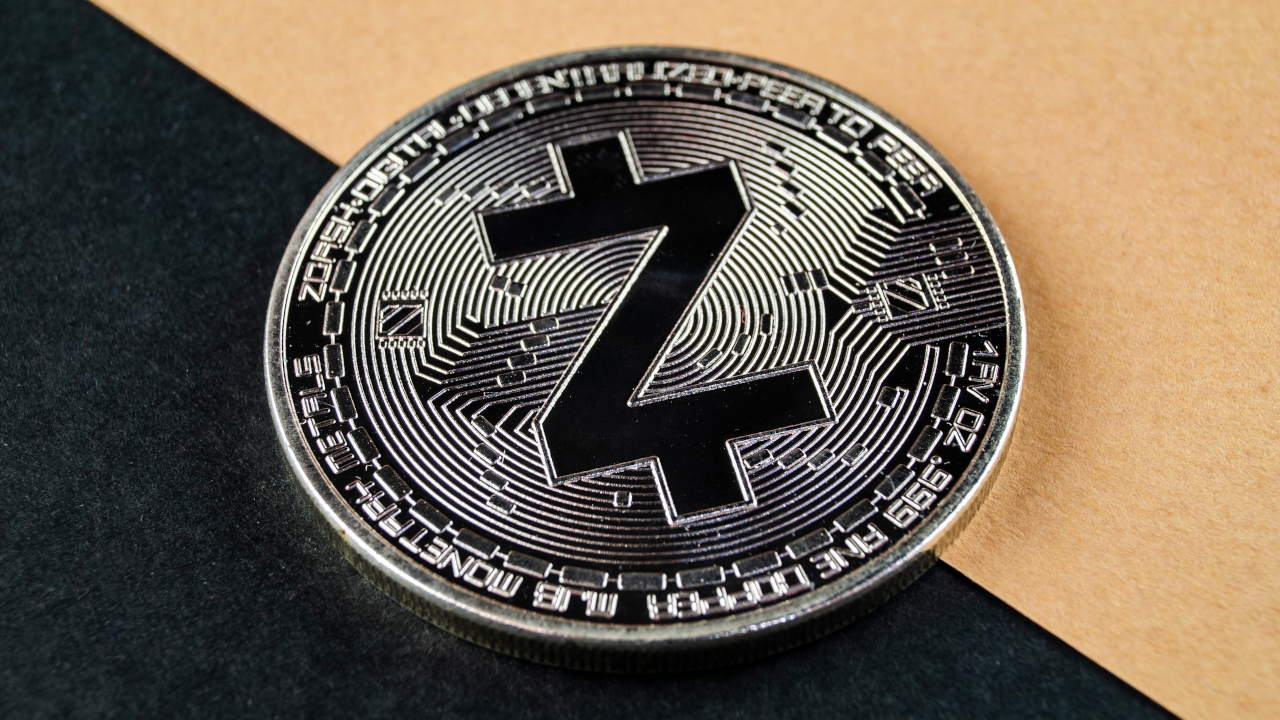
Zcash developers at Zakura say the network could gain post-quantum signature instructions in January, laying the groundwork for transparent payments protected by hash-based signatures. The proposal also combines address rotation with private information retrieval to make it harder for servers to connect a user’s series of addresses.
The plan addresses concerns that artificial intelligence or quantum computing could eventually undermine the elliptic-curve cryptography used by major blockchain networks. However, it applies only to Zcash’s transparent payments, and no date has been confirmed for activating the proposed changes across the network, according to Decrypt.
What Zakura is proposing
Zakura, a team that develops a Zcash full node, expects post-quantum signature opcodes to be added to Zcash in January. Opcodes are low-level instructions that allow a blockchain to perform specific operations, including checking whether a digital signature is valid.
The proposed instructions would support hash-based signatures for Zcash’s transparent pool. Roman Akhtariev, in an engineering post, described the objective as creating “full post-quantum safe transparent pools with hash based signatures.”
Zcash has two payment systems. Shielded payments conceal the sender, recipient and amount. Transparent payments work more like transactions on Bitcoin: their activity is publicly visible. A transparent address contains a hash of a public key, and that key is revealed on the blockchain when the owner spends from the address.
Zakura’s design uses two related measures. A wallet would create a new transparent address after each transaction, limiting the reuse of addresses and keeping public keys hidden until they are needed. It would also use a backup signature based on WOTS, a hash-based signature scheme.
Hash-based signatures are relevant to the post-quantum discussion because they do not depend on the elliptic-curve mathematics that researchers fear could eventually be defeated by sufficiently capable quantum computers or advances in mathematical problem-solving assisted by artificial intelligence.
Address rotation and the privacy challenge
Using a fresh address for every transaction can create a separate problem. A wallet may need to ask a server to check balances across many addresses. If those requests are made openly, the server could infer that the addresses belong to one user, weakening the privacy benefit of address rotation.
Zakura says it plans to address that issue with private information retrieval, or PIR. This cryptographic technique allows a wallet to retrieve information from a database without disclosing which records it is seeking. In the Zcash context, that could allow a wallet to check its addresses without giving the server a complete view of which addresses are connected.
The feature is being introduced in the Vizor wallet this week. Users can test it by switching on “private queries” in the wallet’s settings. Zakura presented the combination of rotating transparent addresses and PIR as a way to reduce linkability while preparing for signatures designed to withstand post-quantum threats.
The approach is limited in scope. The proposal concerns Zcash’s transparent side rather than shielded payments, and Zakura’s post did not specify how the new opcodes would be activated by the network or when that activation would occur.
The wider “bunker mode” debate
The proposal follows a warning from Justin Drake, a researcher at the Ethereum Foundation, who urged cryptocurrency users to move funds to fresh addresses. Drake argued that artificial-intelligence-driven advances in mathematics could threaten the ECDSA signatures used by Bitcoin and Ethereum before large-scale quantum computers become available. In his worst-case framing, the risk could emerge in months rather than years.
Ethereum co-founder Vitalik Buterin later described it as plausible that AI-related advances in mathematics could break encryption within the next two years. The discussion has been referred to as “bunker mode,” reflecting the idea of moving assets and preparing systems before existing cryptographic protections are compromised.
Zakura’s response is notable because it focuses on implementation details rather than only on relocating funds. Its plan seeks to address both the signature risk and the possibility that repeatedly changing addresses could itself expose links between a user’s transactions. Still, the expected January arrival of the opcodes is not the same as a confirmed network-wide upgrade date.
The effort comes as Zcash attracts more institutional attention. A further U.S. exchange-traded fund linked to the Winklevoss twins has been proposed, while Europe has seen its first Zcash exchange-traded product. Zcash has also undergone an upgrade intended to make private payments three times faster.
ZEC market picture
Moneyiar market data at 10:04 on October 13, 2026, showed Zcash (ZEC) at $1,208.2561684252, down 7.55% over 24 hours and 10.6% over seven days. The figures describe market performance at that time and do not establish a connection with Zakura’s proposal.
The same Moneyiar data showed Quant (QNT) at $222.0513835606, down 6.43% in 24 hours and 12.68% over seven days. BAS was at $0.0211283771, down 6.84% and 10.06%, respectively, while Velo (VELO) was at $0.0047077499, down 5.95% over 24 hours and 18.61% over seven days. QNT, BAS and VELO readings were recorded at 10:03 or 10:04 on October 13, 2026, as specified in the Moneyiar data.