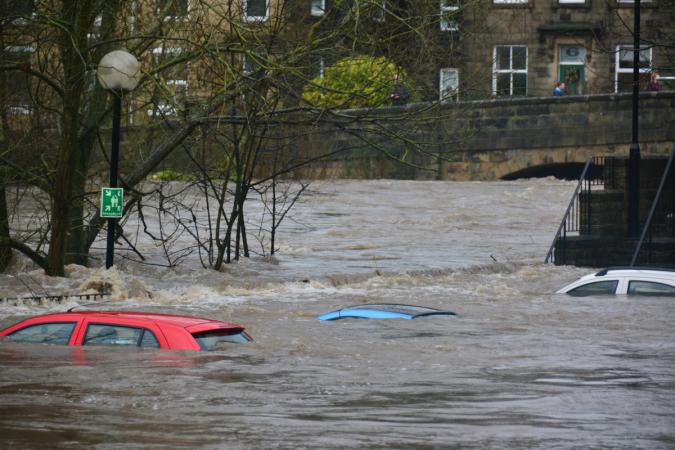
Natural disasters generated $220 billion in economic losses last year, but only $107 billion was covered by insurance, leaving a substantial protection gap for households, companies and governments. A planned Bermuda transaction aims to use blockchain-based ownership to bring new capital into some of the disaster risks that remain difficult or expensive to insure.
A traditional risk market gets a digital structure
Bermuda-based insurance law firm Harneys and tokenization platform droppRWA plan to issue tokenized catastrophe bonds in early 2027, according to CoinDesk. Under the proposed structure, each token would represent legal ownership of a catastrophe bond rather than simply tracking an asset informally on a blockchain.
Catastrophe bonds, commonly called cat bonds, allow insurers to transfer defined risks such as hurricanes, wildfires and earthquakes to investors in the capital markets. Investors provide capital that can be used to cover an insured event, while the bond’s terms specify the circumstances under which that capital may be used for claims. In return, investors receive a return for accepting the possibility of losses tied to the specified catastrophe risk.
The market has expanded even as many disaster losses remain uninsured. Catastrophe bonds outstanding reached $65.6 billion in June, while new issuance totaled $11.3 billion in the second quarter, the highest quarterly figure on record, according to a recent Artemis report cited in the source material.
The proposed tokenized format is intended to address access to a market that has generally been dominated by specialist funds and large institutional investors. Many conventional catastrophe-bond offerings require minimum investments of at least $250,000. Harneys and droppRWA are considering smaller beneficial ownership units, although the transaction would still have to comply with securities, insurance and investor-protection rules.
The insurance gap remains concentrated in vulnerable regions
The growth of the cat-bond market has not eliminated the shortage of disaster coverage. Floods, typhoons and wildfires continue to generate losses that are not fully insured. In the Asia-Pacific region, 91% of disaster losses in 2023 were uninsured, according to the Organisation for Economic Co-operation and Development.
The OECD has also said that limited claims data and catastrophe models can make it harder for insurers and reinsurers to price coverage, especially in locations exposed to severe hazards. That challenge is particularly relevant to risks such as flood protection and typhoon cover in Southeast Asia, which Harneys managing partner Henry Tucker identified as areas where conventional reinsurance can be difficult to arrange.
A specialist underwriter could use a tokenized bond to raise capital for one clearly defined risk. The offering could set out the assumptions used to assess that risk, as well as the return offered to investors. In that sense, tokenization would change how ownership and participation are recorded and divided; it would not change the underlying physical danger.
Tucker cautioned that the structure should not be viewed as an informal or casual retail product. The invested capital would be fully committed to covering a specified insurance risk. As he explained to CoinDesk, investors would not simply be taking the other side of an ordinary wager.
Public-sector precedent for catastrophe bonds
Catastrophe bonds have already been used to help governments arrange protection against natural disasters. In May, the World Bank arranged $200 million of hurricane coverage for Jamaica. The transaction replaced an earlier arrangement that paid out after Hurricane Melissa in 2025.
Jamaica’s finance minister, Fayval Williams, described catastrophe bonds as an important way for the country to maintain access to capital markets as part of its resilience strategy. The example illustrates how insurance-linked securities can be used beyond private insurers, including to support public disaster protection.
The planned Bermuda issuance would apply tokenization to this established insurance-linked securities model. Its proponents say legal ownership recorded onchain and smaller ownership units could broaden participation. However, neither feature guarantees that insurance will become cheaper or more widely available in areas exposed to disasters.
Tokenization also cannot reduce the cost of a hurricane, flood or wildfire itself. The economic result will still depend on the risk being covered, the terms of the bond, the quality of the underlying assessment and the regulatory framework governing the issuance.
Moneyiar market picture
Moneyiar market data at 09:34 on October 13, 2026, showed Aster at $0.6919899251, down 2.38% over 24 hours and 6.4% over seven days. Cap was priced at $0.0933905311, up 0.88% in 24 hours and 22.9% over seven days.
At 09:34 on October 13, 2026, Astar stood at $0.006521648, down 5.72% over 24 hours and 13.16% over seven days. Moneyiar data for WOULD, recorded at 21:04 on September 22, 2026, showed a price of $0.0351412837, with a 24-hour gain of 0.33% and a seven-day gain of 10.6%.
These market figures describe selected digital assets and do not measure the performance or risk of the proposed catastrophe-bond issuance.