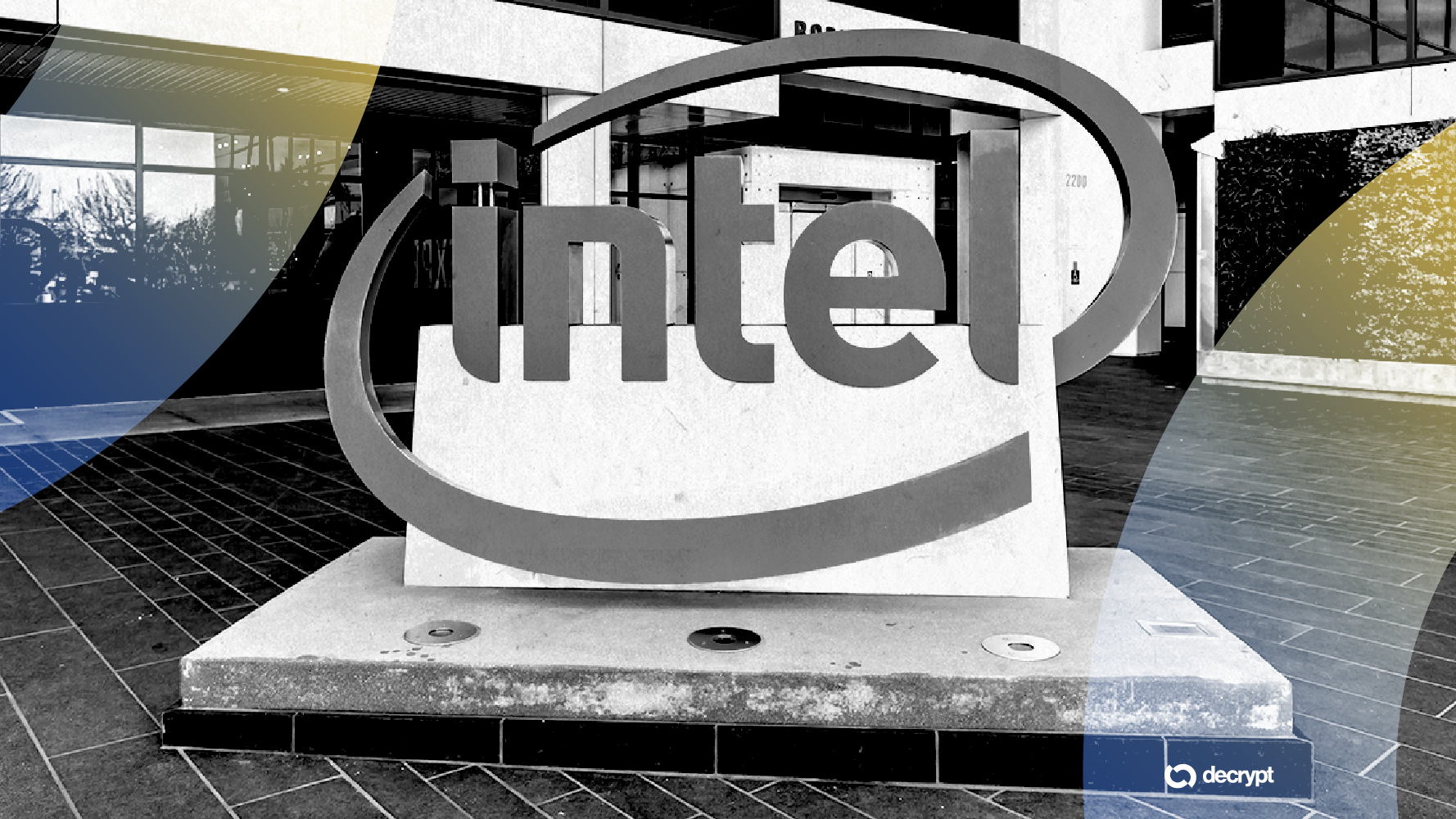
Intel, Oracle, IBM and quantum-computing company IonQ have objected to plans for their shares to trade on OKXICE TSV, bringing the number of objecting issuers to 26, according to an updated public notice dated Oct. 26 and reported by Decrypt. The rapid increase highlights growing resistance among technology companies to a proposed venue for around-the-clock trading of tokenized U.S. stocks.
Objections expand
OKXICE TSV is a planned 50-50 joint venture between Intercontinental Exchange, the owner of the New York Stock Exchange, and OKX’s U.S. holding company. Its public notice does not explain why the companies objected, nor does it say what an objection means for the possibility of their shares being traded on the platform.
The number of issuers listed as objecting has risen quickly:
- Nine companies were listed on Oct. 15.
- The total reached 16 on Oct. 19 and 22 on Oct. 23.
- Intel, Oracle, IBM and IonQ lifted the count to 26 on Oct. 26.
The roster includes a large group of technology companies, including Microsoft, Alphabet, Broadcom, Qualcomm, Arm, Cisco, Intel and Oracle. Goldman Sachs and Wells Fargo are among the financial companies listed, while IBM and IonQ bring additional representation from the quantum-computing sector.
How the venue is designed
OKXICE TSV plans to allow approved users to trade tokenized U.S. shares 24 hours a day, seven days a week. Tokenized stocks are digital tokens designed to represent claims linked to underlying shares held by another entity. On this platform, the underlying stock would be held by a third-party tokenizer through a registered broker-dealer.
Trading is planned to take place through permissioned Uniswap v4 liquidity pools on OKX’s XLayer blockchain, with stablecoins such as USDC used for the trading pairs. Users would need to complete identity and sanctions checks and hold a nontransferable “soulbound” token to access trading.
The venue is expected to operate under an innovation exemption introduced by the Securities and Exchange Commission in September, after the Clarity Act stalled in the Senate. OKX and ICE first partnered on tokenized securities earlier this year before announcing the venue’s plans this month.
Investor-protection questions
The latest notice points to uncertainty over how tokenized shares held in self-custodied wallets would be treated if the tokenizer’s broker-dealer failed. Specifically, it is unclear whether those tokens would qualify as customer property or receive protection from the Securities Investor Protection Corporation, which helps protect brokerage customers when firms collapse.
The proposed market would require trades to be fully funded, with no margin or borrowing. Liquidity providers would not need to be registered market makers and could withdraw their liquidity at any time. Those conditions, together with the unresolved protection question, are among the details investors would need to understand before trading such assets.
Moneyiar market picture
Moneyiar data as of Oct. 25-26, 2026, show Compound (COMP) at $21.1287447338, down 10.42% over 24 hours and up 0.3% over seven days. Telcoin (TEL) was $0.0014157918, down 0.97% in 24 hours and 7.28% over seven days. ADI stood at $8.0409971161, down 0.27% over 24 hours and 2.6% over seven days, while ShareX (SHARE) was $2.7028029712, up 0.33% and 5.1% over those periods, respectively.