
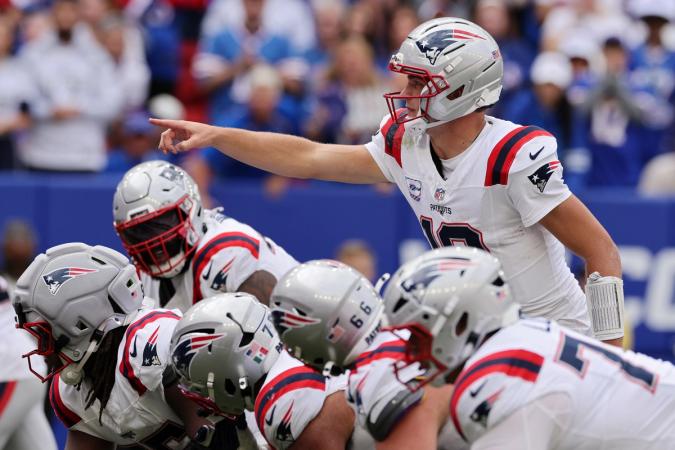
The National Football League has asked the U.S. Supreme Court to intervene in a dispute over whether sports prediction markets such as Kalshi and Polymarket should be supervised by the federal government or by state gambling authorities.
In a filing submitted Thursday, the NFL backed the states’ position that local gambling regulators should retain authority over sports wagering conducted through these platforms. The league said it had raised concerns with the Commodity Futures Trading Commission, or CFTC, but that its requests had not been resolved.
According to CoinDesk, the NFL told the court that current betting practices create significant questions around game integrity and consumer protection. It argued that federally supervised prediction markets do not face the same level of oversight as state-regulated sports betting.
The filing comes as the legal dispute approaches the Supreme Court. New Jersey has asked the court to hear the case and issue a definitive ruling, while the CFTC maintains that exchanges under its supervision fall exclusively within federal jurisdiction. That position would prevent states from applying their own gambling laws to the markets.
Why the NFL is challenging federal oversight
Prediction markets allow participants to buy and sell contracts tied to the outcome of future events. In the sports context, the contracts can function similarly to wagers on games or specific events. Kalshi and Polymarket are among the platforms at the center of the broader debate.
The NFL said the CFTC’s approach leaves several safeguards below the standards used by state gaming authorities. In its brief, the league raised concerns that the markets may permit wagers vulnerable to manipulation by individual players, allow people under 21 to participate and operate under an agency that does not have enough staff to monitor them as closely as state regulators.
The league said protecting the integrity of its games and its fans has been a central priority as legal sports betting expanded across the United States. It argued that applying state gambling rules would provide stronger controls over the way sports-related markets are operated.
The NFL also urged the Supreme Court to act quickly. The league said billions of dollars could be wagered on NFL games through prediction markets each season and that delays would increase potential consumer harm and risks to game integrity.
Kalshi and the CFTC dispute the league’s account
Kalshi said it had repeatedly attempted to work with the NFL on market integrity but had received no response. Spokesperson Elisabeth Diana said the company had sought to engage with the league “proactively and constructively.”
Kalshi also said it had established partnerships with Major League Baseball and the National Hockey League, claiming those leagues had been willing to share data and cooperate on integrity issues. The company said the NFL was the exception among the major professional sports leagues it referenced.
The CFTC rejected the suggestion that it had failed to engage with the NFL. The agency said it had worked with the league from the beginning on its rulemaking agenda and policy priorities. It added that the NFL could have entered into an arrangement allowing more detailed cooperation and information sharing with the regulator.
At the heart of the disagreement is a question of jurisdiction. The CFTC says federal authority over the exchanges takes precedence over state gambling laws. The NFL and the states argue that sports betting remains a traditional area of state and tribal regulation and should not be shifted to a federal derivatives regulator through the relevant financial legislation.
Former officials join the states’ side
The NFL is not alone in opposing the CFTC’s interpretation. Former CFTC Chairman Gary Gensler filed a brief arguing that Congress did not transfer control of sports betting from the states to the federal agency.
Gensler said the Dodd-Frank Act, which amended the Commodity Exchange Act, was designed to address the causes of the financial crisis rather than overturn longstanding state and tribal authority over gambling. Former Senator Chris Dodd, one of the legislation’s authors, made a similar argument and said the law was not intended to authorize nationwide sports betting through derivatives markets.
The legal landscape is unsettled. One federal court has supported Kalshi’s argument that the CFTC should be the exclusive regulator, while two other courts have sided with the states’ view that sports betting belongs under state gambling laws. Those conflicting decisions have left prediction-market operators facing uncertainty while the Supreme Court considers whether to take up the dispute.
Moneyiar market picture
Moneyiar market data at 21:29 on October 8, 2026, showed mixed performance among the listed digital assets:
- Ethereum Name Service (ENS) was $6.222297439, down 3.78% over 24 hours and 9.45% over seven days.
- ONEchain (ONE) was $0.132347881, down 4.08% over 24 hours and 3.98% over seven days.
- RedStone (RED) was $0.1446374821, down 3.34% over 24 hours and 18.16% over seven days.
- Ark (ARK) was $0.2248321424, up 5.33% over 24 hours but down 6.17% over seven days.
These market movements are separate from the court dispute but provide a snapshot of the digital-asset market at the time of publication.




