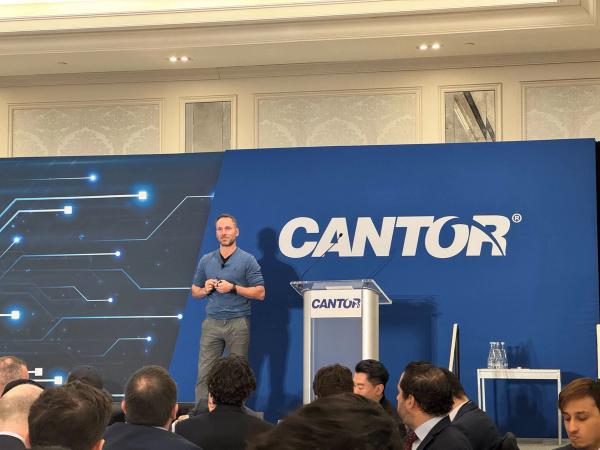
Tether is pushing back against a Democratic-led Senate investigation that accused the stablecoin issuer of helping sustain Iran’s shadow banking network. Chief Executive Officer Paolo Ardoino said the company has acted ahead of formal sanctions in freezing suspicious wallets and argued that its intervention has contributed to a sharp decline in Iran-linked USDT activity.
According to CoinDesk, Ardoino made the case in posts on X and during a remote appearance at Washington’s DC Fintech Week. He said Tether is frequently faster than government agencies in identifying and restricting addresses connected with suspicious activity, and that the Senate report did not give sufficient weight to those actions.
Tether’s response to the Senate investigation
The dispute centers on a report released last month by Democrats on the Senate Permanent Subcommittee on Investigations. Senator Richard Blumenthal, the panel’s top Democrat, led the inquiry, which examined concerns that cryptoassets are being used to facilitate illicit finance.
The report described Tether’s stablecoins as “a significant financial lifeline within Iran’s shadow banking network.” It also examined the company’s earlier approach to flagged wallets, particularly the period before 2024, when the report said Tether had not comprehensively frozen addresses identified as suspicious.
The Senate document said this lack of deterrence encouraged abuse. It specifically claimed that terrorist organizations, including Hamas, had shifted from bitcoin and a mix of other cryptocurrencies toward promoting USDT.
Ardoino disputed the picture presented by the investigation. He said Tether has often frozen addresses before they are formally designated by the U.S. Treasury Department’s Office of Foreign Assets Control, known as OFAC, or Israel’s National Bureau for Counter Terror Financing, or NBCTF.
In a post on X, he said that since 2023 Tether had frozen addresses an average of four weeks before an official designation by either agency. He also said that in 99% of cases, Tether acted before the addresses were identified by blockchain analytics firm Chainalysis.
Company cites decline in Iran-linked activity
Ardoino further argued that Tether’s enforcement efforts had helped reduce Iran-linked stablecoin volumes by 94%. He presented the decline as evidence that the company’s monitoring and freezing policies have had a meaningful effect, rather than facilitating continued access to USDT.
At the DC Fintech Week event, Ardoino also criticized the way the Senate report was released. He said it reached the media before Tether had an opportunity to review it, and told attendees that the public should hear the company’s response as well.
“Tether’s aim is to push out the bad actors from USDT,” he said. Ardoino added that those actors were moving toward other methods outside the control of both U.S. authorities and Tether.
He acknowledged that the work was not complete but said he remained confident in the company’s conduct. In his public comments, he said he believed Tether was “doing the right thing.”
A stablecoin is a cryptoasset designed to maintain a relatively stable value against another asset, commonly the U.S. dollar. USDT is Tether’s dollar-linked token, and its use in international transfers has made the company’s controls over wallets and transactions an important focus for regulators and lawmakers.
Wider scrutiny of Tether and its partners
The Senate investigation is part of broader Democratic concern about the use of digital assets in illicit finance. Blumenthal has also continued examining the relationship between Tether and Cantor Fitzgerald, its U.S. financial partner. The source material notes that Cantor Fitzgerald has close ties to the administration of President Donald Trump.
Tether also appointed Bo Hines, a former White House crypto adviser to Trump, as chief executive of its U.S. division last fall. Those links have added to the political attention surrounding the company as lawmakers examine its compliance practices and business relationships.
The Senate report and Ardoino’s response emphasize different periods and measures. The investigation focused partly on Tether’s earlier handling of flagged wallets, while the CEO highlighted the company’s actions since 2023 and its claimed lead over formal government designations. The disagreement therefore concerns both Tether’s past controls and how its more recent enforcement should be assessed.
Current market picture
Moneyiar market data at 21:59 on October 19, 2026, showed Ethereum at $2,399.2742082944, up 1.36% over 24 hours but down 3.55% over seven days. Tether USDt was priced at $0.9987433583, with a 24-hour change of -0.01% and a seven-day change of -0.01%.
Other stablecoin-related assets tracked by Moneyiar were mixed. Ethena was at $0.1860295426, up 3.96% over 24 hours and down 11.39% over seven days. STABLE was at $0.0249231126, rising 3.66% over 24 hours while falling 7.81% over the week. Moneyiar recorded the USDT price at 21:58 and the other figures at 21:59, all on October 19, 2026.