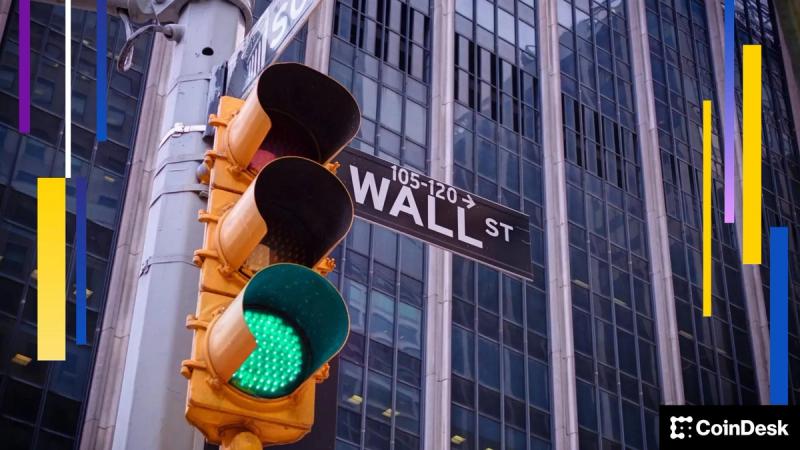
An influential research firm says the migration of real-world assets onto blockchains could give crypto infrastructure a clearer role in finance. The harder question for investors is not whether tokenization will grow, but which companies, networks and protocols will capture the fees and activity created by that shift.
According to CoinDesk, Citrini Research made the case in a 79-page report titled “Breaking the Wall.” The firm is better known for research on technology, artificial intelligence and market trends than for promoting crypto, making its focus on tokenization notable beyond the industry’s existing real-world-asset community.
Tokenization refers to representing assets such as stocks, bonds, credit, funds and commodities on a blockchain. Crypto supporters have argued for years that traditional financial assets would eventually move onto these networks. Citrini’s central argument is that this transition could finally connect the infrastructure developed by crypto with assets that investors and financial institutions already use.
Why tokenization matters
Crypto has built exchanges, lending systems, wallets and other financial infrastructure, but much of the activity historically involved trading one digital asset for another. That led to a persistent question: what practical purpose would blockchains serve beyond the crypto market itself?
The movement of real-world assets onchain offers one possible answer. Once financial instruments are represented on a blockchain, they can potentially move between applications, be used as collateral, support borrowing or become part of other financial products. This could reduce the need for each platform to develop separate systems for custody and settlement.
The supporting pieces are also developing. Stablecoins place digital representations of cash onchain, while wallets, exchanges and decentralized-finance protocols provide infrastructure for transactions and lending. Retail-oriented platforms including Robinhood and Coinbase offer distribution, and regulators in the United States and elsewhere are beginning to provide a clearer route for tokenized securities to enter markets.
The significance of Citrini’s report is therefore less about discovering real-world assets as a crypto theme. Investors in the sector have discussed tokenization for years. Its importance lies in framing the opportunity around a question that matters to larger investors: where will the economic benefits actually accrue?
The revenue question
More assets moving onto blockchains will not automatically mean that bitcoin, ether or the networks hosting those assets become the best-performing investments. Tokenization can create issuance fees, trading revenue, demand for stablecoins, lending activity and additional use of assets as collateral. Those revenues, however, may be distributed across several parts of the market.
Christian Magoon, chief executive of Amplify ETFs, which operates the tokenization-focused TKNQ fund, said infrastructure providers could act as “toll booths on the blockchain toll roads.” Distribution may be equally important, including firms such as Coinbase, Robinhood, banks and wealth platforms that already have relationships with customers.
Jeff Dorman, chief investment officer at Arca, told CoinDesk that the process of putting assets onchain could become increasingly commoditized as competition increases. In his view, more durable economics may appear afterward, when tokenized assets begin trading, being lent or serving as collateral. Potential beneficiaries he identified include Securitize, the blockchain-based trading platform Hyperliquid, decentralized lender Aave and decentralized exchange Aerodrome.
Zach Pandl, head of digital-asset research at Grayscale, said the more straightforward way to gain exposure to the trend may be through the networks that host real-world assets and process transactions. He identified Ethereum and BNB Chain as current industry leaders, alongside Solana. Avalanche and Canton, which have taken more institutionally focused approaches, could also see demand as banks and asset managers move more activity onchain.
AI could expand the use case
The tokenization thesis could extend beyond faster trading or improved record-keeping. Arthur Hayes, BitMEX co-founder and chief investment officer of Maelstrom, said the larger opportunity may involve artificial-intelligence agents operating financial services.
Such software could continuously rebalance a portfolio, move idle cash toward higher yields, search for cheaper borrowing or adjust collateral as conditions change. To perform those tasks, AI agents would need access to money and investments programmatically, around the clock and without a person approving every individual transaction.
That requirement aligns with features associated with blockchain infrastructure: programmable assets, always-on markets, smart-contract lending and near-instant settlement. Citrini similarly argued that tokenized financial products could be placed into a machine-readable format that AI agents can use.
The market remains at an early stage, however. Magoon emphasized that tokenized assets are still small compared with global financial markets, meaning the eventual leaders may not be the companies or networks considered strongest today.
Moneyiar market picture
Moneyiar data at 21:29 on October 17, 2026, showed mixed performance among selected digital assets:
- Aptos (APT): $0.7997279839, down 5.17% over 24 hours and 7.85% over seven days.
- Celestia (TIA): $0.653186151, down 1.46% over 24 hours but up 12.04% over seven days.
- Compound (COMP): $21.3160052631, down 3.66% over 24 hours and 14.29% over seven days.
- Cap (CAP): $0.0737314393, up 1.51% over 24 hours but down 18.96% over seven days.
These figures describe the current prices and recent performance of the selected assets; they do not determine which businesses will ultimately benefit from tokenization. The central commercial question remains open: whether value will be captured mainly by asset issuers, customer-facing distributors, infrastructure providers, blockchain networks or the applications built on top of them.